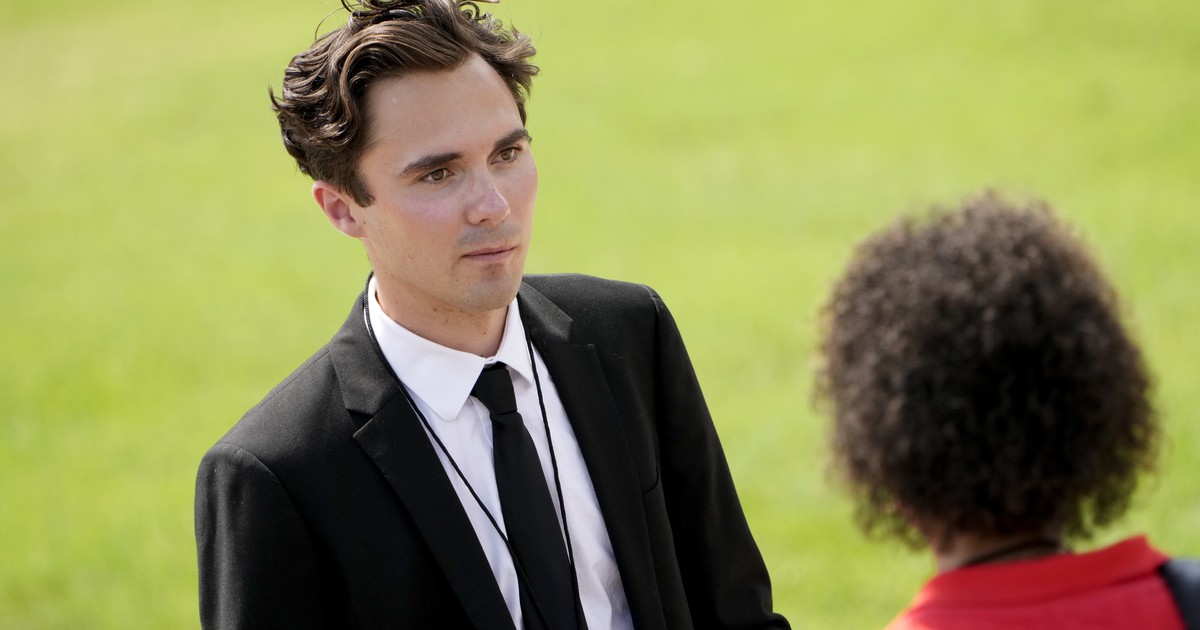
David Hogg publicly told moderate Democrats they no longer belong in the party after hard-left candidates surged, arguing the Democratic establishment must realign with its base; his remarks landed amid controversy over Abdul El-Sayed’s nomination and growing influence from socialist voices.
David Hogg, who rose to national attention after the Parkland shooting and later took a DNC leadership role, told CNN’s Kaitlin Collins that moderates should rethink their place in the party. He argued that the party’s establishment repeatedly fails because it is out of step with both the Democratic base and broader public sentiment. His comments landed as Democrats wrestle with a wave of more radical nominees and internal tension over the party’s future direction.
“I would say to the moderates in our party, you need to figure out how to actually offer something new to voters that isn’t just the same message that you gave them in 2024,” Hogg told Collins. “Increasingly, the reason why the establishment of our party is being defeated over and over and over again is because they don’t have the right values that are aligned with, not just the Democratic base, but the American people.” He doubled down on the notion that messaging without solutions is a losing strategy.
Hogg added a blunt warning about competence and sincerity in elected officials, saying voters are tired of excuses. “The American people are sick and tired of listening to Democrats tell them all of the reasons why they can’t solve their problems,” he said. “If you can’t solve our problems, you shouldn’t be running for office. We need people who actually sound, at a minimum, and genuinely believe what they are saying.”
https://x.com/RNCResearch/status/2085693258500309362
The backdrop for these remarks was the nomination of Abdul El-Sayed in Michigan, a development that has alarmed many within and outside the party. El-Sayed has been portrayed in coverage as having troubling ties and making statements that many find extreme, including claims that America deserved 9/11. For Republicans and many independents, such nominations are a clear sign the Democrats are drifting toward candidates who energize a narrow activist base but alienate swing voters.
Hogg’s own trajectory makes his tone notable: he served as vice chair of the Democratic National Committee for a portion of 2025 after the party’s 2024 defeat. That period saw prominent Democrats like Kamala Harris running highly progressive campaigns, pushing policies such as federal legalization of abortion, an “assault weapons” ban, and proposals like Medicare for All. To critics on the right, and to some voters in the center, those stances underscore a party that has moved well beyond moderate ground.
Online figures on the left have matched Hogg’s rhetoric with calls for punishment for dissenting Democrats, heightening party fracturing. Socialist streamer Hasan Piker, a prominent left-wing voice, reportedly urged a “Marxist-Leninist” approach to those skeptical of candidates like El-Sayed, pushing a punitive tone against internal critics. That attitude deepens concerns that the party is not just shifting left but becoming intolerant of internal debate.
Republican strategists see opportunity in the Democrats’ current turmoil, arguing that nominees with radical records or extreme rhetoric make it easier to hold swing seats. The GOP message is straightforward: the Democrats are nominating people who are out of step with mainstream American priorities on security, economics, and culture. For many conservative voters, Hogg’s attack on moderates feels like confirmation that the party is choosing ideology over electability.
Hogg’s critique also raises questions about who gets to define party values and how coalitions are built ahead of general elections. If a party sidelines moderates while elevating candidates with controversial histories, the debate over turnout and persuasion intensifies. That tension will play a central role in the midterms, where control of the Senate and House could hinge on a handful of competitive races.
Whatever the motivations behind Hogg’s statements, they expose a raw internal debate: whether to chase a purist base or rebuild a broader governing majority. Democrats now face a choice between doubling down on a more activist set of policies and candidates or recalibrating to win back centrists and independents. For Republicans watching closely, the splintering presents a clear political opening heading into November.