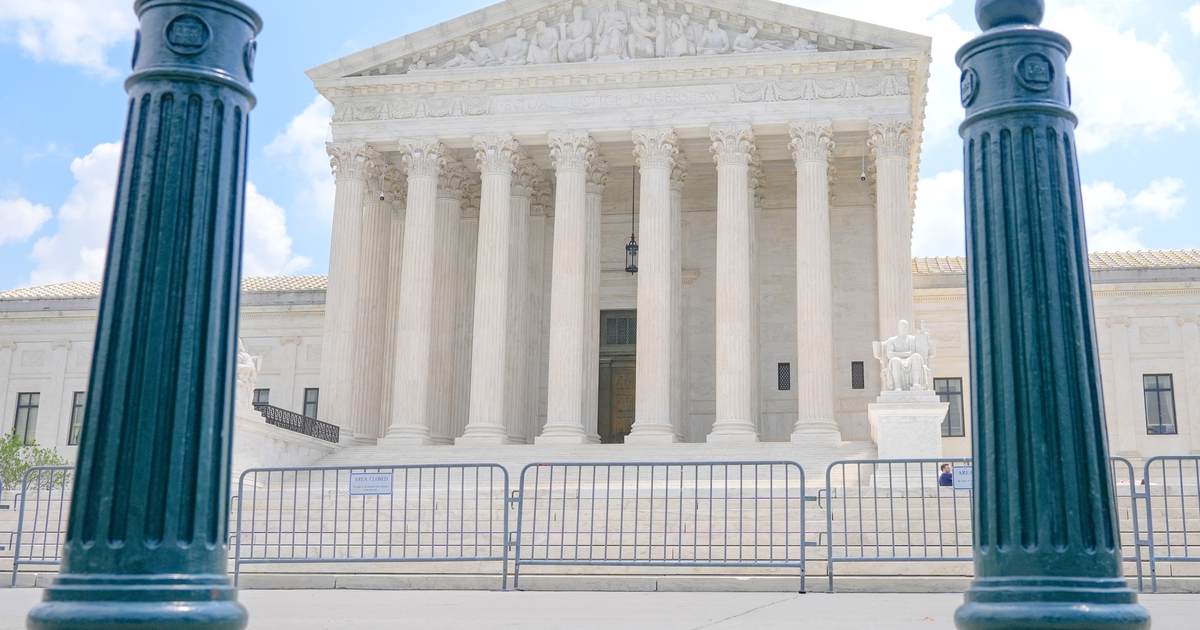
Democrats are openly pushing to expand the Supreme Court while some Republicans who claim conservative principles keep picking fights inside their own party instead of defending the judiciary and key GOP nominees.
Former House Democrat Whip Jim Clyburn has publicly said Democrats should consider increasing the number of Supreme Court justices to 13, joining others who favor reshaping the court. That escalation follows proposals already floated by party leaders and adds urgency to the debate over institutional norms. The push signals a coordinated effort from top Democrats to alter a coequal branch of government.
When influential Democrats move from proposing procedural tweaks to calling for a larger court, they betray a willingness to rewrite rules whenever outcomes don’t suit them. This is not a minor procedural dispute. It’s an effort to reshape the balance of power in a way that would make lifetime judicial independence subject to partisan whims.
The term “nuclear option” used to describe Senate procedure changes now feels small compared with proposals to dismantle the judiciary’s guardrails entirely. Democrats are framing court expansion as corrective, but the real result would be a long-term weaponization of the Court. That threat demands serious pushback from conservatives who value separation of powers.
https://x.com/RNCResearch/status/2094066778452213770
At the same time, parts of the GOP aren’t showing unified resistance. A number of so-called Republican moderates have spent the campaign season publicly undermining conservative nominees and candidates in pivotal races. Their attacks do more than dent campaigns; they hand the opposition leverage at the precise moment national institutions are under threat.
One immediate example is dissension around the Senate contest involving Ken Paxton, where intra-party spats have distracted from the larger stakes. Paxton’s race is connected to who controls the Senate and, by extension, confirmation power for judges. Weakening a GOP nominee in this context risks ceding critical influence over the judiciary to Democrats bent on expansion.
Despite this chaos, Republican financial resources are strong heading into the midterms, with donors and party committees prepared to pour money into key contests. That financial edge is important and can blunt internal sabotage if it is deployed strategically. Money alone, however, will not win if party leaders fail to present a united front.
The bigger problem is strategic: when internal fighters turn their fire inward, they undermine the very institutions they claim to protect. The fight over the Court is existential for the rule of law because packing the bench would normalize partisan control over lifetime appointments. That outcome would reshape policy for generations and erase any pretense of impartial jurisprudence.
Conservative voters expect leaders to defend institutional checks and balances, not indulge vendettas or side bets that prioritize personal feuds over party success. Grassroots activists and donors alike have little patience for internecine warfare when judges, elections, and freedoms are on the line. Elected Republicans who continue to snipe at their own side will face political costs from an electorate worried about the Court’s future.
There are also practical consequences for governance. If Democrats succeed in expanding the Court after winning control of the White House and Senate, the precedent will be difficult to reverse. That means today’s RINO infighting carries long-term policy and constitutional consequences far beyond any single primary or nomination fight.
Republican leaders who genuinely want to preserve judicial independence must prioritize cohesion in competitive races and coordinate resources to defend nominees and senators aligned with conservative principles. Tactical discipline matters: voters want results, not soap operas. Unity on the essential fights is the most effective way to block radical institutional change.
Ultimately, the stakes are clear: a partisan remaking of the Supreme Court would alter American governance in permanent ways. Republicans who talk about defending the Constitution should act to preserve its institutions rather than indulge public spats that hand advantages to the other side. That means focusing on winning key races and protecting the judiciary from radical proposals that would hollow out its independence.