The piece lays out historical roots of Islamist violence, quotes a founding-era warning, reports Abdul El-Sayed blaming the United States for modern terrorism, and pushes back against that framing from a conservative angle.
Islamic violence and raids on Western shipping have a long history that reaches back before the Republic existed, and those early conflicts shaped U.S. policy in a very real way. After American independence the Barbary States attacked and seized American ships, leading envoys like Thomas Jefferson and John Adams to confront ambassadors from Tripoli and Algiers. In a report to Secretary of State John Jay, Jefferson and Adams said, “The ambassador answered us that [the right] was founded on the Laws of the Prophet, that it was written in their Koran, that all nations who should not have answered their authority were sinners, that it was their right and duty to make war upon them wherever they could be found, and to make slaves of all they could take as prisoners, and that every Mussulman who should be slain in battle was sure to go to Paradise.”
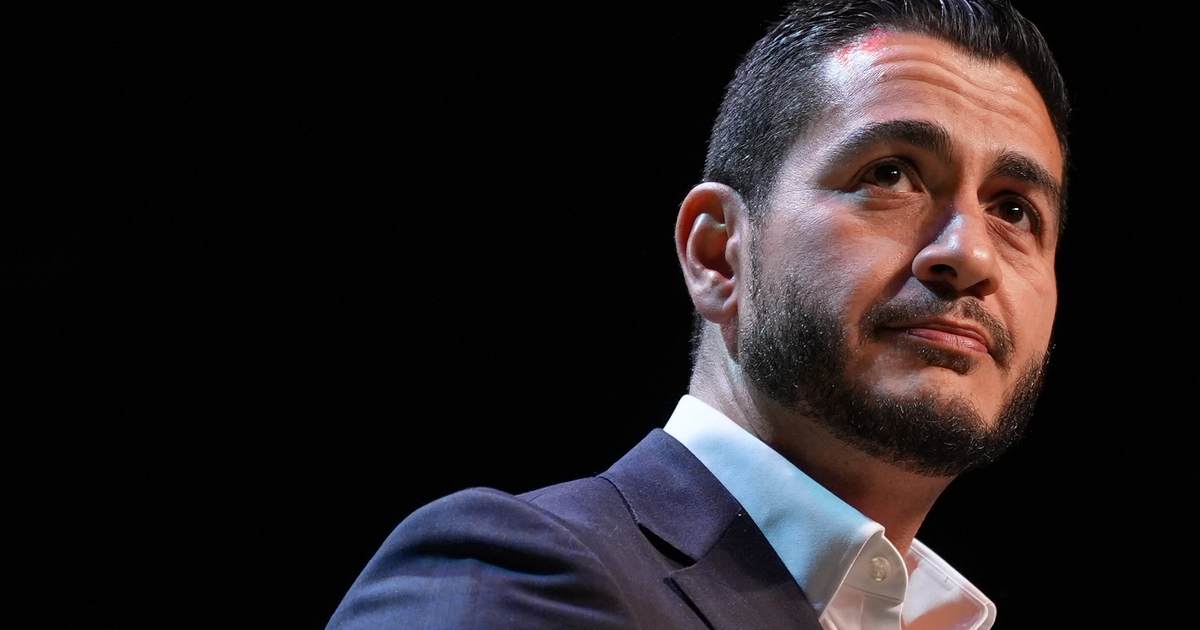
That history matters because it shows Islamic terrorism predates our country and our policies, and it is rooted in ideas and movements, not simply a reaction to U.S. power alone. Yet in a striking example of misplaced self-examination, Abdul El-Sayed recently argued that the United States bears major responsibility for today’s Islamist violence. The claim flips cause and effect in a way that lets ideologies off the hook while turning America into the villain.
That’s right: the U.S.
“I think the approach that we’ve often taken with terrorism is to figure out how to leverage the might of the U.S. military. To go in and root out certain terrorist organizations, etc. And where that’s necessary, that’s necessary, but I also think we need to be curious about why those things happen in the first place. What drives somebody to commit such a heinous act?” El-Sayed said.
“I have to be a student of people’s pain,” he continued. “What happens when people are in pain. And I think that part of what we have to understand is that sometimes when we move, we create so much collateral damage because too often we have been on the wrong side of our own policies.”
https://x.com/Bobby_LaVallley/status/2091555439645200547
“But I think we have to make sure that when we say there’s a rules-based international order, that we are the principal follower of the rules, not just the principal enforcer,” El-Sayed added. “There is a level of pain and frustration and a level of lack of agency that they have to feel to do something so insane and absurd. I’ve often tried to ask what moves somebody into that and how it is that we’re behaving that may get somebody to think that we don’t see them, and that’s creating pain.”
Exactly this. Claiming America is the root cause of Islamist terror is an oversimplified moral accounting that ignores ideology, long-standing religious and political movements, and the violent ambitions of groups who have targeted innocents for centuries. When the Republican argument points this out, it is not an excuse for unnecessary force; it is a defense of cause-and-effect, of holding actors and ideas accountable rather than making the country the default scapegoat.
Sounds like all communists, really. The tendency to interpret violence as primarily the result of grievances against the West or capitalism is a predictable talking point from those who want to recast geopolitical failures as purely American sins. That framework often leads to policy prescriptions that refuse to confront the root ideological drivers and instead demand contrition or withdrawal as the cure.
The blame is the point. Speaking of lack of agency. Turning the discussion toward American guilt ignores that Islamist terror networks recruit around narratives of religious duty, conquest, and governance, not just resentment over foreign policy. Conservatives insist that recognizing the real nature of the threat is the first step toward defending citizens, allies, and liberty, and that moral clarity matters in both rhetoric and strategy.
That’s exactly what this is. Saying America caused Islamist terror lets violent actors off the hook and undermines the political will to dismantle the groups and ideas driving attacks. If the problem truly were only U.S. actions, then eliminating America would fix it — but history, doctrine, and repeated attacks show otherwise, and any serious response must start with that honest assessment.
Islamic terrorism predates America, and if America disappeared tomorrow, Islamist violence would almost certainly continue under the same doctrinal and political impulses. When a public figure points at the United States as the principal cause, he offers a narrative of victimhood that is both politically convenient and strategically dangerous, because it distracts from the need to confront ideology, stop funding and safe havens, and partner with reformers who oppose extremism within the Muslim world.