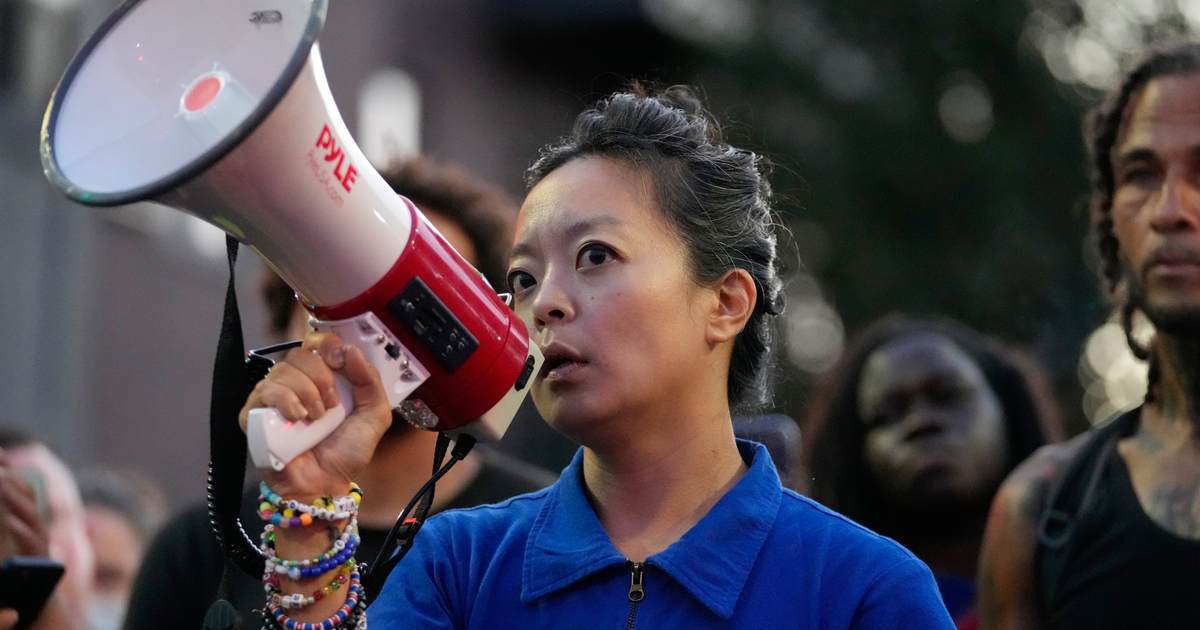
A concise look at Francesca Hong’s effort to appear moderate while her long-standing ties to the Democratic Socialists of America raise questions about whether she’ll accept the group’s full platform to win their endorsement.
Francesca Hong has tried to position herself as a moderate, but her history with the Democratic Socialists of America complicates that narrative. For years she’s been a dues-paying member, a fact that undercuts recent attempts to distance herself from radical positions once shared on social media. Voters should pay attention when a candidate flips public posture without an open explanation of past commitments.
Hong’s campaign pushed back when asked about a past post calling for abolishing the Senate, saying she didn’t necessarily agree with every plank of the DSA platform. The post remained visible on X, and in interviews Hong stopped short of a full rejection of those ideas. That ambiguity matters because the DSA values unified commitment from its endorsed candidates.
The DSA now appears to be testing Hong’s sincerity by making endorsement conditional on a pledge of fidelity to their agenda. That agenda, as described publicly by DSA members, includes abolishing the Senate, dismantling the Supreme Court and even rethinking the presidency. It also calls for open borders and blanket amnesty and, according to critics, pushes toward an end state that resembles full-blown communism.
“This is actually something that we committed to at convention,” said DSA member Michaela B. “Having our endorsed candidates supporting the program. It’s a requirement and so that’ll be incorporated into our endorsement process.”
Michaela B. went on to make the party’s ambition plain: “Whenever people are like, ‘Oh my God they want to get rid of the president.’ I don’t know what we would call it in the future, we could call it the head honcho of whatever … we might not have a president.”
https://x.com/america/status/2085072508080804084
Those are not abstract goals. They are programmatic demands from an organization that expects ideological unity, and that expectation forces candidates into a choice: accept the terms or forgo the endorsement. For a Democrat in a swing environment, an endorsement can be tempting enough to override earlier disavowals.
“It sounds so radical, like abolish the Senate, abolish the Supreme Court, etc., etc.,” said Frances Gill. “But it’s really it’s not those are the things that need to happen.”
Seen from a conservative perspective, the DSA’s platform reads as a direct threat to constitutional structures and the rule of law. Moving to erase institutions such as the Senate or the Supreme Court would rewrite the basic checks and balances that protect liberty. Those ideas are not merely policy experiments; they are existential changes that reshape who governs and how.
History also offers a warning. Communism and socialism in the 20th century resulted in mass death and repression on a scale that should give any reasonable person pause. The human toll demonstrates that sweeping ideological projects often ignore individual rights and the lessons of the past.
The question for Francesca Hong is straightforward: will she align publicly with the DSA’s agenda to secure an endorsement, or will she explain why she rejects those aims and stand by democratic institutions? Voters deserve a clear answer, not vague distancing or selective disagreement. Clarity about her commitments will reveal whether she truly seeks to govern within America’s constitutional framework or follows a radical faction that seeks to replace it.