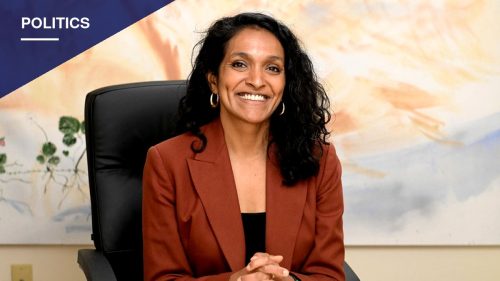
Lawrence’s mayor faces federal charges alleging he diverted COVID relief loans into personal debts and campaign expenses, triggering a multiagency investigation and criminal prosecution that details loan increases, large transfers, and payoff of high-interest mortgages.
The Mayor of Lawrence, Massachusetts was arrested and charged with fraudulently obtaining more than $1.5 million in COVID-era small-business loans and using those funds for non-business purposes, including campaign payments, personal tax obligations, and the payoff of high-interest mortgages on properties he owned. Court papers say the loans were processed through an SBA program intended to provide working capital to small businesses during the pandemic, not to cover personal or political expenses. The indictment ties specific deposits and transfers to the mayor’s personal accounts and his mayoral campaign.
Brian Depena, 61, faces one count of wire fraud and one count of money laundering in federal court. He was first elected mayor in November 2021 and won reelection in November 2025, after serving on the Lawrence City Council from 2016 to 2021. The charges allege a pattern of seeking emergency relief funds and then diverting them for personal and political use.
United States Attorney Leah B. Foley framed the arrest as an accountability action by federal prosecutors and agents. The office emphasized the expectation that public officials serve with integrity and that those who betray public trust will be investigated and prosecuted.
“Mayor DePena was elected to be a leader for the City of Lawrence. He was looked up to and trusted by his constituents, but he betrayed that trust through his alleged corruption and lies,” said United States Attorney Leah B. Foley. “Today’s arrest is just another example of our determination to root out fraud by anyone, even public officials and holding elected officials accountable.”
Court filings describe applications for Economic Injury Disaster Loans for Tenares Tire Services Inc., a business owned by Depena, during 2020 and 2021. EIDLs carried an interest rate of 3.75 percent and were limited to working capital to address economic injury from COVID-19, explicitly excluding uses such as funding political campaigns, paying personal taxes, or retiring mortgage debt. The charging documents assert that many of these rules were ignored as funds were moved away from the business account.
Thomas Demeo of IRS Criminal Investigation emphasized the broader mission behind the probe. “Today’s arrest highlights IRS CI’s continued commitment to safeguarding emergency relief programs and holding accountable those who abuse them,” said Thomas Demeo, Special Agent in Charge of the Internal Revenue Service Criminal Investigation, Boston Field Office. “CARES Act funds were created to help small businesses survive an unprecedented national crisis — not to bankroll personal debts, political ambitions, or real estate ventures. IRS Criminal Investigation remains committed to protecting taxpayer dollars, pursuing those who exploit federal relief funds, and ensuring that financial integrity is upheld at every step.”
Prosecutors say an initial EIDL of $150,000 was obtained in June 2020 and largely used as working capital for the tire business. By early 2021, the charging documents allege the mayor needed cash to address a struggling campaign, unpaid federal taxes, and nearly $900,000 owed to two private hard-money lenders who were charging 12 percent and 8 percent interest on loans secured by his properties. Those rates far exceeded the 3.75 percent EIDL rate, and the filings contend this created incentive to redirect relief funds.
“Today, the FBI arrested Mayor Brian Depena for allegedly cashing in on a public health crisis and blatantly defrauding a government program meant to keep businesses afloat during the pandemic. It’s alleged the Mayor fraudulently obtained over $1.5 million in small business loans which he then used as his own slush fund to pay his personal taxes, fund his mayoral campaign, and pay off $883,000 in high-interest mortgages on several properties he owned. This was emergency financial assistance meant to be a safety net for struggling businesses, not Mr. Depena’s own personal ATM,” said Ted E. Docks, Special Agent in Charge of the FBI’s Boston Division. “When elected officials misuse federal funds for personal gain, they’re breaking the trust of their constituents – and breaking the law. Together, with our partners, the FBI will continue to doggedly pursue anyone who defrauds the federal government. You’ll be prosecuted to the fullest extent of the law, and that ‘easy money’ won’t seem so easy after all.”
Records show a July 14, 2021 SBA approval raised the Tenares Tire EIDL by $350,000 to a $500,000 total, with the funds deposited on Aug. 16, 2021 into an account that had a pre-deposit balance of $20.23. The filings allege that shortly after deposit, $85,000 was paid to the IRS for personal tax debts and $120,000 was moved to a personal account, from which checks totaling $90,000 were written to “The Committee to Elect Brian Depena” and later characterized as loans to the campaign.
Later in 2021, a second modification approved on Oct. 27 increased the EIDL by $1,154,400, bringing the total to $1,654,400. On Nov. 30, 2021, $1,154,188 was deposited and allegedly transferred that same day to a personal account that showed a balance of $1,401. The documents claim $42,112.96 of that tranche was used for campaign checks, including one for $10,000 and another for $32,112.96 deposited in early December when the campaign account was reportedly overdrawn.
The filings assert $883,293 of the EIDL proceeds were used to retire the hard-money debts via treasurer’s checks purchased on Dec. 9, 2021 for $538,109.03 and on Dec. 18, 2021 for $345,184.13. As of Aug. 5, 2026, the complaint states only 16 payments had been made on the Tenares Tire EIDL, leaving an outstanding principal balance of roughly $1,654,420.
Wire fraud carries a statutory maximum sentence of up to 20 years in prison, up to three years of supervised release, and fines up to $250,000. Money laundering charges each carry up to 10 years in prison, three years of supervised release, and fines up to $250,000; any sentence ultimately would be set by a federal judge under the U.S. Sentencing Guidelines and applicable statutes.
The announcement credited work by federal and state partners and named Assistant U.S. Attorneys assigned to the Public Corruption Unit as prosecutors on the case. The charging documents and the statements by law enforcement make clear this is a coordinated investigation with multiple agencies involved in reviewing alleged misuse of pandemic relief funds.
The details in the charging documents are allegations, and the defendant is presumed innocent unless and until proven guilty beyond a reasonable doubt in a court of law.