Francesca Hong publicly urged an end to the Madison encampment that sprang up after the police shooting of Corey Ruiz, a shift that highlights the political and public-safety tensions around the protest zone. Her statement seeks a transition from the physical encampment to policy demands, but critics argue the move exposes her to backlash from activists and voters who see her as part of the problem.
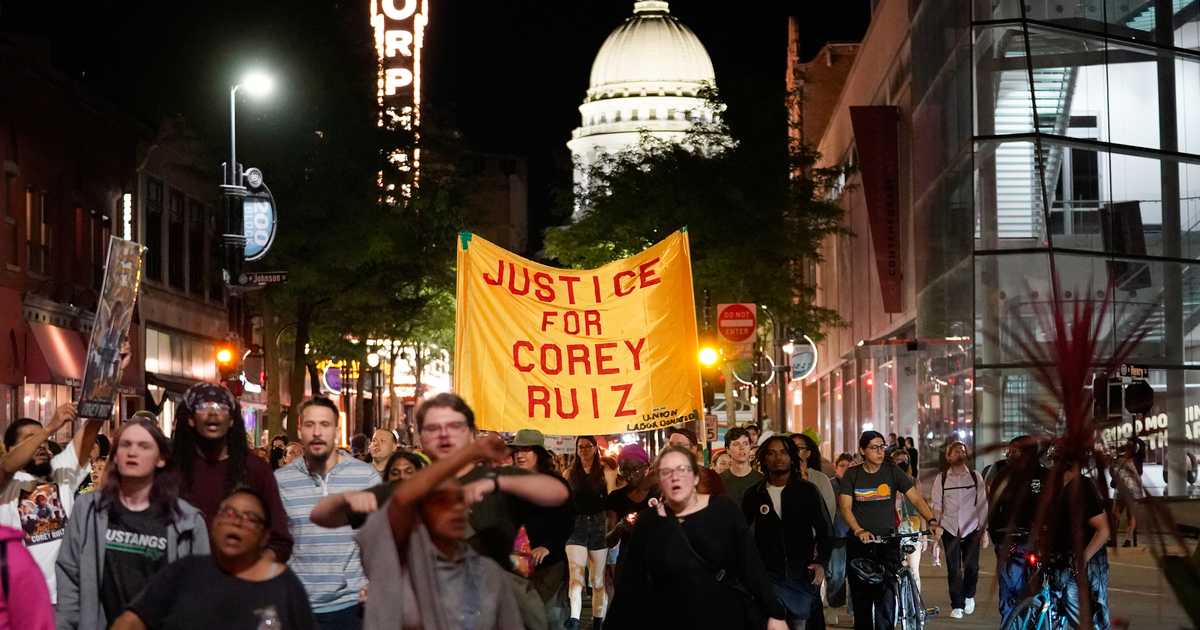
After the July shooting of Corey Ruiz, tensions in Madison boiled over when an encampment formed at Williamson and Baldwin that limited police and emergency access. Protesters set up barricades, and local officials reportedly supplied vehicles that ended up reinforcing the perimeter, leaving businesses and residents squeezed. The scene became a flashpoint for arguments about public safety, civil disobedience, and political responsibility.
Francesca Hong’s initial public comments — including calling the shooting an “execution” in front of a crowd — helped fuel the anger that led to the encampment. That rhetoric made her a target from day one and tied her name to the turmoil on the ground. Now she is trying to walk back some of the fallout by urging the encampment to end and pushing for a different approach to accountability.
Here’s a glimpse inside that zone.
And independent journalist Nick Sotor .
https://x.com/MrDanielBuck/status/2084365366520692825
Hong has publicly called for dismantling the physical encampment while continuing to press for investigations and reforms. She framed her request as balancing the right to protest with the need for residents and businesses to move freely. That position has real political consequences for her, since many activists view any call to disperse as betrayal.
Since Corey Ruiz was killed by police on July 22, I have been in close contact with city officials, local elected leaders, community organizers and neighbors who are working toward a peaceful resolution to the encampment [at] Williamson and Baldwin.
Our community is grieving and demanding accountability. Direct action and civil disobedience are valid forms of protest. At the same time, people need to access their homes and businesses. I have been working to connect organizers with resources and help address those immediate needs while supporting the right to demonstrate.
I support calls for a peaceful, community-led resolution. This cannot mean moving on from Corey’s death or abandoning the demand for justice, but we need a transition from the physical boundaries of the encampment to advocacy for durable change.
We must continue the deeper work of strengthening independent police oversight, investing in housing and homelessness services, and changing systems that allow injustice to persist. I also support creating a permanent, community-designed memorial honoring Corey and other victims of police violence in our neighborhood.
I will remain engaged with neighbors, organizers, and local leaders as we work toward a solution that prevents further harm while keeping the focus on accountability and lasting change. This is not an end to the work, but an opportunity for it to grow beyond the physical space.
Let’s translate this: “Please stop protesting, because it’s hurting my campaign.” That blunt reading may be cynical, but it captures how political survival factors into calls for order. Voters see politicians who once cheered on confrontational tactics suddenly asking for calm when the consequences get personal.
There are other things in her statement that stand out, and not in a flattering way. The omission of a small preposition before the location name looked sloppy and undercuts the polished message Hong tries to project, while threats against the officer and his family reportedly escalated once the encampment took hold. The environment at the site, by many accounts, was far from peaceful.
“Direct action” is a communist code phrase for violence. Whenever activists use that term, they often mean disruptive tactics like vandalism and blocking streets, and those actions cross lines that civil society should not tolerate. Those behaviors are destructive, make neighborhoods unsafe, and are not covered by First Amendment protections when they move into criminal conduct.
When Hong talks about a “community-led resolution,” critics interpret that as a push to substitute legal due process with activist pressure. In practice, that can look like public demands for punishment without a fair trial or a full review of evidence. Republicans argue the proper route is through transparent legal channels and strengthened oversight, not mob-driven outcomes.
Hong also pitched a public safety plan heavy on social spending and new programs. Ruiz reportedly had 42 prior convictions and was out on release after being freed in May; his record raises questions about enforcement and accountability, not just welfare policy. Opponents say this is fundamentally a behavior and criminal-justice problem in need of firm action, not only expanded social services.
The most worrying line to opponents was “changing the systems that allow injustice to persist.” Many read that as code for defunding police or gutting prisons without using those words. That scares suburban and working-class voters who want order and expect law enforcement to be supported while reforms are thoughtfully pursued.
Yes.
Leftist socialists like Hong.
Yes.
The internal backlash against Hong is already visible as activists and rival factions jockey for influence. Some allies resent any attempt to tamp down protest tactics, while others fear the political fallout will cost them broader support at the ballot box. The result is messy factional fighting that will play out in public and on the campaign trail.
That’s hilarious and richly deserved.
Let the socialist in-fighting begin.
This piece leans on political critique rather than policy wonkery: it points out the tension between enabling disruptive protest and protecting citizens, and it flags how political calculations shape public statements. Hong’s pivot may calm some concerns, but it also exposes her to charges of inconsistency from both activists and mainstream voters.