Massachusetts is moving to create a state commission focused on American Muslims while simultaneously blocking public displays of Catholic saints, creating a stark and controversial contrast that raises questions about equal treatment of religion in government actions.
A new state proposal in Massachusetts would create an 11-member, unpaid body to advise the government on matters involving Muslims. The commission is described as set to “focus exclusively on the status of American Muslims in the state.” That single-religion focus is already drawing sharp criticism from those who expect government to treat faith groups evenly.
The plan would appoint members for three-year terms and give them a formal advisory role inside state government. Officials say the commission would “serve as a state resource on American Muslim communities, promote research, foster unity among Muslim organizations, work as liaisons between the government and private groups, recommend American Muslims for appointments in state/local government, and advise on proposed legislation’s impact on American Muslims.” That lineup reads like a government office dedicated to one faith.
At the same time, Massachusetts courts recently blocked a municipality from installing statues of Catholic saints outside a public building. The decision was framed as avoiding any government appearance of favoring one religion over another. For many Republicans and religious conservatives, the contrast could not be clearer and it smells like a double standard.
Massachusetts prides itself on progressive milestones like early gay marriage recognition, yet those same leaders claim concern about government endorsement when it comes to Catholic symbols. Meanwhile a new state-sanctioned panel would explicitly concentrate on an Islamic community, which prompts a tough question: why is one faith being given a formal voice while another sees its public expressions curtailed?
People on the right see this move as political theater that rewards identity politics while erasing traditional faith visible in public life. There’s a real fear that policy will bend toward groups that are politically useful to the left, while ordinary Christians and Catholics are told to step back. That’s not equal treatment; it’s preferential treatment in a cloak of tolerance.
Some defenders argue the commission would merely improve communication between government and a growing population, and that might be true in narrow terms. But when a commission is explicitly limited to one religion, it becomes an instrument with power to influence appointments and legislation. That kind of formal role has consequences for how decisions get made in the halls of state government.
The cultural stakes are high: some progressive strategists seem content to sideline visible Christianity while courting other religious blocs. If public policy increasingly favors one religion’s advisory council while restricting another’s public symbols, voters of faith will rightly worry about the future of religious freedom. Republican critics say this is not neutrality, it’s a reordering of influence.
The controversy also brushes up against social issues like LGBTQ policy, where religious communities often disagree deeply on values. There are already reports of political figures soft-pedaling LGBTQ messaging to avoid offending some Muslim voters. That dynamic feeds the suspicion that political calculation, not principle, drives these decisions.
https://x.com/nypost/status/2092867842450321872
Flip that coin and imagine a government commission devoted only to Catholic concerns; many would object, but the larger debate is consistency. If the state is worried about seeming to endorse religion, then a one-faith commission should raise the same constitutional alarm as a saint statue. The law and common sense demand even-handed public treatment of faith.
Massachusetts officials and court rulings have to answer for how they reconcile these moves with basic fairness. If symbols of one religion are confined to private spaces while another gets a formal role inside state institutions, citizens will see politics, not principle, at work. That undermines trust in the courts and the legislature alike.
People who defend the commission will say outreach equals inclusion, and Democrats will call critics alarmist. But the point here is structural: a government office dedicated to a single faith alters the balance between church and state in practice, even if the language claims neutrality. Skeptics on the right want to know why the rules differ depending on which faith stands to gain.
There’s also a practical element: advisory power tends to translate into policy influence and appointments. When one religious community gets a formal pipeline to government, it shifts who gets heard and who gets appointed. That means the stakes are not theoretical; they affect real hiring, appointments, and legislative advice.
Republican observers worry about long-term consequences if this becomes a pattern where certain faiths get formalized channels and others are sidelined in public spaces. That pattern would reshape civic life and could erode the civic neutrality elected officials are supposed to guard. Voters should expect consistency from courts and legislatures.
Massachusetts now faces a choice about whether its actions will appear even-handed or politically selective. A state that champions pluralism must avoid the appearance of picking favorites with government tools. Courts, legislators, and citizens all have a role in demanding clarity and equal treatment under the law.
For residents who care about both religious liberty and fair government, the debate is more than academic; it will shape which voices get a seat at the table. If the state moves forward with an all-Islamic advisory body while rejecting Catholic public commemoration, many conservatives will see that as a sign the game is rigged. That perception will have political consequences.
The question many Republicans will keep asking is simple: will Massachusetts apply the same rules to every faith, or will it bend the rules to favor one group? If the answer is the latter, expect resistance from voters who want equal treatment and a neutral public square. The controversy is only just beginning.
Here’s more (emphasis added):
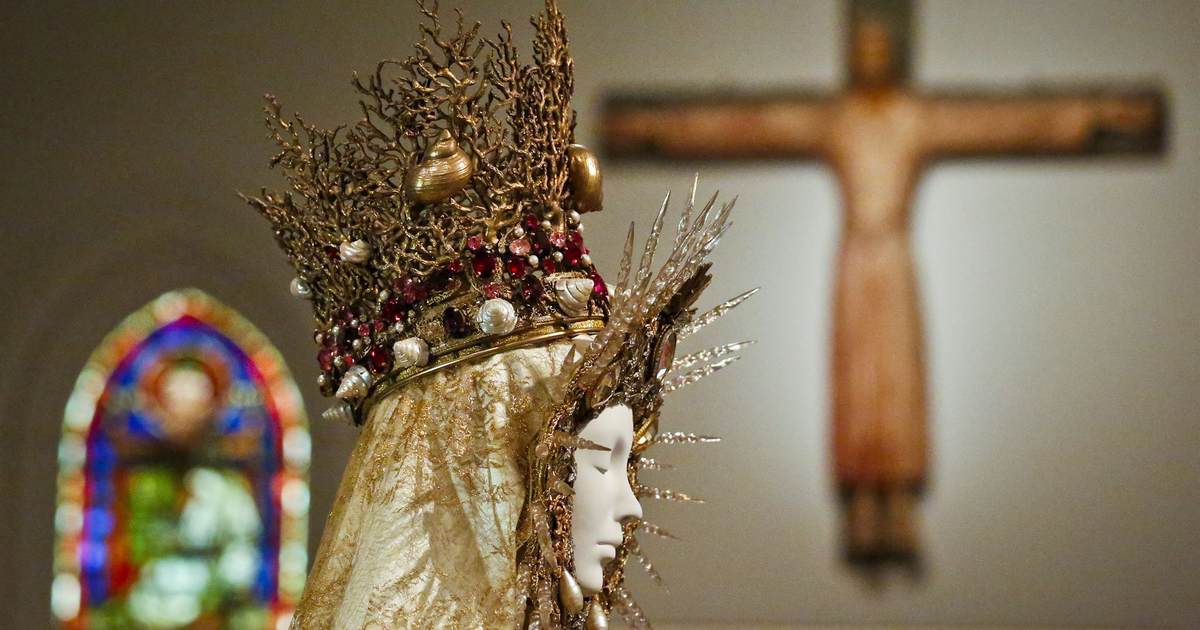
Massachusetts’ highest court has blocked a city from installing two towering statues of Catholic saints honoring police officers and firefighters outside a new public safety headquarters, ruling the monuments could improperly signal government support for one religion.
The Aug. 20 ruling upheld an October 2025 lower court decision that temporarily blocked the city from installing two 10-foot statues of St. Michael the Archangel, the patron saint of police officers, and St. Florian, the patron saint of firefighters.
The Becket Fund for Religious Liberty, which is representing the city of Quincy, told Fox News Digital the legal battle is not over.
“This ruling is disappointing but is only preliminary,” Joe Davis, senior counsel at Becket and lead attorney for the city of Quincy, told Fox News Digital. “Quincy chose these statues to honor the courage and sacrifice of its firefighters and police.
It’s (D)ifferent, after all.