Quick look at messy Midwest primaries where progressives, establishment Democrats, and Trump-backed Republicans battle for control of key seats.
It’s primary day across the Midwest, and the choices on many ballots make plain how fractured the Democratic coalition is while Republicans smell opportunity. Michigan, Missouri, Kansas, and a few Pacific contests are all worth watching because they show where each party’s energy is focused. Voters will decide whether progressives keep pushing the party left or the establishment reins the chaos back in.
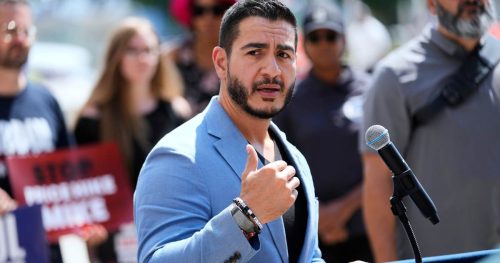
Michigan stands out as the most consequential turf fight, with the Democratic Senate primary drawing national attention and big money. Former Wayne County health director Abdul El-Sayed and Rep. Haley Stevens have been trading policy labels and personal attacks as they battle for a nomination to replace retiring Sen. Gary Peters. If a progressive nominee wins in a swing state like Michigan, it will test whether that brand can survive a general election against a GOP target such as ex-Rep. Mike Rogers.
The governor’s race in Michigan is also telling. Democrats have a clear favorite in Secretary of State Jocelyn Benson, while Republicans offer a more open field where Rep. John James faces heavy self-funded opposition from Perry Johnson. On the GOP side, money and name recognition will matter, but the party’s pickup chances hinge on narrowing the messaging to voters tired of big government and woke distractions.
Missouri delivers its own internal left-wing scrap, with a 1st District rematch between Rep. Wesley Bell and ex-Rep. Cori Bush in St. Louis. Bush’s return attempt is the latest sign that progressive insurgents aren’t giving up, even after losses. If she pulls it off, Democrats will point to grassroots fury with party elites; if she fails, it’s an argument for more pragmatic choices.
Kansas offers Republicans the best pickup opportunity for a governor’s mansion, and Trump’s endorsement matters there. State Senate President Ty Masterson has the former president’s backing in a crowded GOP field that includes Scott Schwab, Vicki Schmidt, and Philip Sarnecki. Whoever wins the primary will need to court the broad conservative base and avoid infighting that could hand Democrats an opening.
Michigan’s U.S. Senate race is the main event on August 4. Progressive Abdul El-Sayed looks like the favorite for the Democratic nomination over Rep. Haley Stevens. But Democrats have other factional fights in competitive seats, including in Michigan’s 7th District.
In Missouri, Democratic voters in St. Louis must choose between Rep. Wesley Bell and ex-Rep. Cori Bush in a rematch of their 2024 primary battle. In the heavily redrawn 5th District, Republicans will pick a nominee to challenge vulnerable Democratic Rep. Emanuel Cleaver.
Kansas is the GOP’s best pickup opportunity on the 2026 governors map, and both parties have highly-contested primaries to pick their nominees for the race. And in Washington’s 4th District, it’s unclear if two Republicans might advance out of the top-two primary to November.
[…]
[Michigan] races to watch: U.S. Senate; 7th, 10th, 11th, 13th congressional districts; governor
Michigan hosts the largest number of pivotal primaries on Tuesday, with six that we will dig into here. And number one with a bullet is the Democratic primary for U.S. Senate, in which former Wayne County health director Abdul El-Sayed and Rep. Haley Stevens are tangled in the most expensive Senate primary their party has ever seen. This critical seat on the Senate map is open due to the retirement of Democratic Sen. Gary Peters. The winner of the Democratic primary will face ex-Rep. Mike Rogers, the presumptive GOP nominee who barely lost in Michigan’s 2024 Senate race.
The contest between El-Sayed and Stevens features clear ideological cleavages. El-Sayed is a staunch progressive who supports policies such as Medicare For All and holds a highly critical opinion of Israel plus the influence of pro-Israel groups. A center-left Democrat, Stevens is more closely linked to the party’s establishment and has a reputation as one of the more pro-Israel Democrats in Congress.
Despite her support from many party leaders, Stevens is the underdog heading into primary day. As of Monday morning, El-Sayed led in Decision Desk HQ’s primary polling average by 13 percentage points, 53%-40%.
[…]
Should he win the nomination, El-Sayed will test whether a progressive can win in a swing state. And the importance of the Michigan seat cannot be underestimated: If Republicans flip the seat, Decision Desk HQ’s forecast shows that the GOP will have close to a 90% chance of holding onto its Senate majority.
Michiganders will also nominate their candidates for governor on Tuesday, with the winners looking to succeed term-limited Democratic Gov. Gretchen Whitmer. In the Democratic primary, Secretary of State Jocelyn Benson is a heavy favorite over Genesee County Sheriff Chris Swanson. By comparison, the Republican contest is more competitive. There, Rep. John James faces businessman Perry Johnson, who has self-funded his campaign with more than $30 million to beat James, whose campaign has spent a little over $6 million.
[…]
[Missouri] races to watch: 1st, 5th, 6th congressional districts
After Michigan’s U.S. Senate primary, the Democrats’ next-most prominent ideological clash can be found in Missouri’s 1st District, a dark-blue constituency that includes the City of St. Louis. The seat’s Democratic primary features a rematch between now-Rep. Wesley Bell and ex-Rep. Cori Bush, whom Bell ousted in the 2024 primary for this seat. An outspoken progressive, Bush primaried a longtime incumbent to win this district in 2020. But in 2024, Bell defeated Bush about 51%-46%, aided by millions in outside support from United Democracy Project, AIPAC’s super PAC.
Just two years later, Bush is mounting a comeback against Bell. Her success depends in part on surfing the same wave of energy that has produced successes for other left-wing candidates in Democratic primaries, tied in part to changes in Democrats’ views of the party establishment as well as increasing party’s criticism of Israel and pro-Israel groups like AIPAC. We have seen no recent public polling of this primary, but a February survey by HIT Strategies for Bush’s campaign found Bell only leading by 4 points, 44%-40%. If Bush successfully topples Bell so soon after he beat her, it will be easy to connect her success with the changing mood of the Democratic Party.
[…]
[Kansas] races to watch: Governor
Kansas’s race for governor offers Republicans their top pick-up in the country. Democratic Gov. Laura Kelly is term-limited, which has opened up this seat in the traditionally red-leaning Sunflower State.
Understandably, a large number of Republican contenders jumped into the fray. But Trump intervened in the GOP primary by endorsing state Senate President Ty Masterson, which likely makes him the favorite in a crowded race. Still, Masterson faces opposition from three other noteworthy candidates: financial services executive Philip Sarnecki, Insurance Commissioner Vicki Schmidt, and Secretary of State Scott Schwab. Surprisingly, we have seen no public polling released of the GOP race. Each of them hopes to upset Masterson and make him the fourth Trump-endorsed gubernatorial candidate to lose a 2026 nomination contest.
Down-ballot, some races are more about personality than policy. In Michigan, Rep. Shri Thanedar faces a far-left challenger, State Rep. Donavan McKinney, in a primary many insiders call a throwaway contest. Establishment Democrats reportedly won’t fight hard to keep Thanedar, which says more about local calculations than national priorities. Voters watching should note when party elites choose to conserve resources and when they actually engage.
Out west, Washington’s 4th District will test the state’s top-two system after Rep. Dan Newhouse announced his retirement. With two Republicans potentially advancing, Democrats could be shut out of the general unless the GOP splits badly. That dynamic favors organized campaigns that consolidate support behind one conservative to avoid handing an unexpected opening to a lone Democrat.
None of Virginia’s contests merited special attention from national trackers this cycle, which speaks to where both parties are concentrating their forces and where real movement is happening. Primaries like these shape the map for November and show which messages are resonating with voters tired of extremes on both sides.