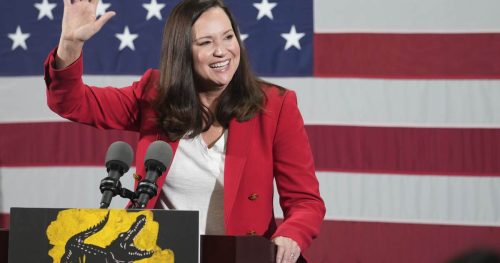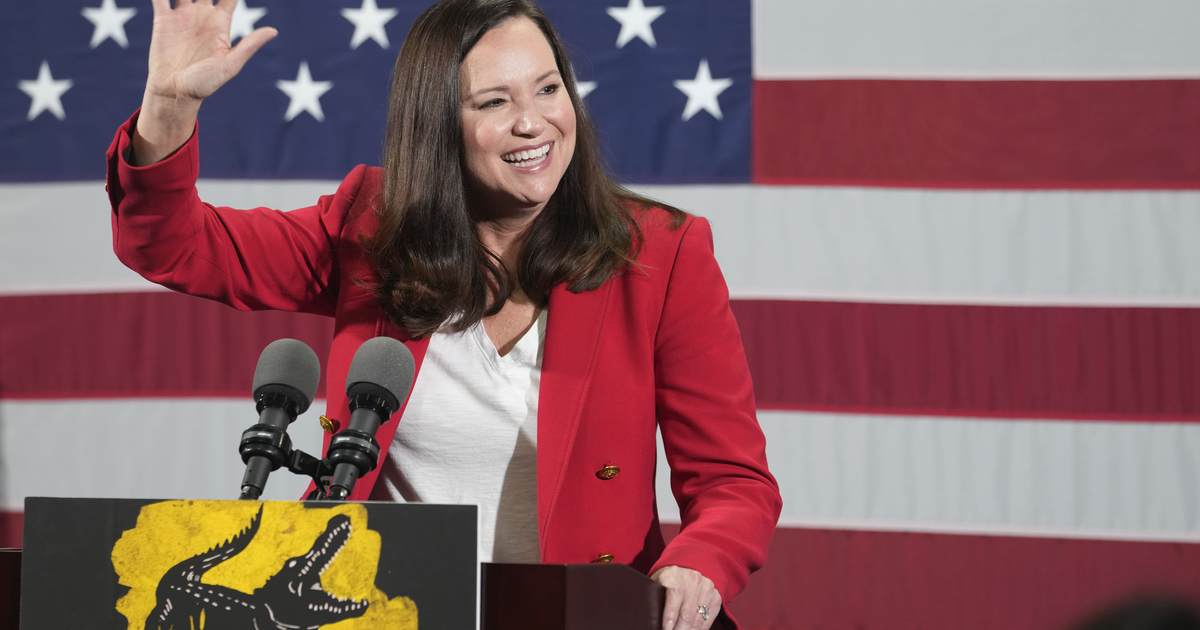
A clear Republican victory in Florida played out after a bruising Democratic primary where Angie Nixon routed Alex Vindman, and the fallout from her candidacy — and a string of rough interviews — only underscored why Ashley Moody is set to coast to reelection.
Ashley Moody cruised through the primary and appears positioned to hold the seat through November, a result Republicans should cheer. Angie Nixon demolished Alex Vindman in the Democratic primary by a decisive 56-44 margin, despite Vindman pouring millions into the race. That outcome tells you something about where Democratic voters in Florida are headed and how national anti-Trump figures are fading from influence.
Vindman’s role in the impeachment drama made him a familiar face to many, and voters seem done with the old resistance crowd. Nixon, a recent joiner of the Democratic Socialists of America and a longtime community organizer and union organizer, still managed to handily beat the establishment-backed candidate. Her line about knocking on doors and running a constituency program might sound grassroots, but in a state like Florida it looks like a bridge too far for Democrats trying to appeal to displaced Cubans, Venezuelans, and others who reject socialist labels.
JEN PSAKI: You have incredible background. We’ve just talked about in the block before this, where people are getting to know you. And running statewide in Florida is no easy task, as you know. So that’s why I’m asking these questions. One of the- you are a member of the Democratic Socialists. So a lot of candidates who have won in primaries who are members of the Democratic Socialists as well. You are also running, though, in a state Florida has, as you well know, and a lot of people watching know, a large population of people who fled countries like Cuba and Venezuela, who may have a very unfavorable view of the term “socialist”, and they may not know you yet. So how- what is your message to them, and how are you going to appeal to them? Because you need to win them over too.
ANGIE NIXON: Yeah, for sure. So I’m going to continue to- to work hard and go and knock on every door and have conversations with people, even if they may not agree with me ideologically. I want to be clear, I just recently joined the Democratic Socialists of America, but I’m also a union organizer. I’m a mother. I am a wife. I am a community organizer, a small business owner. And I’m going to have conversations with people about what it is that they care about. Too often, elected officials don’t come talk to people. That is why people have been getting so upset and off. I pride myself on having had one of the amazing constituency services programs here in our state, and I’m going to continue to do that when I become the next United States senator. I have an advisory committee that helps advise me on policies and legislation people want to see passed, as well as how they want me to vote, and I’m going to continue that advocacy and that constituency program and advisory committee when I become the next United States senator.
https://x.com/BonillaJL/status/2089912604781052285
PSAKI: Angie Nixon, congratulations. You ran a heck of a campaign. Thank you so much for joining me.
NIXON: Thank you for having me.
Those interview clips landed like lead balloons. Watching Nixon fumble through the socialist label and lean heavily on generic community-service lines made her vulnerable to a campaign that will paint her as out of step with Floridians who fled authoritarian regimes. For Republicans, that was a gift; for Democrats, it was a reminder that candidate vetting matters more than celebrity endorsements and spending sprees.
The Democratic Socialists of America got a bruise in a state that has tilted Republican for years, yet Nixon still seems convinced she can flip the script against Ashley Moody in November. National observers noted the cost of the DSA experiment for Democrats, and even critics of the GOP saw the move as politically tone-deaf for statewide politics in Florida. Party operatives will study this result and gripe about messaging and candidate selection for months.
Moody, of course, is in a comfortable position. She was appointed to finish Marco Rubio’s term and now has the organizational advantage and name recognition that comes with incumbency. The special election will simply formalize what the primary outcome already suggests: Florida voters are unlikely to hand this seat to a candidate tied to socialist branding and shaky national support. Republicans can point to this result as evidence that conservative messaging about economic freedom and border security still resonates here.
Democrats in Florida face a reckoning: keep nominating candidates who energize a narrow faction, or broaden the tent to reflect the state’s real electorate. For now, Ashley Moody heads into the final stretch with momentum, while the opposition scrambles to explain how a costly, high-profile challenge ended up consolidating Republican strength. That dynamic will shape not just this race but how both parties approach statewide contests moving forward.