El-Sayed’s remarks about rights stirred a lot of questions and pushback, and people on the right are rightly skeptical about what he really means by “rights.”
Democrats have steadily redefined rights to mean government-provided perks, and that change matters. When politicians swap liberty for entitlement, the balance of power shifts toward bureaucrats and away from citizens. That tension is the backdrop when Abdul El-Sayed talks about rights, and it explains why conservatives are looking closely at his words.
The left’s tendency is to label things like healthcare, housing, and education as rights that require big government to deliver. Meanwhile, longstanding constitutional protections like the First and Second Amendments face constant pressure. That’s not a neutral observation; it’s a warning about how quickly policy language can reshape legal reality.
So when El-Sayed tried to explain his views on rights, it left us wondering what exactly he meant. His phrasing focused on a universal defense of rights, but the speech left gaps about which rights he prioritizes and which he doesn’t. That selective defense tells you more than the soothing rhetoric does.
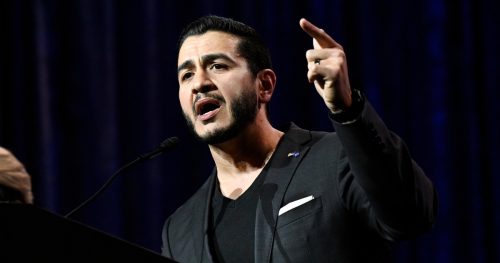
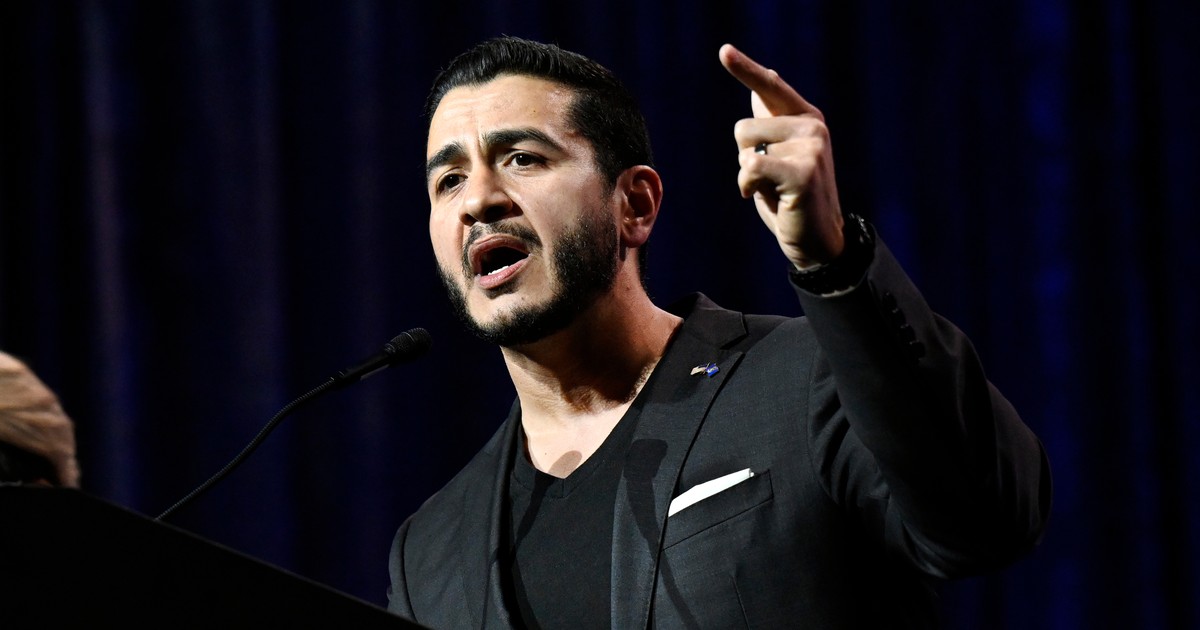
“Fighting for rights that you don’t use or may not understand is about fighting for rights generally,” El-Sayed said. “We’re being told that if we only give up, if we sacrifice the rights of some people, then the rest of us get to keep our rights, which we all know is some bulls**t.”
https://x.com/AbdulElSayed/status/2091545001171759151
“Because rights are rights are rights are rights. Whether you use a certain set of rights every day or have no clue why anybody would want to use them,” he continued, “the idea that government can come for your rights is itself an assault on all our rights. And so I also have certain rights that I use that most people in this room don’t use. I put my face on the ground 34 times a day. I value being able to walk into places and do that. I don’t need people to understand why. I just need them to agree that the government can’t tell me not to. Similarly, when it comes to trans rights, I don’t need people to understand why. I need people to make sure that the government can’t come in and tell people not to.”
“And so we’ve got to decide that when there is an assault on rights, all of us are going to show up for all of our rights, because the minute we assent to one group losing their rights we are assenting to everybody losing their rights,” El-Sayed added.
Those are strong-sounding sentences, but they also leave room for political gamesmanship. Defending a right in the abstract is easy; defending it when it collides with other priorities is harder. Conservatives want clarity: which rights get ironclad protection, and which are negotiable depending on prevailing political pressure?
There are obvious examples where Democrats talk tough about rights while backing policies that chip away at civil liberties. Censoring speech through partnerships with tech platforms, pushing narrow religious exemptions to the margins, or championing policies that punish dissent are not abstract concerns. They change how people navigate public life.
El-Sayed’s example of religious practice — kneeling or putting his face on the ground — was meant to humanize the argument, and it does highlight how personal some freedoms are. But invoking one kind of spiritual practice while glossing over competing rights, especially those of women or religious conservatives, feels like selective solidarity. When a politician claims universal defense yet sidelines certain groups, you should ask why.
That selectivity is why voters react the way they do. When someone insists we must protect “rights” while also supporting policies that expand government power over families, speech, and gun ownership, it raises red flags. The left’s broad definition of rights inevitably increases the state’s role in deciding who gets what and under what conditions.
Critics on the right are not arguing for cruelty or exclusion; they are arguing for clarity and consistency. If rights are truly universal, then every law that risks trampling on liberty should be scrutinized, not only those that affect favored constituencies. Until politicians like El-Sayed spell that out, their rhetoric remains convenient and ambiguous.
He doesn’t believe that’s a right. That sentence, short and blunt, nails the skepticism conservatives feel when lofty language falls short of concrete protections.
Women don’t have rights when it comes to Islam and the trans agenda. Leaving that out was by design.