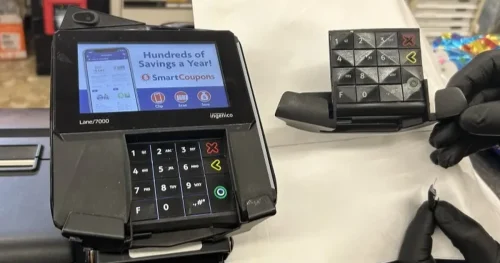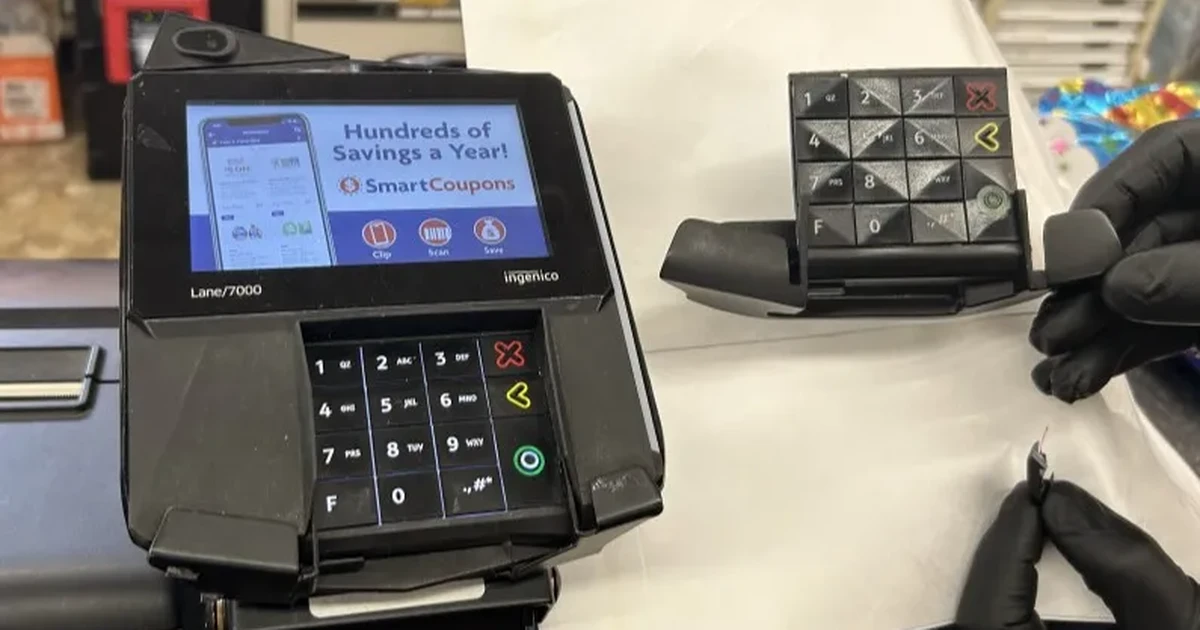
The U.S. Secret Service Miami Field Office led an outreach effort called Operation Heat Check with local police partners, inspecting hundreds of machines, removing 13 illegal skimming devices and preventing an estimated $13.5 million in potential fraud across the Miami area.
The Miami field office of the U.S. Secret Service worked with the Hialeah and Homestead police departments during Operation Heat Check, visiting hundreds of businesses to check for illegal skimming activity. Teams inspected point-of-sale terminals, gas pumps and ATMs citywide to identify vulnerabilities that criminal actors exploit. The coordinated effort focused on both enforcement and education to reduce immediate risk.
Across the operation, agents and officers visited 378 businesses and completed 2,842 inspections of card readers and payment terminals. Those checks led to the discovery and removal of 13 illegal skimming devices that could have been used to steal card data. Officials estimated the activity prevented about $13.5 million in possible fraud losses for consumers and institutions.
Alongside device removal, teams handed out educational materials and spoke directly with staff at affected businesses to raise awareness of common tampering indicators. The outreach aimed to teach employees how to spot loose or altered equipment and how to report suspicious findings quickly. That hands-on approach is designed to stop fraud before consumers are harmed.
“Miami is a global city, home to millions of residents and one of the most visited destinations in the United States. That visibility also makes South Florida an attractive target for criminal actors seeking to exploit hardworking consumers and businesses.
“Operation Heat Check demonstrates that, alongside our local partners, the U.S. Secret Service is committed to identifying and pursuing those who prey on South Florida communities. Our approach is proactive. Rather than waiting for consumers to become victims, we are working with businesses to help them recognize and report skimming devices before more people are impacted.
“Partnerships with law enforcement, businesses and our communities are essential to disrupting these crimes and protecting the public,” Special Agent in Charge of the U.S. Secret Service Miami Field Office Michael Townsend said.
Criminals install skimming devices on ATMs, gas pumps and merchant terminals to capture magnetic stripe or card data, then use that information to make fraudulent purchases or withdraw funds. Those operations often target busy tourist areas and retail corridors where devices can be installed quickly and go unnoticed. Victims can suffer serious financial and emotional harm, especially when the stolen cards are tied to essential benefits.
Skimming poses a particular threat to people who depend on Electronic Benefit Transfer cards for food and necessities, since organized groups can exploit those accounts quickly. Criminal rings move across jurisdictions and can hit multiple communities in a short time frame, complicating recovery and investigation efforts. Local partnerships with federal investigators help disrupt those networks and recover stolen data when possible.
The Secret Service continues these outreach operations as part of a broader, nationwide initiative to combat payment card skimming, EBT fraud and other financial crimes. Those efforts combine field inspections, public education and targeted enforcement to close gaps in the payment ecosystem. Working with local law enforcement allows federal agents to scale responses and share techniques that protect businesses and consumers.
In 2025, similar operations removed more than 400 illegal skimming devices, an activity officials say prevented an estimated $428 million in potential fraud losses. That prior year’s results illustrate how proactive sweeps and inspections can have significant financial impact. The recurring operations are intended to keep pressure on criminal groups that rely on skimming for quick payouts.
Industry estimates put the annual cost of skimming to financial institutions and consumers at more than $1 billion, highlighting the scale of the problem. Advances in card technology like EMV chips and contactless payments help, but skimmers and associated tactics adapt to exploit older hardware and human vulnerabilities. Continued vigilance by businesses and customers remains essential.
Consumers can take practical steps to lower their risk and spot tampering before it becomes a loss. Inspect card readers for loose or mismatched parts and avoid devices that look damaged or altered. Use contactless payments or chip transactions when possible to reduce exposure to magnetic stripe skimming.
- Inspect ATMs, point-of-sale terminals and other card readers for anything loose, crooked, damaged or scratched; do not use a reader if it looks unusual.
- Use tap-to-pay or chip-enabled cards whenever possible to limit magnetic stripe exposure and make data theft harder.
- At gas stations, run a debit card as credit to avoid entering a PIN when feasible; if you must enter a PIN, shield the keypad to block tiny cameras that might record entries.
- Be especially alert in high-traffic tourist areas and busy retail corridors, which can be popular targets for skimming devices and quick fraud schemes.
The Secret Service emphasizes that partnerships with local police, businesses and communities are vital to disrupting skimming operations and protecting consumers. Proactive inspections and education reduce the window of opportunity for criminals and help businesses safeguard their customers. Continued coordination across agencies remains the most effective way to reduce fraud risks in public payment systems.