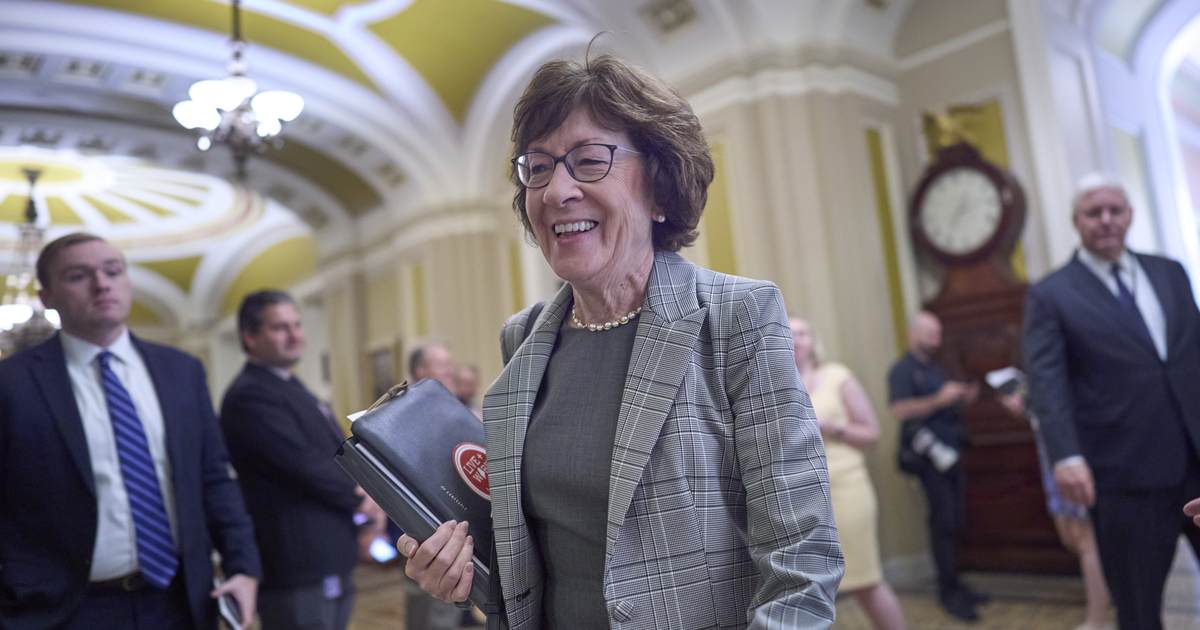
Senators struck a temporary funding deal to keep the government open through December 11, and lawmakers are now negotiating the path forward to avoid a shutdown this fall.
Senate Appropriations Committee Chair Susan Collins announced a bipartisan agreement to fund the government temporarily via a Continuing Resolution through December 11. The move buys time but sets a firm deadline for lawmakers to finish appropriations work or risk a shutdown. Details focus on preserving current funding levels while addressing key program needs and national security priorities.
The agreement must still clear both chambers of Congress and land on President Donald Trump’s desk to take effect. Collins summed up the package bluntly: “This CR is straightforward,” Collins said. “It continues current government funding levels until December 11th and includes necessary adjustments for programs like the Special Supplemental Nutrition Program for Women, Infants, and Children (WIC), vital national security programs, including shipbuilding across multiple vessels, and the Disaster Relief Fund,” she continued, adding that it “also avoids any poison pills.”
Democrats in the Senate signaled support for portions of the proposal while highlighting differences with earlier House plans. Committee Vice Chair Patty Murray wrote that the “bill includes important extensions and language that House Republicans’ CR did not, and it rejects Trump’s frivolous war spending wish list.” She also stressed: “Importantly, we closed the loophole in House Republicans’ CR that would have allowed the Trump administration to transfer funding provided for other programs to Border Patrol, which desperately needs reform, not more money.”
On the House side, Speaker Mike Johnson touted a Republican-backed CR last month, but Senate leaders emphasized the need to work across the aisle. Senate Majority Leader John Thune advised collaboration in public comments, and a spokesman pushed the same line on social media: “House and Senate Rs are on the same page on govt funding – on length, desire for clean CR, & motivation to complete our work before the deadline. It’s simply a matter of adding the anomalies that the WH has requested. Bipartisan effort underway to accomplish all of these things,” Thune spokesman Ryan Wrasse posted to X on July 22.
Procedurally, a clean CR that avoids partisan riders is the fastest route to keeping federal operations running into December. That approach appeals to many Republicans who want to prevent brinkmanship and keep focus on core functions like defense and disaster response. At the same time, disagreements remain on the House floor about exactly which adjustments are permissible and whether certain policy changes should be attached to funding.
The White House has been clear about its bottom line, and administration officials pushed that message publicly. “The White House’s stance is that the government needs to be funded. This president and Republicans on Capitol Hill from both chambers, as you just mentioned, the House and the Senate Republicans want to keep the government open,” White House Press Secretary Karoline Leavitt told Townhall on July 23. That stance puts pressure on both chambers to move quickly and avoid another shutdown fight.
Timing is the clear risk. Lawmakers face a hard deadline: the government will shut down on Sept. 30 if a spending plan does not land on the president’s desk in time. That timeline forces compressed negotiations in August and September, and floor calendars in both chambers will determine how much of the year’s appropriations can realistically get done before the CR expires in December.
Recent history shows how disruptive funding standoffs can be. There was a 43-day government shutdown last fall, followed by a months-long Department of Homeland Security funding gap this spring that hampered operations and complicated planning for agencies. Those experiences have pushed some Republican leaders to prioritize stability and avoid repeating the same mistakes that hurt service members, border security, and essential programs.
Republican lawmakers face a choice between insisting on policy changes and securing a clean, short-term fix that preserves key priorities like shipbuilding, WIC, and disaster relief. For many conservatives, the emphasis is on preventing chaos at the border while holding the line on responsible spending and national security readiness. Negotiators will need to balance those priorities with pragmatic compromises to keep the government running.
With days to go and a path forward mapped through a bipartisan CR, the immediate focus shifts to vote counts and the House response. Lawmakers will be watching how Senate leaders shepherd the bill and whether House Republicans line up behind a compromise that avoids poison pills and keeps federal operations funded into December.
https://x.com/RWrasse/status/2079925603675889981