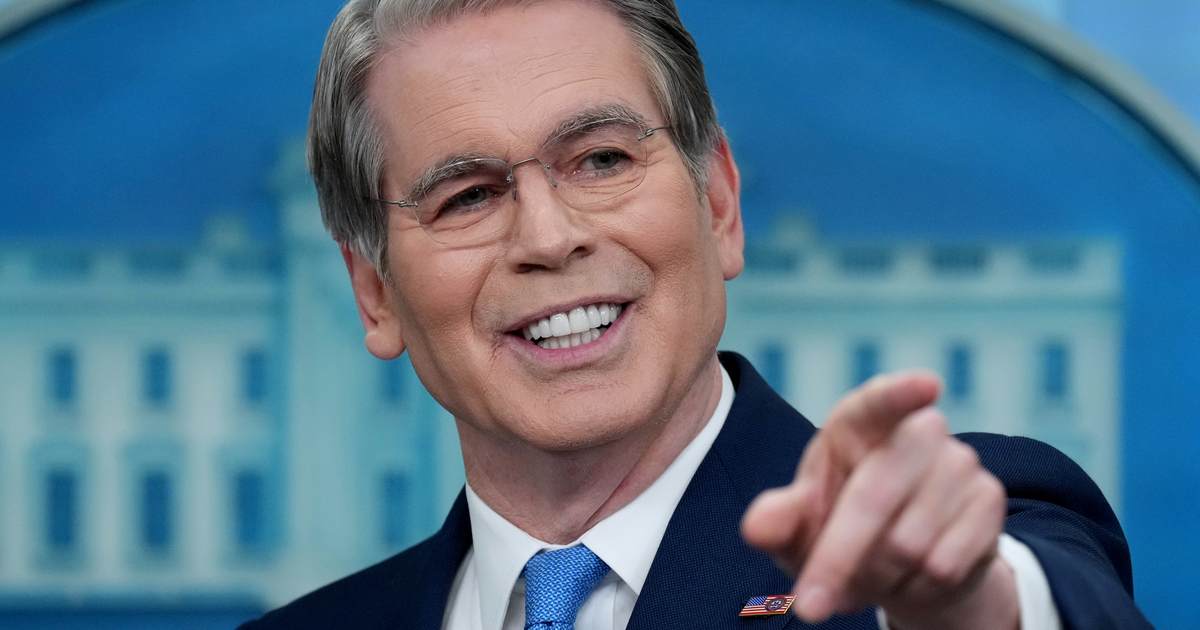
CNBC hosts Joe Kernen and Becky Quick highlighted a clever media move by Treasury Secretary Scott Bessent, noting he openly leaves visible notes so reporters will ask about them, a tactic they agreed is effective and emblematic of a team that knows how to push back on biased coverage.
CNBC’s Joe Kernen and Becky Quick called out a neat piece of theater from Treasury Secretary Scott Bessent that cuts through the usual media noise. They described a simple, deliberate tactic: he writes things on a notepad and positions it so cameras and reporters will notice. The move is straightforward, public, and deliberately designed to steer the conversation where he wants it to go. It’s a small action with an outsized impact when the press is eager to pounce.
What made the exchange on live television stand out was how plainly they framed the technique as intentional and effective, not accidental or awkward. Kernen and Quick both pointed to an incident where reporters literally asked about a note because he had placed it where cameras could see. This is media management in plain sight—no spin, no leaks, just a physical cue that draws attention and forces questions. For conservatives tired of one-sided narratives, that kind of directness is refreshing.
KERNEN: “He leaves notes on his notepad.”
https://x.com/overton_news/status/2084267798138699927
QUICK: “We all have to-do lists. Some of us have to-do lists that are a little longer.”
KERNEN: “No, but he’s on the record. A couple of weeks ago, or months ago, somebody said, ‘You wrote this on your notepad. Why did you do that?’”
“And he said, ‘So that all the reporters behind me would see it, and then they would ask me questions about it.’”
QUICK: “That’s interesting!”
KERNEN: “I don’t know if he did it this time.”
QUICK: “Well, it works…”
“I look back and think of Treasury Secretaries in the past…there are some Treasury Secretaries I would not feel comfortable if they were intervening in the markets like this.”
“Bessent is a special case, I think.”
The hosts’ take framed Bessent as deliberate and savvy rather than theatrical for its own sake, and that’s the point: media engagement is a skill, and some officials are better at it than others. When bureaucracy meets a hostile press corps, the ability to control narrative moments matters. Bessent’s method is low-risk and high-reward, since it lets him decide which topics surface and keeps the press reaction within a predictable lane. For anyone running communications in Washington, that kind of discipline is an advantage.
This episode also highlights a larger pattern within the current administration: intentionally staffing people who will push back against biased coverage and who understand how media cycles work. Those officials don’t cower when cameras flash; they use those moments to shape questions and answer frames. That posture is especially important when markets, policy, and national security are on the line and when sloppy reporting can create real harm. Smart, assertive officials protect the public interest by refusing to be passive targets.
It’s worth noting why tactics like Bessent’s resonate with conservative audiences: the mainstream media too often operates from a presumption rather than curiosity, and they prioritize scandal over clarity. When a public official forces the agenda by giving the press something concrete to ask about, it undercuts lazy narratives and puts responsibility back on reporters to do the hard work. That’s not manipulation; it’s accountability in reverse—making the press explain what they mean and why it matters.
Beyond the optics, the practical outcome matters when market interventions are involved and when Treasury decisions can move billions overnight. Officials who can handle tough questioning calmly and who create predictable windows for discussion reduce uncertainty. Reporters get the scoop they chase, officials get to set the record straight, and the public benefits from clearer, more focused exchanges. That kind of discipline keeps conversations about policy away from rumor and toward substance.
This isn’t a call for showmanship as an end in itself, but for tactical smarts that preserve control and clarity in a combative media environment. In an era where the press often prefers controversy, having people who can steer coverage without bowing to it is vital. The Bessent example shows how small, intentional moves win big when the goal is to inform rather than inflame.