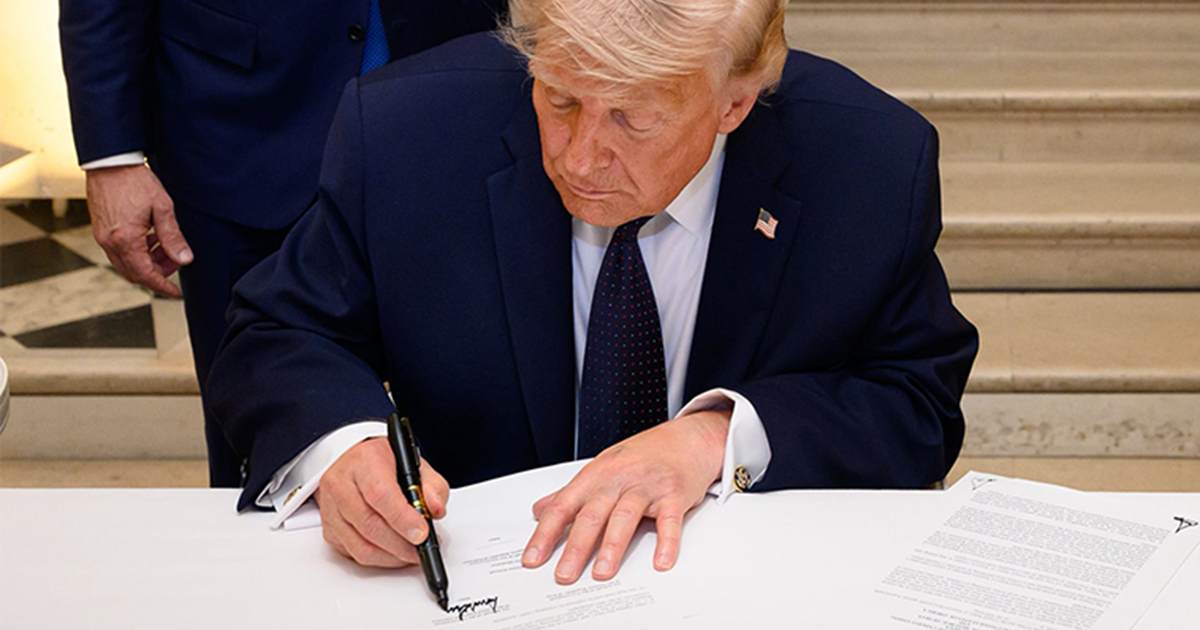
President Trump has told negotiators to press Iran for financial accountability, linking compensation demands to U.S. service members, victims of Iranian violence, and a broader economic squeeze that includes frozen crypto and other sanctions.
President Trump has ordered American negotiators to push Iran for compensation tied to the recent conflict and to past attacks that harmed U.S. personnel and allies. He framed this as a direct response to Iranian officials seeking reparations, and he wants the matter added “to put this firmly into any, and all, future” conversations. This shifts talks from abstract diplomacy to concrete financial consequences.
The president made clear the money should benefit both military families and civilians who suffered under the Iranian regime. He insisted that payments must reach the relatives of American soldiers as well as “families of the hundreds of thousands of innocent protestors that Iran has killed over the last 50 years” in a Truth Social post. That language underscores a tougher negotiation posture tied to accountability.
Trump rejected framing the question as one-sided, pointing out Tehran asked for its own compensation after recent hostilities. “I see that Representatives of the Islamic Republic of Iran are asking for compensation for the damage done to them during the last five month Military Conflict (started because, THEY WILL NOT HAVE A NUCLEAR WEAPON), even though it was never mentioned in any of our negotiations or meetings!” he wrote. His reply was to demand parity: Tehran must answer for lives lost and injuries caused by its actions.
He then spelled out the scope of what he wants recovered, naming attacks and campaigns that have hit Americans and others over decades. “But it is an interesting idea because now I am likewise demanding compensation from Iran, for all of the people that they have killed and gravely wounded with their roadside bombs and many conflicts, for which they are famous, as led initially by General Soleimani, including the families of those killed on the USS Cole, and thousands of others killed in combat,” he further added.
Over the weekend Trump told reporters the U.S. is tempering public moves while building leverage behind the scenes. He described the administration’s posture as “low-keying it” and said the talks are “only semi-negotiating with them” as Iran faces internal economic strain. He summed up the approach bluntly: “It will work out. It always works out. It’s like a chess game,” he added, according to the outlet.
A Memorandum of Understanding between Washington and Tehran was signed in June, but the ceasefire unraveled after Iran began striking cargo ships in the Strait of Hormuz. Those strikes triggered a days-long U.S. military response and stepped-up operations designed to curb Iranian aggression and derail its nuclear ambitions. The collapse of the truce shows how fragile any agreement remains until accountability and enforcement are secured.
Financial tools are now central to the U.S. response, part of a campaign layered under the label Operation Economic Fury. That effort has targeted Iran’s use of crypto and shadow finance, including moves to freeze assets and disrupt the networks that fund the regime. Officials have signaled aggressive follow-through, and reports this year noted roughly 1b in Iranian crypto was seized as part of those efforts.
Secretary of the Treasury Scott Bessent put the strategy in plain terms, arguing the regime’s hidden finance exposes it to pressure. “The Iranian regime’s reliance on digital assets and shadow banking networks is further evidence that Economic Fury is working,” he said. “We will continue to increase the economic pressure. Whether in dollars, rials, or crypto, Treasury will hunt down and dismantle the illicit financial networks that keep the regime afloat.”
Taken together, the policy mixes battlefield deterrence, targeted military responses, and economic isolation to force Iran into a corner. The demand for compensation is meant to translate moral and political claims into recoverable leverage, forcing Tehran to weigh financial pain against further escalation. For those who back a firm stance, Putin-style brinksmanship won’t be enough; concrete financial consequences are the next step.