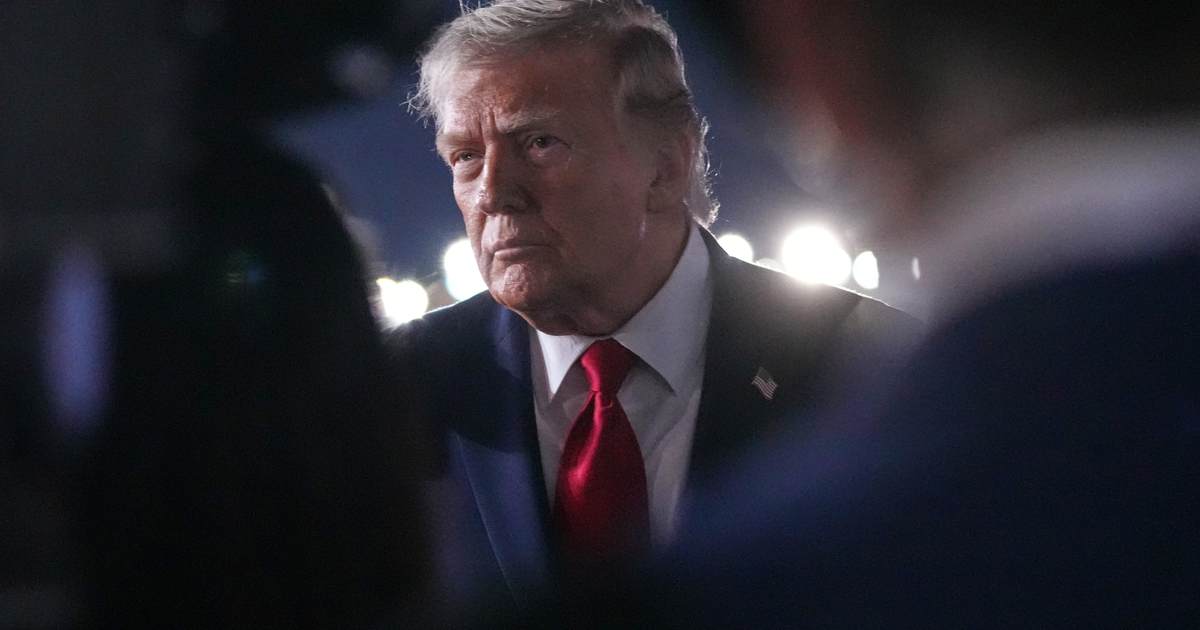
President Trump defends AI data centers as essential to American competitiveness, economic growth, and local prosperity while pushing back against efforts to block them.
There’s a growing push to stop AI data centers, and that fight has real consequences beyond zoning debates. Opponents raise concerns about water use, power demand, and environmental impact, but those claims often get stretched or misrepresented. From a practical standpoint, these facilities are the backbone of tomorrow’s tech economy and deserve clear-eyed scrutiny, not knee-jerk bans.
President Trump has stepped into the debate advocating for communities that welcome data centers, and he frames the issue as a national priority. His view is straightforward: these facilities help the U.S. compete with rivals and bring concrete local benefits like stronger tax bases and higher property values. That’s a Republican take that cuts through the ideological fog and focuses on outcomes.
Local officials and residents should weigh the real, measurable gains data centers can deliver. In many places, these facilities translate into new revenue streams that relieve pressure on local taxpayers and stabilize budgets. When planned and regulated properly, they can coexist with strong community services and property values.
If the United States wants to lead in artificial intelligence, the necessary grid, plants, and transmission capacity must be built here, not overseas. The decision will shape who dominates the AI economy for decades. The risk of losing that edge isn’t abstract; it’s about companies and jobs choosing other countries where infrastructure and policy are more welcoming.
“Well, a big part of it is China. Look, whoever wins the AI race is going to win AI,” the president explained. “It’s bigger than the Internet. It’s bigger than maybe anything that has happened for many, you know, for literally hundreds of years. It is the biggest thing. And it’s mostly good. And the communities that are giving a hard time now, a lot of people think that’s China-oriented, you know, that China doesn’t want this, spending a lot of money on promoting don’t, you know, not build because we’re beating China in AI.”
https://x.com/RedWavePress/status/2084853909135208743
We’re really doing a great job. I approve. It was my idea, actually, for every plant that’s built, they build their own electricity. So this way, and they’re building unbelievably modernized, you know, much better than anything we have had in the country. You know, these are super geniuses. They know about building plants and they’re building their own power. We need tremendous power for that. China is building massive amounts of power. We are too. We’re building more than China, because every one of those buildings that you see going up is building their own. So they’re not taking to the community and the excess power that they have, which is substantial. They’re selling them that back at a very low cost to the grid. So we’re getting more and more electric.
“I think any community that turns down AI is making a big mistake because your taxes are going to go way down,” Trump added. “If you own a house, it’s going to be more valuable. It’s a it’s a tremendous thing. And I see it. It’s almost like there’s a there’s a campaign against, you know, data centers. But data centers, if you look at the stats, everything’s good around them. Now, the thing they should look at is blue states and blue cities, cities run by Democrats, because that’s really the threat to the country, because they’re a disaster. But when you turn down data centers and within this country, when they get turned down, there’s other communities that want them desperately.”
Look at Loudoun County, Virginia, where hundreds of facilities already cluster and generate a substantial share of local revenue. That concentration shows how embracing infrastructure can reshape local finances without wrecking neighborhoods or utilities. The Loudoun example is often cited as proof that thoughtful deployment can deliver broad benefits without the catastrophic trade-offs opponents predict.
New technology always makes people uneasy, and that’s healthy to an extent. Reasonable oversight and smart permitting protect communities while allowing progress. But fear-driven moratoria hand the advantage to other countries and delay the economic payoff American towns could use right now.
There’s a national security angle that doesn’t get enough attention: whoever controls the AI stack will hold strategic leverage. That isn’t partisan, it’s practical. A pro-growth policy that secures infrastructure here keeps critical capabilities under American oversight and aligned with U.S. interests.
Municipal leaders face a choice: chase myths and push away investment, or set sensible rules that invite development with safeguards. Markets respond to certainty, and welcoming infrastructure attracts not just data centers but related services, technology jobs, and secondary investment. Communities that get it tend to see rising home values and stronger local economies.
Critics point to environmental concerns and resource use, which merit honest answers and engineering solutions. Modern data centers invest heavily in efficiency, new cooling approaches, and power management that reduce impacts compared with older facilities. Blanket bans ignore innovation and the opportunity to regulate toward better outcomes.
The political fight over data centers will keep unfolding, but the core question is simple and consequential: will America build the future here or let others do it for us? For those who care about jobs, national power, and local prosperity, the answer should be clear. The debate should focus on practical policy, not symbolic hostility.