The Justice Department reached a settlement with OpenAI after finding the company steered certain permanent-hire roles away from U.S. workers, imposing penalties and new hiring rules to address the discrimination.
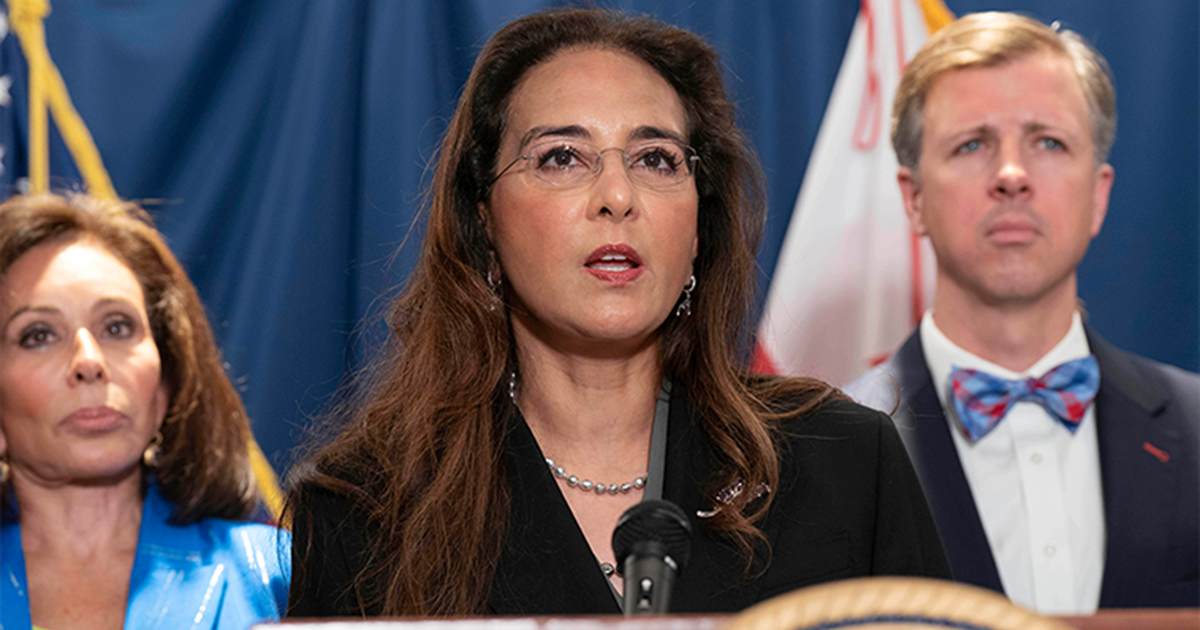
Assistant Attorney General Harmeet K. Dhillon of the Justice Department’s Civil Rights Division announced the settlement with OpenAI, calling out discriminatory hiring practices that shut out American applicants. The department said the resolution forces the company to change recruitment habits and compensate harmed workers. The move is part of a series of enforcement actions aimed at ensuring U.S. workers get fair access to high-paying technology jobs.
The Justice Department’s Civil Rights Division announced today that it has secured a combined $3,200,000 settlement with OpenAI OpCo LLC, a San Francisco, California-based artificial intelligence company, and its subsidiary, Statsig Inc., a Bellevue, Washington-based software development company (together, OpenAI). The settlement addresses allegations that both companies violated the Immigration and Nationality Act (INA) by discriminating against U.S. workers and instead preferred workers with temporary employment visas, when the companies hired and recruited during the Permanent Labor Certification (PERM) process.
“It is illegal to discriminate against U.S. workers by preferring temporary visa holders for jobs,” said Assistant Attorney General Harmeet K. Dhillon of the Justice Department’s Civil Rights Division. “This substantial settlement ensures that OpenAI redresses harm and changes its recruitment practices so that U.S. workers receive a fair opportunity for highly sought-after technology positions.”
The Department’s investigation found that OpenAI did not advertise positions it sought to fill through the PERM program on its external job website, even though its standard practice was to do so with other jobs. OpenAI also required applicants to mail paper applications for positions advertised as part of PERM recruitment, even though the company permitted electronic applications for other positions. In addition, OpenAI took other steps to discourage U.S. workers from applying, such as advertising positions on the radio late at night. While there were fewer than ten PERM positions at issue, the resolution amount reflects the harm to U.S. workers when they are shut out of applying for lucrative technology jobs.
Under the terms of the settlement, OpenAI will pay $1,200,000 in civil penalties to the United States and establish a back-pay fund of $2,000,000 to compensate victims of the companies’ discriminatory practices. In addition, OpenAI will give U.S. workers fair opportunities to apply for jobs as part of PERM recruitment by posting the positions on its public career website and accepting electronic applications. The agreement also requires OpenAI to train its personnel on the INA’s anti-discrimination requirements, revise its employment policies, and be subject to departmental monitoring and reporting requirements, to prevent future discrimination.
The Justice Department framed this settlement as corrective and preventive. Beyond the financial components, the enforceable requirements aim to make the PERM recruitment process transparent and consistent with how the company handles other openings. Training, policy revisions, and oversight are meant to stop informal practices that had the effect of favoring temporary visa holders over qualified U.S. candidates.
Under President Donald Trump’s second term, the Justice Department has taken action against several companies accused of favoring temporary visa holders over U.S. workers in hiring. In April 2026 the department resolved a separate matter with Compunnel Software Group for $313,420 after recruiters allegedly posted ads that excluded U.S. citizens and permanent residents while preferring temporary visa holders and denied a Python developer position to a U.S. citizen.
“It’s illegal to discourage U.S. workers from applying for American jobs,” Assistant Attorney General Harmeet K. Dhillon said. “Employers cannot exclude U.S. workers from the labor force by discriminating against them based on their citizenship status. Employers must design recruitment, training, and compliance practices to ensure adherence to federal civil rights laws.”
The department’s recent enforcement actions show a continued focus on the immigration and labor provisions of federal civil rights law as they intersect with tech hiring. Companies that use PERM or other hiring routes now face clearer expectations: post publicly, accept the same application channels for PERM roles as for other jobs, and document recruitment steps to demonstrate fair treatment. Those changes are intended to ensure U.S. applicants are not inadvertently or deliberately sidelined in the race for top technical talent.
https://x.com/AAGDhillon/status/2084670528493625495