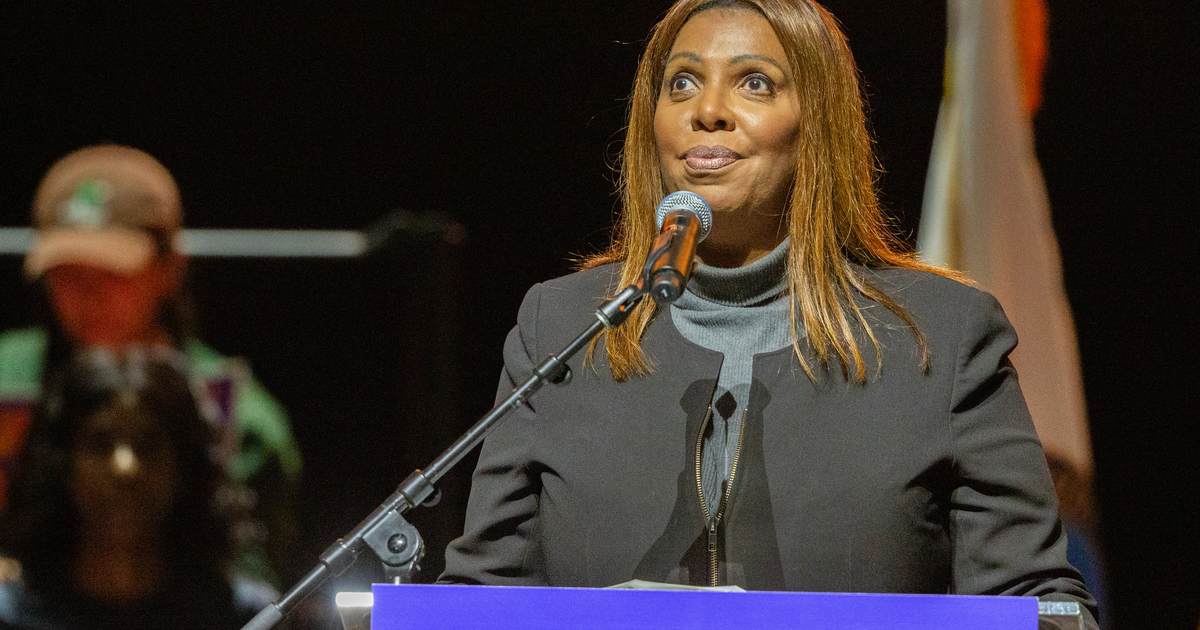
A former Brooklyn prosecutor says he was ordered from inside Letitia James’ office to dig up wrongdoing on allies of former President Trump, and his claims, including a since-deleted email sent to staff, have sparked questions about political targeting inside the Attorney General’s office.
Daniel Wiesenfeld, who moved from the Brooklyn prosecutor’s office to the Investor Protection Bureau, alleges he received an instruction to pursue crimes tied to Trump allies without a credible basis. His account centers on orders from supervisors to investigate specific people and organizations tied to conservative politics. That claim landed with reverberations because it suggests internal directives may have been politically motivated rather than purely legal.
Wiesenfeld says he circulated an email to about 2,000 staffers that accused leadership of picking targets for political reasons before the message was deleted. He reported being told to concentrate on certain names and platforms rather than following traditional evidence-based decisions. The email, he says, was meant to call out what he viewed as a pattern of improper priorities inside the bureau.
Daniel Wiesenfeld, a former Brooklyn prosecutor who now works in James’ Investor Protection Bureau, said his boss instructed him “to find and pursue crimes” committed by Trump allies, according to a since-deleted email obtained by the Times-Union.
https://x.com/libsoftiktok/status/2094226382389702898
Wiesenfeld alleged in his email on Friday that Bureau Chief Shamiso Maswoswe specifically directed him to target “Trump himself, Truth Social, Hewlett Packard (DOJ approved merger)… without having a credible reason for targeting the organizations and individuals,” the outlet reported.
The feds recently approved a $14 billion merger between Hewlett-Packard and Juniper Networks.
The specifics Wiesenfeld cited are blunt and politically loaded, pointing to figures and platforms tied to the former president. He named Bureau Chief Shamiso Maswoswe by name and described explicit direction to pursue investigations focused on those targets. Allegations like that raise immediate concerns about mixing legal resources with political ends.
In his internal note, Wiesenfeld wrote, “If you believe Trump is using the [DOJ] attorneys to prosecute his enemies and further his political interests, you should find it equally troubling that Tish is doing exactly the same thing.” Those are sharp words aimed squarely at the office’s leadership and mirror broader debates about justice and fairness in high-profile prosecutions. The comparison is meant to underscore a perceived double standard.
He went further, reportedly telling colleagues, “I ask that you not serve as Tish’s personal attorneys by targeting her political enemies. Instead, I hope you choose to prosecute crimes and find the individuals accountable rather than targeting individuals and then finding crimes.” That plea frames his objection as a call for traditional prosecutorial standards. It is also a direct appeal to the integrity of the staff charged with upholding the law.
After the email surfaced, Wiesenfeld was reportedly placed on administrative leave, a typical step when internal disputes escalate or when an office needs to sort out personnel and procedural questions. Administrative leave does not resolve claims on either side, but it does pause the person’s active role while the office examines the situation. Observers will watch how the bureau documents its decision-making and whether any formal inquiry follows.
The controversy also touches on a larger story about how enforcement priorities get set inside state Attorney General offices, where political pressure and policy goals can sometimes collide. Critics argue that choosing targets because of their politics erodes trust, while defenders may say aggressive enforcement of consumer and investor protections sometimes overlaps with politically sensitive actors. That tension is familiar in big, high-profile jurisdictions.
Public reaction combines predictable partisan outrage with calls for clear process and independence in prosecutions. Some will see Wiesenfeld’s move as whistleblowing that exposes bias, while others will question motive and timing. Either way, the episode amplifies demands for transparent standards for how offices decide who to investigate.
To be useful, any follow-up should focus on documents and memos that show how cases were assigned and why certain targets were prioritized. Facts, timelines, and internal communications will matter far more than slogans from either side. A clear paper trail can help determine whether this was improper political targeting or a contested judgment about enforcement priorities.
At stake is public confidence in the rule of law, especially when investigations involve politically consequential figures and companies. If office leadership crossed a line, there should be accountability that follows proper investigatory channels rather than partisan theater. If, instead, the scrutiny was rooted in legitimate legal concerns, that evidence should be presented clearly to rebut the allegations.
No one should want prosecutors picking cases based on politics, and any serious claims deserve a thorough review that preserves legal norms and public trust. The coming weeks will likely see calls for records and for the office to clarify its internal procedures so similar disputes can be avoided. Meanwhile, this episode will keep the spotlight on how justice is administered in high-stakes, politically charged cases.