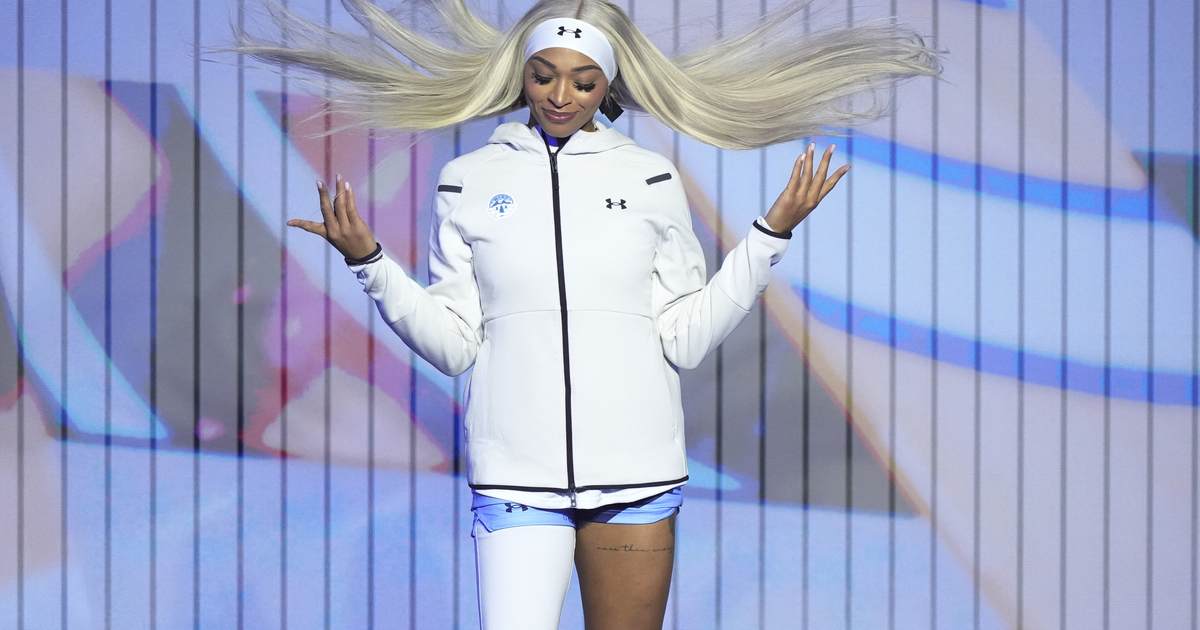
Chicago Sky guard Dijonai Carrington returned to social media after an on-court incident that drew national attention, defending a controversial “white privilege” remark following a hard foul on Indiana Fever’s Sophie Cunningham during the August 8 game that the Fever won 90-86.
She’s back on Twitter and she’s not saying sorry. After a hard foul on Sophie Cunningham in the August 8 matchup that ended 90-86, Dijonai Carrington fired off a post invoking the phrase “white privilege,” and the reaction was immediate and intense.
The play itself drew complaints from fans and officials, and Cunningham later downplayed any racial angle, saying the foul had nothing to do with race and that she had been ejected for a similar play a year earlier. Still, the social media fallout pushed the incident far beyond a single game and put the WNBA’s handling of on-court discipline under a bright, uncomfortable light.
Florida Attorney General James Uthmeier weighed in and warned that, if players acted that way in his state, charges could follow. That statement raised eyebrows since, as of 2026, the WNBA has no franchise in Florida, but the point landed: public officials were paying attention and the optics were bad for the league.
https://x.com/Outkick/status/2086542283390763272
Rather than address Cunningham’s explanation or the sequence of events on the floor, Carrington took aim at commentary from others, including former NFL player Emmanuel Acho, who pushed back and argued the foul couldn’t be labeled “white privilege.” That public back-and-forth shifted the conversation from rules and discipline to motive and tone.
Behind the scenes, players and fans debated whether the reaction was about intent or the appearance of bias, and whether league discipline had been consistent. Cunningham herself acknowledged she had committed a similar foul before and was ejected, which suggests the league has precedent for strict penalties.
Instead of calming things, Carrington’s further posts — including a later tweet on 8/23 — made some observers read them as a setup for another confrontation. The timing and wording of social media messages can turn a bad play into a brewing personal rivalry, and that’s exactly where this felt like it was headed.
I’ve never once claimed that the assessment of the foul was white privilege (that was your assumption). Try exercising your critical thinking skills, I know you studied psych. Furthermore, I’m the LAST thing from ignorant or asinine when it comes to speaking on “white privilege”, do ya research on that one. I actually went to school, one of the top universities might I add, to educate myself on this exact subject. I would never use that term as a rhetorical weapon knowing the historical and social weight it holds without having the proper evidence to substantiate it.
That quoted defense reads like someone trying to thread a tight needle: insisting on education and context while simultaneously taking offense. The problem is tone and timing; long defenses are easy to read as defensive, and defensive posture rarely calms an already heated crowd.
For fans who want clarity, the real questions remain procedural: will the league review the play consistently, will precedent be applied evenly, and can players keep social media from amplifying every judgment call into a spectacle? Right now the answers look messy, and messy invites politicians and pundits into the frame.
The potential rematch dynamic only adds fuel. If Cunningham and Carrington meet again, their history will be in the air, and every contact will be viewed through the lens of the August 8 incident and the tweets that followed. That’s not healthy for the sport and it’s not what fans tuned in to see.
Public figures piling on, official warnings from state actors, and charged social-media posts have turned a hard foul into something much bigger than the play itself. The WNBA has to decide whether it wants to let these flashes of controversy define its season or to rein in the drama with clear, decisive action.
Last Note: Dear God