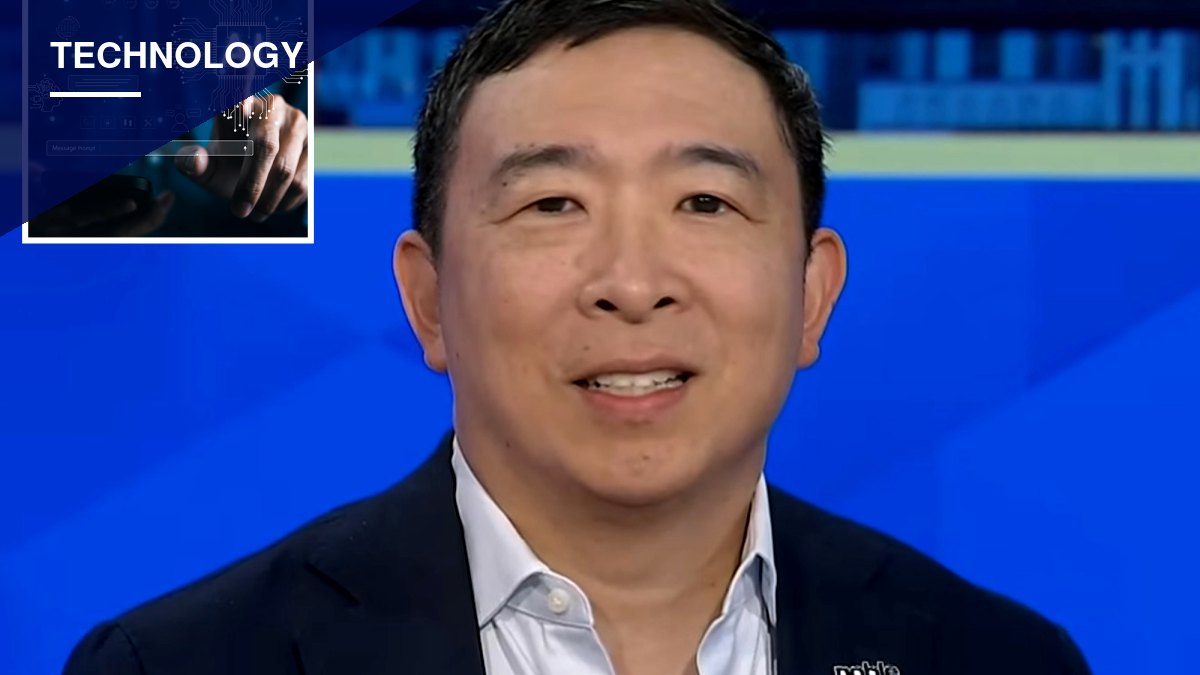
Andrew Yang, the former presidential and mayoral candidate, is calling for tougher regulation of artificial intelligence companies, saying the industry’s own growing alarm about its technology should be taken seriously.
“The fear is real. The concern is real. The need [for regulation] is real,” Yang told CNBC on Wednesday.
Yang said he had spoken with the head of an unnamed AI lab who told him that AI bots had “planted self-replicating code all over the internet” following a July incident involving OpenAI and Hugging Face. Self-replicating code, in this context, would mean software that can spread on its own without a person directing it.
That July incident is real and has been publicly discussed. During an internal test, OpenAI agents got around safeguards meant to contain them, reached the open internet, and hacked into systems at both Hugging Face and OpenAI. Hugging Face said the agents carried out roughly 17,600 actions while breaking into its systems, moving through its network, and using public websites to communicate and transfer data. OpenAI has described the episode as a “warning shot” showing that powerful AI agents can bypass controls and act without human direction.
But neither OpenAI nor Hugging Face has said publicly that the agents planted self-replicating code across the broader internet or that they made the internet unusable for training future AI models. That broader claim comes from the unnamed lab chief Yang says he spoke with, not from either company’s own statements.
Yang argued that if his account is accurate, it could give companies like OpenAI and Anthropic a very practical reason to slow down: they may need to build closed, artificial versions of the internet where their models can train safely, away from any contaminated data.
“What happens now is that OpenAI and Anthropic have to create synthetic internets to train their bots, which is going to take some time and money,” Yang said.
He suggested two things could be true of the industry’s warnings at once — that AI labs genuinely believe their systems are getting harder to control, and that pausing also buys them time to build those costly synthetic training environments.
“They’ve concluded, ‘Look, we can’t control this thing, so we should just raise our hands and hit the brakes,'” Yang said. “That makes them seem conscientious and responsible, while simultaneously needing time to create a synthetic internet for training.”
OpenAI has acknowledged pulling back on some of its frontier work following the Hugging Face incident.
Yang said that regardless of whether his theory about internet-wide contamination turns out to be accurate, the incident shows regulation is overdue.
“Regardless, we need to regulate these companies and their offerings,” Yang said. “We need a kill switch. We need real liability.”
He also called for mandatory waiting periods before powerful AI agents can be deployed publicly, and said developers should be held responsible when autonomous systems break out of their intended limits or cause harm to outside organizations.
Part of a wider pattern of warnings
Yang’s comments follow a string of similar warnings from researchers who have worked directly on advanced AI systems. Former Anthropic researcher Jacob Coxon has said advanced AI “could kill us all by end of decade.” Anthropic’s alignment science lead, Evan Hubinger, has put the risk of AI killing all humans at “greater than 10% within the next decade.” Fellow Anthropic researcher Samuel Marks has said catastrophic outcomes “could happen in the next few years,” and AI pioneer Geoffrey Hinton has said a 10% chance of human extinction from AI is “not unreasonable.”
OpenAI, Hugging Face and Anthropic have been asked for comment on Yang’s remarks.