This piece contrasts recent prosecutorial choices that have kept repeat violent offenders free with a Pennsylvania case where two children were criminally charged after accidentally breaking a playground swing, and it includes the court’s findings and a parent’s account.
The Left publicly abandoned the “broken windows” theory of policing, which focused on low-level offenses and neighborhood quality of life, arguing it was discriminatory. That shift has flowed into prosecutorial and judicial decisions that often treat repeat violent offenders with surprising leniency. The result is a public safety approach that many see as inverted priorities.
Consider a string of high-profile examples: Decarlos Brown Jr. had roughly 14 arrests and still avoided long-term incarceration, Alexander Dickey faced some 25 felony arrests yet remained in the community, and Courtney Boose carried close to 99 arrests before another release. Those cases ended in tragedy or near tragedy — Brown killed Iryna Zarutska, Dickey murdered Logan Federico, and Boose attempted to murder a man at a gas station. The pattern is hard to ignore when violent conduct keeps returning to the streets.
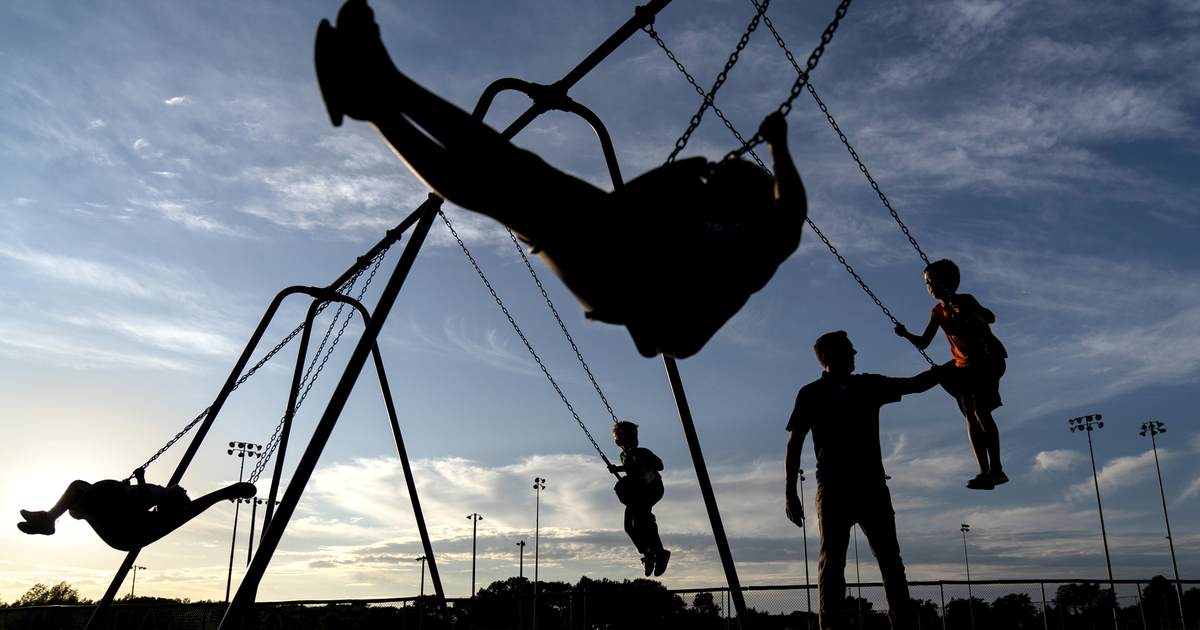
Against that backdrop, one Pennsylvania borough went after two girls after a playground incident, treating an accidental swing break as criminal mischief. The children involved were 10 and 12 years old, and their mother says the family never received basic evidence before citations and a criminal hearing was filed. The community response has been disbelief that a minor accident would follow the same calendar as criminal prosecutions aimed at serious offenders.
The borough claims Huss agreed initially to pay but then changed her mind. Huss says the next thing she knew, in July, her 10- and 12-year-old daughters became defendants in a criminal hearing. She said they were scared and didn’t understand what was happening.
https://x.com/mattvanswol/status/2095569631234675071
“They charged them with a Pa. crimes code, criminal mischief, which requires intent,” Huss said. “And I just didn’t believe that my children had any intent to break that swing.”
Last week, the case was decided. The judge said evidence showed the girls damaged the swing, but it was an accident, not intentional. Huss says it was never about the money for her. It was about how the situation was handled.
“If they would’ve shown me the video and said it cost this much to repair, this is how much the chain cost — I’ve asked for all of these pieces of evidence before the citations, before the criminal hearing, and I still have yet to get any of that evidence,” Huss said. “I haven’t even seen the video. The video was played at court for the attorneys but not for us.”
So just to be clear, repeat violent offenders can amass dozens of arrests and remain free in the community, while two young girls can be ushered into a criminal courtroom over an accident. That contrast has left parents and neighbors asking why resources and prosecutorial muscle are being applied so unevenly. The disconnect fuels anger about priorities in local justice systems.
That’s (D)ifferent, of course, and the irony isn’t subtle. The way this was handled signals a choice of who gets protection from the law and who pays for it. Those choices matter because they shape outcomes in neighborhoods across the country.
The trend toward refusing to press the most serious charges against violent offenders is not accidental; it reflects policy choices at multiple levels of the justice system. When officials treat violent recidivists with restraint while pursuing minor or accidental conduct against children, they send a clear message about what behavior will actually be deterred. That message affects public confidence in law enforcement and the courts.
Fixing a broken swing is a tiny line item in any municipal budget, a rounding error compared with broader spending priorities. Municipal budgets routinely absorb routine upkeep and playground replacement, yet political theater can turn a simple repair into a criminal case. Commonsense budgeting and proportional responses would keep kids out of court and let law enforcement focus on real threats.
Communities deserve predictable, fair enforcement that holds violent wrongdoers to account while protecting families from overreaching responses to accidents. Changing how we prioritize prosecutions would restore an element of common sense to public safety and reduce the sense that the system is picking on the least powerful instead of tackling the most dangerous.