A Palestinian-Italian journalist drew fire after using a racial slur toward House Minority Leader Hakeem Jeffries over his support for Israel, sparking reactions across social platforms and raising questions about partisan double standards and media accountability.
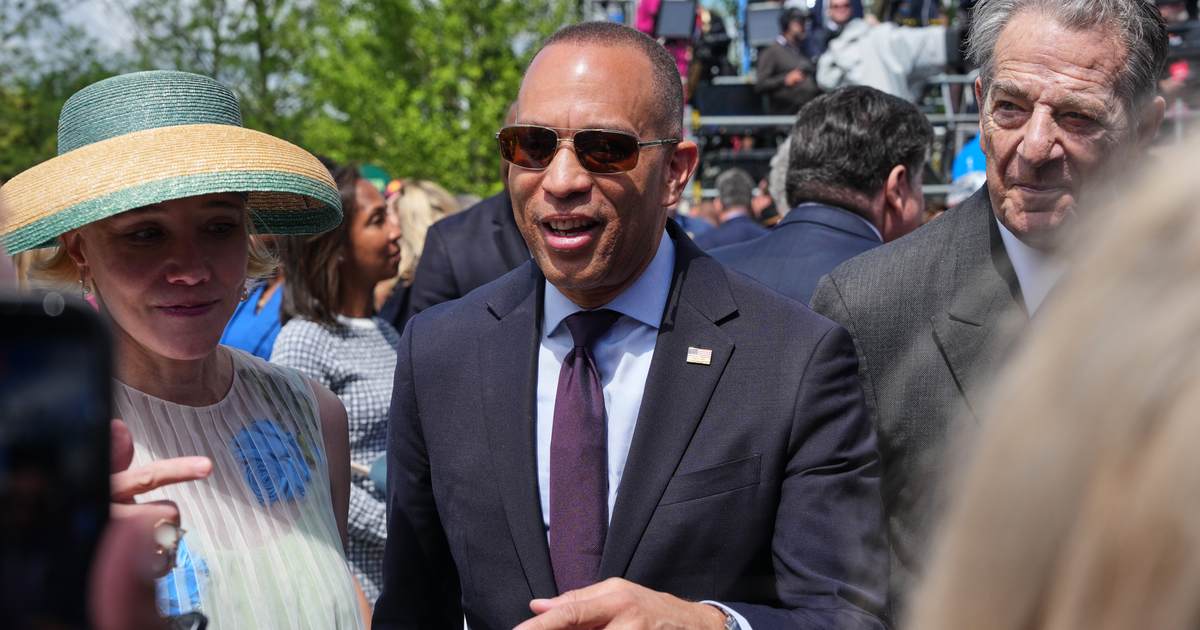
A Palestinian-Italian reporter publicly attacked House Minority Leader Hakeem Jeffries (NY-8) during a podcast appearance, calling him out for backing Israel. The criticism centered on claims that Jeffries supports the Israeli government because of influence from the American Israel Public Affairs Committee, known as AIPAC. That allegation set the tone for a wider, heated exchange about Israel, Gaza, and political loyalties. The voice on the podcast was Rula Jebreal, a progressive journalist who has built a reputation as a fierce critic of Israel.
On Wajahat Ali’s show, Jebreal escalated her remarks into a personal attack that crossed a line. She singled out Jeffries by name and linked his heritage to a supposed betrayal of principles, wrapping her criticism in language that many listeners found shocking. The moment went viral because it mixed foreign policy accusations with a phrase long recognized as a racial slur against Black people. The exact wording she used was striking for how raw and careless it sounded coming from a prominent critic of Israeli policy.
“And what does the established Democrat Party, Hakeem Jeffries, by the name, his name is Hakeem,” Jebreal said. “Hakeem in Arabic is an Arabic name, which means healer. He’s not a healer, he’s a divider. He is a bought and paid by AIPAC monkey, with all due respect. And I don’t mean it in a racist way. He is just basically an errand boy and we’re done and tired.”
Those comments drew immediate blowback online, with social posts from both sides criticizing the language and the implication behind it. Several X users on both sides blasted Jebreal over her racist comments. The exchange became less about the substance of the Israel debate and more about whether the left is willing to police its own.
Jebreal has long been an outspoken critic of Israeli actions in Gaza and has publicly accused the Israeli military of committing atrocities against Palestinians. She has characterized Gaza in stark terms, arguing that civilian casualties and legal failures demand international pressure. Those positions are part of her public record and explain why she is often invited onto shows to argue the Palestinian perspective. Her rhetoric has always been fierce, but this incident pushed into territory that many see as gratuitously insulting and racially charged.
https://x.com/MrShermichael/status/2095930270843113908
She also said in a past interview, “I think the genocide in Gaza will not end in Gaza or stop in Gaza,” she said. That line has circulated widely and is frequently cited by critics who argue that her language inflames passions rather than advancing tangible policy solutions. Whether you agree or not, those words and the recent slur show a pattern of using extreme terms to drive an argument home. For many observers, that pattern undermines the credibility of the critique because it substitutes provocation for persuasive evidence.
Anyone listening closely could hear the attempt to soften the blow immediately after the slur, which only highlighted how aware she likely was of the term’s history. Jebreal tried to frame the remark as nonracial, yet the use of “monkey” as an insult has a long and ugly racial history when directed at Black people. That makes the defense ring hollow for critics who see it as either ignorance or deliberate provocation. In a media environment where words matter, public figures get judged harshly for language that crosses established lines.
The political fallout is predictable and revealing. If a conservative had used the same term on a left-leaning platform, Democrats and allies in mainstream media would be quick to condemn and demand consequences. But because the speaker is a progressive, many Democrats have been conspicuously quiet, and the usual chorus of outrage has been muted. That inconsistency fuels the argument that media and party elites apply standards selectively, protecting their allies while weaponizing norms against opponents.
Accountability matters across the board, and that includes holding critics to the same standard whether they sit on the left or the right. Public debate about Israel and Gaza is important and often painful, but it does not require slurs or personal degradation. When leaders or influential voices resort to derogatory language, it distracts from policy arguments and lets powerful interests off the hook. Voters and readers deserve better from journalists and pundits on every side of the aisle.