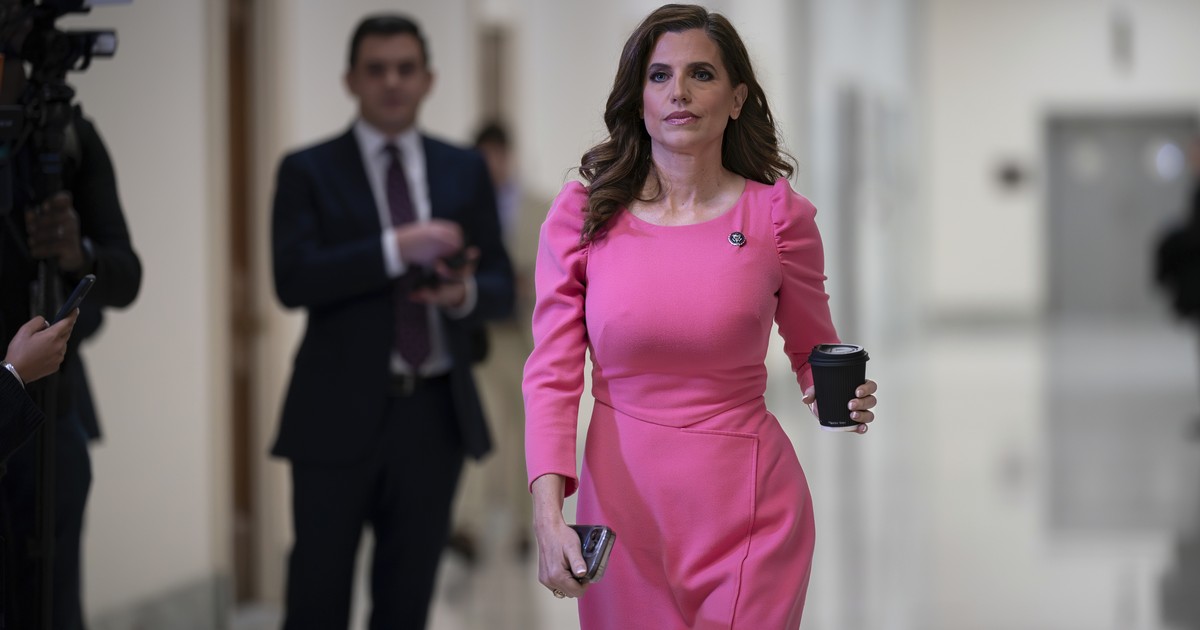
Representative Nancy Mace spoke bluntly at a TMZ interview about what she sees as racial double standards in the uproar around Lindsay Clancy’s case, arguing that the support from liberal white women would not extend to a Black defendant. Her comments touch on mental health, violent crime, and cultural signals; the Clancy jury has struggled to reach a verdict and the presiding judge gave a “dynamite charge” to push deliberations forward. The exchange has become a flashpoint for debate over race, gender and how the left responds to high-profile criminal cases.
Nancy Mace took a firm stance when a TMZ reporter asked about the women rallying behind Lindsay Clancy during the trial. She framed the backlash as less about mercy or mental-health advocacy and more about selective sympathy, and she did not mince words about the crime at the center of the controversy.
I mean, she murdered her children. And look, I mean, if you murder someone out of cold blood like that, yeah, you’re crazy. You’re insane.
You’re mental. But that doesn’t mean everybody who’s insane who murders should walk free. …She’s going to walk free because of this pink mob.
Basically, they’re just, you know, it’s their F you to whatever. I think it says a lot about our culture. And it’s a sad state.
The reporter pressed the racial angle directly: “Do you think if she was black, it would be a different situation?” That question set up Mace to connect the public reaction to wider patterns she sees in liberal activism and public outrage.
Mace answered plainly: “Oh, nobody would be supporting her if she were black.” She elaborated by pointing to past cases and patterns in media and activist responses when race is different, insisting that the reaction around Clancy is not purely about mental health or mercy.
On the same topic she added, “Liberal white women aren’t going to support a black woman who murdered her kids. There was one in New York that did and just got away with it, who murdered her children in New York.” That reference underscored her point that support is conditional and uneven across racial lines.
The exchange continued with the reporter asking, “Why wouldn’t a liberal white woman support a Black woman,” and Mace answering in stark terms: “I think the left is inherently racist.” The interview moved quickly from legal nuance to a broad cultural critique that resonates with many on the right who see selective outrage as a pattern.
When asked whether right‑wing women would react differently, Mace said, “I don’t think that right-wing women are racist,” and described how a similar case involving a Black defendant did not attract the same nationwide support. Her comments were aimed squarely at the cultural coalition that has rallied for Clancy and the optics that coalition presents.
Meanwhile, the trial itself has struggled toward resolution, with jury deliberations stalled multiple times and jurors reporting an impasse. The judge pressed the panel with what was called a “dynamite charge,” urging jurors to make an honest effort to reach a unanimous verdict; if they remain deadlocked, a mistrial could follow.
From a Republican perspective, the controversy is less about isolated statements and more about a recurring pattern: when liberal elites mobilize, their choices about who deserves sympathy often follow political optics as much as principle. That viewpoint argues that racial calculus and performative compassion shape who gets a public pass and who does not.
This tension between sympathy for mental‑health struggles and accountability for violent acts is at the core of the debate. Mace’s comments force conservatives and independents to weigh cultural signals, the facts of the case, and whether public support is applied consistently across race and party lines.
The Clancy case remains a live legal fight and a public test of how politics, gender and race intersect in the court of public opinion. Whatever the jury ultimately decides, the conversation Mace started will keep shaping how conservatives talk about selective outrage and the standards we expect from the people who lead public protests and media narratives.
https://x.com/TMZ/status/2095266508339364309