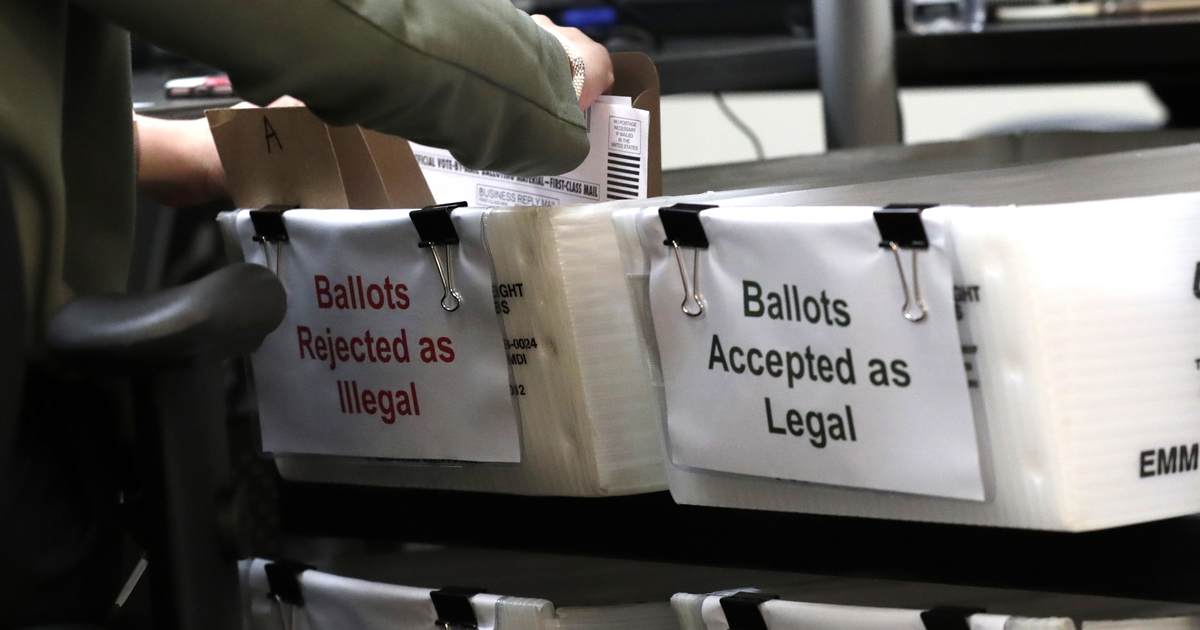
Federal orders, court fights, and a whistleblower claim push the USPS and mail voting into the middle of another election controversy, with officials warning of a rushed system and lawmakers trading blame.
The fight over mail-in balloting has kicked back into high gear after the Trump administration moved to require voter-roll verification before ballots go out, and courts responded with a patchwork of rulings. The Supreme Court let key parts of that order stand while a lower court blocked other elements, creating a legal grey area that set the stage for new alarm bells. At the center now is a claim from inside the Postal Service that implementation is ongoing even where judges have intervened.
A Postal Service whistleblower says the agency has been pushing a “secretive, rushed” plan to build a new digital system that would centralize and control mail voting, and that the effort risks Election Day chaos. That complaint was shared with the office of Senator Richard Blumenthal and made public through advocates representing the whistleblower. Officials warned the system was due to be finished by September 1, a timetable critics say is reckless given the legal uncertainty.
A U.S. Postal Service official has alleged that the agency is moving forward with a “secretive, rushed” effort to implement President Trump’s order exerting federal control over mail voting, despite a court order blocking those plans.
The official filed a whistle-blower report, published on Tuesday morning by the office of Senator Richard Blumenthal, Democrat of Connecticut, asserting that the “risky and haphazard” implementation of Mr. Trump’s order could lead to a “catastrophic failure” in the mail ballot system ahead of this year’s midterm elections. The report said that the agency had planned to complete the new digital system overseeing mail ballots by Sept. 1.
https://x.com/scotus_wire/status/2094501561728700659
“Potentially millions of American voters may not receive their mail-in ballot this election cycle in a timely manner, or at all,” the official said in the report, which was prepared with the assistance of Whistleblower Aid, a nonprofit group that represents people seeking to expose potential lawbreaking.
Speaking to reporters by phone on Monday, Mr. Blumenthal said of the report that “the main takeaway for me is that the Postal Service has designed a system to disenfranchise millions of Americans. One-third of all Americans cast their ballots by mail, and the U.S.P.S. puts all of their votes at risk.”
A Postal Service official declined to comment on the record.
The whistleblower’s language is stark: “risky and haphazard,” “catastrophic failure,” and potentially millions left without timely ballots. From a conservative perspective, those are red flags about both process and competence, and they feed a deeper concern that a rushed federal system could override state procedures. When federal orders clash with court rulings, households and local election officials are the ones most likely to suffer the fallout.
Republicans arguing for tighter controls on mail ballots point to two basic reforms: require strict verification of voter rolls before ballots are printed and mailed, and limit mail voting to verified American citizens. Those sound like common-sense steps to ensure ballots reach the right people and reduce the chance of administrative errors becoming election-day disasters. The whistleblower claim underscores how dangerous a half-built, centrally managed system could be if it goes live while litigation is unresolved.
There are concrete examples that fuel the urgency. States like New Jersey and North Carolina have disclosed problems tying licensed drivers to voter files, and local registries have found inaccuracies that required cleanup. When agencies give noncitizens access to driver’s licenses or IDs without airtight safeguards, those records can cascade into voter rolls unless states perform routine audits. That is precisely why many conservatives press for automatic, recurring verification of registrations.
Beyond technical fixes, the political angle matters. Conservatives see a pattern where federal initiatives expand authority over elections at the same time as state systems face data quality problems, raising the chance that new federal controls could compound rather than solve issues. If a national system gets rolled out without iron-clad checks, the consequences could range from delayed ballots to voters effectively being disenfranchised by administrative failure.
Lawmakers, courts, and postal officials now face a tight calendar and a narrow margin for error. A hearing on a longer injunction is scheduled, and both legal teams and election officials will have to sort how to proceed under competing orders. For voters and election administrators, the core demand remains straightforward: verify the rolls, limit who can vote by mail to citizens, and don’t rush a digital overhaul that courts have put on hold.