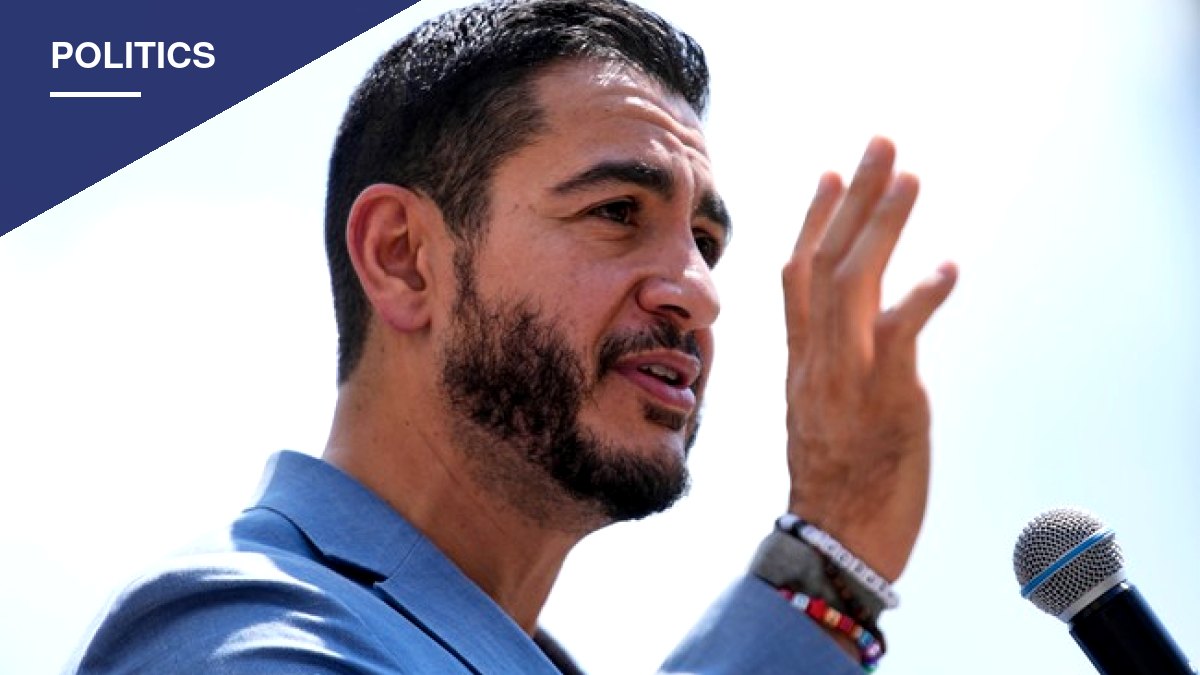
Michigan Democratic Senate candidate Abdul El-Sayed is facing criticism after a video clip of him discussing wealth and the economy circulated online this week.
In the clip, El-Sayed said, “I’d rather have an economy that makes 1,000 millionaires than one billionaire.” He went on to argue that most billionaires do not use their wealth to start new businesses, but instead put it into the stock market, which he described as “just investing in other billionaires.” He said the “top seven stocks were making money” while everyone else was “dipping.”
El-Sayed has used similar arguments to support proposals to tax what he calls billionaires’ “excess money” and redirect it toward schools, infrastructure, healthcare and childcare.
The comments drew a response from CNN commentator and Salem Media host Scott Jennings, who posted on social media that the ratio of millionaires to billionaires in the United States is roughly 23,600 to 1, citing figures showing close to 24 million millionaires compared with fewer than 1,000 billionaires nationwide.
Critics of El-Sayed’s remarks have also pointed to broader economic data. U.S. real median household income reached a record $87,460 in 2025, and the official poverty rate fell to a historic low of 10.2 percent, according to figures cited in the pushback against his comments.
El-Sayed’s critics have also noted that he has accepted campaign donations from billionaires, including donors based outside Michigan, such as in California, while campaigning on reducing the influence of money in politics.
The exchange echoes similar debates involving New York City’s socialist mayor, Zohran Mamdani, who has argued that government should guarantee residents a “dignified life” by meeting their basic needs — though El-Sayed’s stated position does not go as far as Mamdani’s.
Supporters of El-Sayed’s critics point to examples such as Elon Musk’s SpaceX, which when taken public in its initial stock offering created an estimated 4,400 millionaires, including electricians, janitors and cafeteria workers, as evidence that billionaire-led enterprises can broadly distribute wealth.
El-Sayed has reportedly acknowledged that his proposed tax on billionaires’ wealth — often cited at around 5 percent — would not fully fund the programs he has proposed, suggesting that additional revenue would need to come from other taxpayers as well.