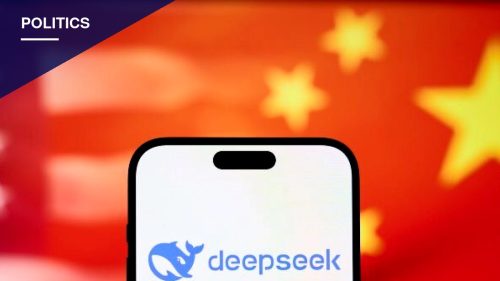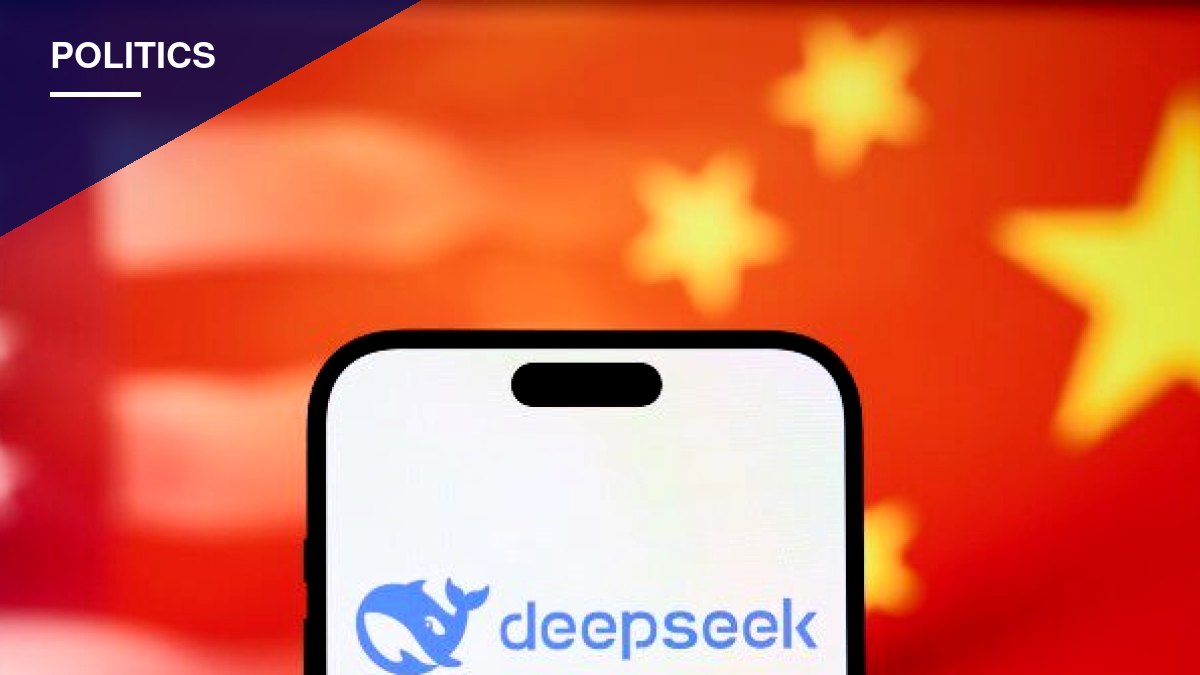
The Department of Homeland Security has confirmed that federal civilian agencies have been ordered to remove the Chinese artificial intelligence platform DeepSeek from government computer systems, citing national security concerns.
According to CNBC, the directive was issued July 24 but was not made public until this week. It instructs agencies to strip out any DeepSeek-related technology, including third-party products or services built using DeepSeek’s AI models. Agencies are also prohibited from purchasing DeepSeek products going forward.
The order covers a wide range of federal departments, including Treasury, State and Justice. It does not apply to the Department of Defense.
DHS said DeepSeek’s models and related technology “present multiple threat vectors.” The department’s central concern is that sensitive government data handled by the platform could end up accessible to China, potentially giving Chinese intelligence services insight into American citizens and government programs. DHS also cited open-source research identifying several critical security vulnerabilities in DeepSeek’s iOS app.
Agencies that need more time to comply, or that want an exception to the order, can submit a written justification to DHS within 60 days, including requests for a compliance delay.
Earlier warnings
Concerns about DeepSeek’s reach predate this week’s disclosure. In March, Breitbart News social media director Wynton Hall, author of the book “Code Red: The Left, the Right, China, and the Race to Control AI,” argued publicly that federal and state employees should be barred from using the platform because of its intelligence-gathering capabilities.
“The safest way to stop CCP Trojan horses is to not let them enter the gates to begin with,” Hall told the Daily Mail at the time, while also noting uncertainty over whether a separate U.S. deal involving TikTok would resolve the security risks that had prompted scrutiny of that platform.
China’s response
China’s foreign ministry has objected to the new ban. Responding to an inquiry from Reuters, spokesperson Mao Ning said China “consistently opposes the over-generalization of national security as well as the politicization of science, technology and trade issues,” and added that Beijing would act to protect the rights and interests of its companies.