The head of the defense and technology contractor Leidos says his company’s partnership with the Cybersecurity and Infrastructure Security Agency (CISA) is central to protecting American water systems, power grids, and other critical infrastructure from a rising number of cyber threats, including those tied to China and artificial intelligence.
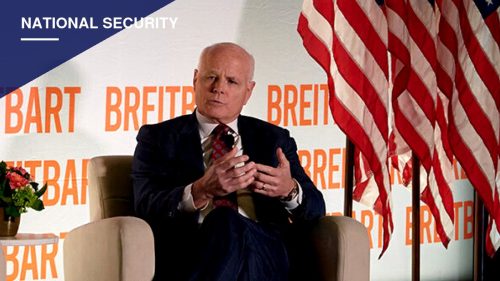
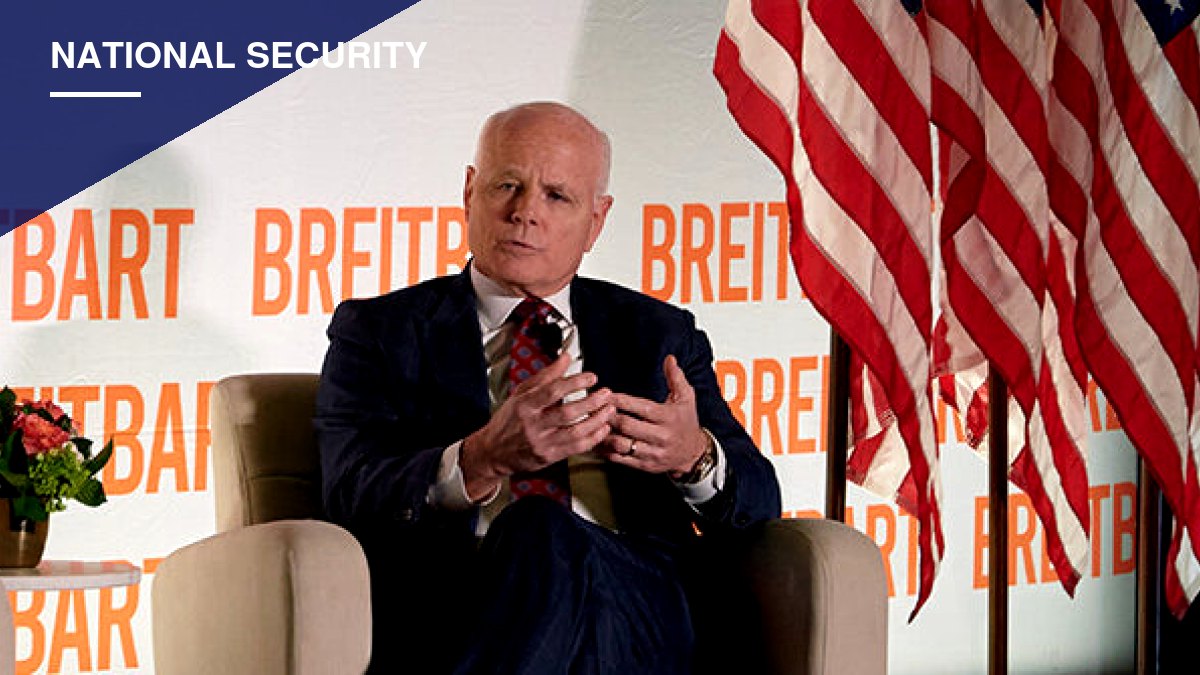
Leidos CEO Tom Bell made the comments during a discussion with Breitbart News Washington Bureau Chief Matthew Boyle on border security, public safety, and American sovereignty. Bell credited President Trump with creating CISA during his first term, calling it a response to an early recognition of cybersecurity threats facing the country’s critical infrastructure.
“Little tip of the hat: President Trump in Trump 45 created CISA, and it was genius to do so because he recognized early that there was a significant cybersecurity threat to our nation’s critical infrastructure, and he formed an organization to do something about it,” Bell said.
Bell said the agency’s purpose was to pull together the best understanding of emerging threats and then act on that information. “What was the something? It was to bring together the best understanding of what the threats were, and then to operationalize how we counter those threats,” he said.
According to Bell, the danger to U.S. infrastructure has grown over the roughly six years since CISA’s creation not because attackers have become more skilled, but because more of them now have the capability to pose a credible threat.
“It’s not that the threats have become more adroit; it’s that there are now more players who can be credible threat actors. So it’s not so much that the critical infrastructure of the United States is under a more sophisticated attack per se. It’s that more attackers can be attacking that surface space.”
Bell pointed to Secretary Markwayne Mullin as focused on rebuilding CISA into a coalition that can work across a fragmented landscape of private utilities and local governments. “Our nation’s critical infrastructure is a very federated space with private utilities,” Bell said. “Every municipality has their own water and wastewater treatment plant. All of those are vulnerable.”
Bell argued that raising security standards across that patchwork of infrastructure providers is necessary for basic daily life to continue uninterrupted.
“We need to raise the standards for all of those critical infrastructure sites, so that every American can, on any given morning, turn on the water and take a shower, or at night turn on the heater to stay warm. It’s that simple, and it’s going to require a federal approach to raising the standards so that all those infrastructure companies can invest appropriately in the solutions that are credible, and we bring to them.”
Bell said understanding threats requires involvement in what he called “full spectrum cyber,” covering both offensive and defensive operations. He said Leidos’s work with the U.S. intelligence community gives the company that broader view.
“In order to defend your critical infrastructure, you have to have a very keen understanding of what the vulnerabilities are that the bad actors will be trying to exploit,” Bell said, adding that Leidos is positioned to help CISA, the Department of Homeland Security, and energy and utility companies nationwide secure their systems against cyberattacks.