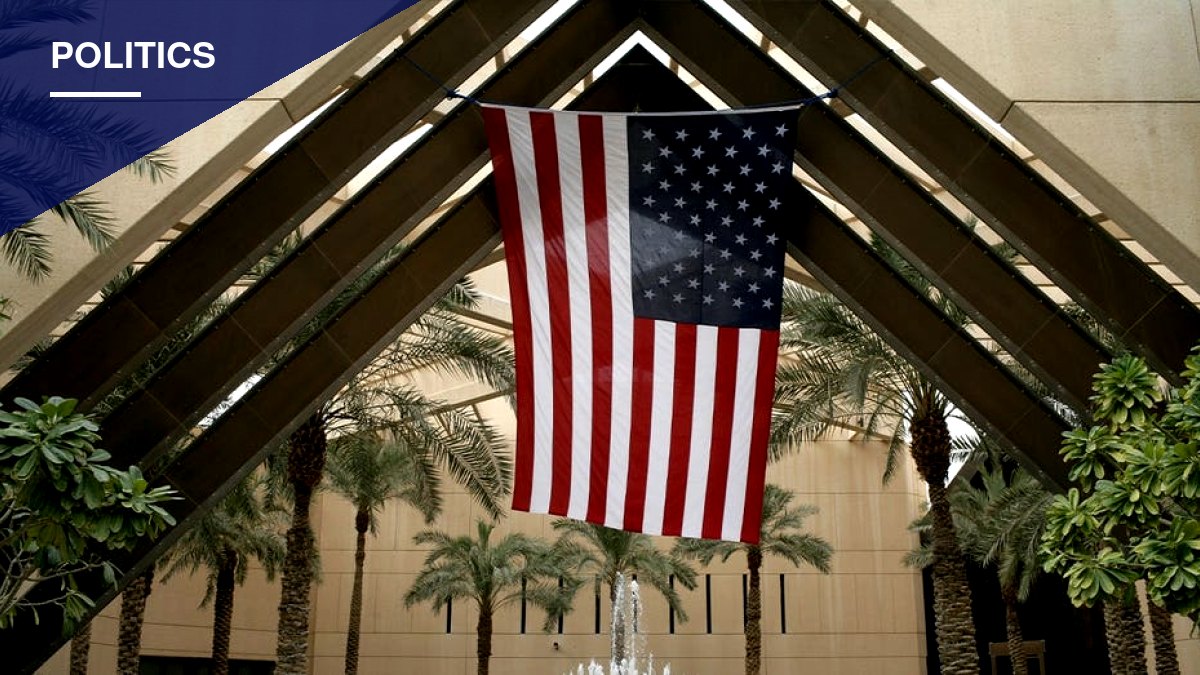
The U.S. State Department has ordered non-emergency government employees and their families to leave Saudi Arabia as Houthi missile and drone attacks against the kingdom escalate, with President Donald Trump now weighing direct military action against the Iran-backed group.
State Department spokesperson Tommy Pigott confirmed the mandatory departure order Wednesday, clarifying it applies only to Saudi Arabia and not more broadly across the Gulf.
“The U.S. Department of State issued an ordered departure for non-emergency U.S. government employees and their family members in Saudi Arabia only,” Pigott said.
Pigott pointed to a sharp rise in Houthi hostility toward the kingdom. “Iranian-supported Houthis have increasingly engaged in hostilities against Saudi Arabia, including attacks on civilian airports and other critical infrastructure resulting in civilian casualties and severe travel disruptions,” he said.
According to the Armed Conflict Location & Event Data Project, Houthi strikes and attempted strikes on Saudi Arabia more than doubled in a single week this month. Airports in Riyadh, Jizan, Najran, Dammam and Abha have all been targeted since Oct. 5.
The deadliest attack hit King Khalid International Airport in Riyadh, killing at least 13 people and wounding more than 300.
Allies step in as Saudi defenses are stretched
The scale of the attacks has pushed Saudi Arabia to seek more help from allies. Britain said Tuesday it would send Typhoon fighter jets to help defend Saudi cities and infrastructure. Egypt is also assisting the kingdom, and Israel has offered support.
Riyadh has asked Washington for additional missile interceptors, but U.S. officials say global supply is stretched thin. “I also talked to Saudi Arabia today; they’d like interceptors. Israel would like interceptors. We would like interceptors. Every country in the world would like interceptors,” Secretary of State Marco Rubio said Tuesday, calling the interceptors “probably the most in-demand product right now in the defense field.”
Farea Al-Muslimi, a research fellow at Chatham House, said the situation shows how a relatively small armed group can overwhelm even advanced, costly defenses. “Saudi Arabia is a huge geography to protect, and this speaks to a larger threat we’re facing globally: a relatively small nonstate actor can pose a serious challenge to even a sophisticated and extremely expensive military,” he said. “The Houthis can impose enormous costs without having to spend very much themselves.”
Trump weighs renewed strikes
Trump has not ruled out joining Saudi Arabia in striking Houthi targets. “We may. We’re gonna look at it,” he told reporters earlier this month. “We’ll make a decision. We move very quickly.”
The U.S. carried out a roughly two-month bombing campaign against Houthi targets in Yemen earlier in 2025 before Trump halted it following an Oman-brokered agreement. Washington continues to provide intelligence and targeting support to Saudi Arabia as the administration considers whether to resume strikes.