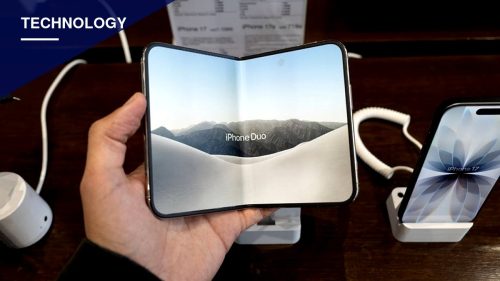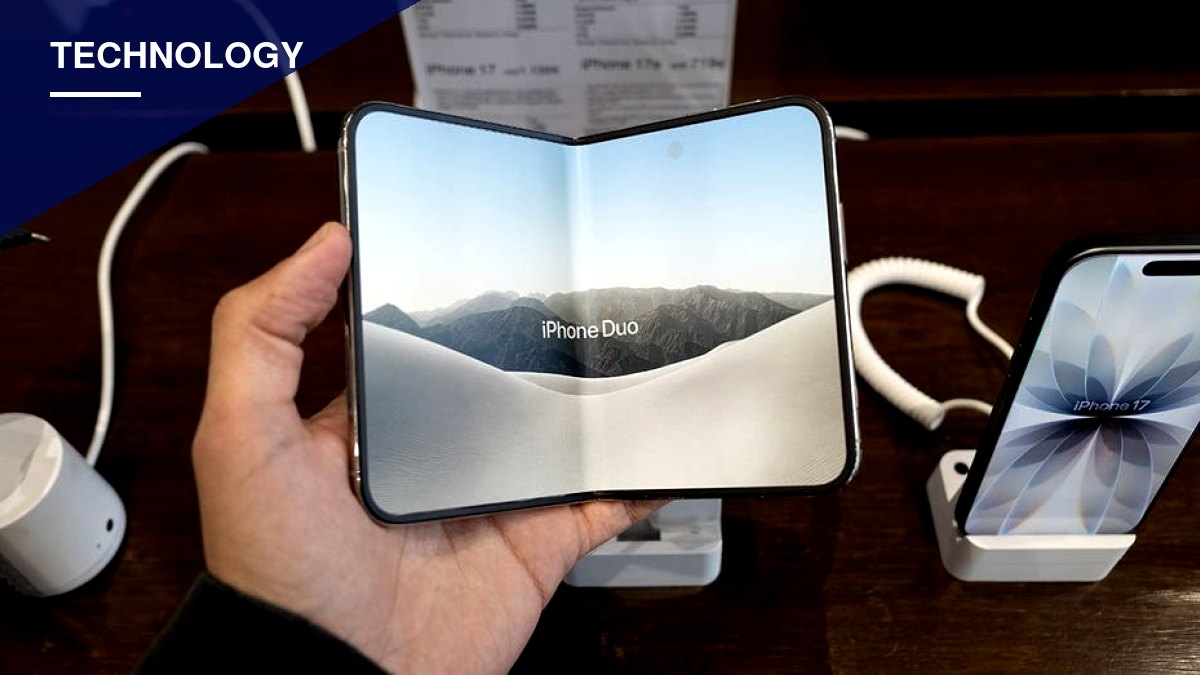
Apple has finally entered the foldable phone market, seven years after Samsung launched the original Galaxy Fold. The new iPhone Duo went on sale Oct. 23, opening like a book to reveal a 7.6-inch screen, and it starts at $1,999 for 256GB of storage. Prices climb from there: $2,199 for 512GB, $2,599 for 1TB, and $3,199 for the top 2TB model.
Samsung’s Galaxy Z Fold 8, which has been on sale since August, starts about $100 lower at each comparable storage tier: $1,899.99 for 256GB, $2,099.99 for 512GB, and $2,499.99 for 1TB.
Design and Weight
The two phones look remarkably similar when folded or open, but they differ in weight and feel. The iPhone Duo weighs 8.96 ounces, nearly two ounces heavier than the Galaxy Z Fold 8’s 7.09 ounces. Samsung’s phone is also thinner when closed, at about 0.38 inches versus 0.44 inches for the Duo. Apple uses a rounded titanium frame, while Samsung’s design has sharper, flatter edges. Both phones have relatively small outer screens — 5.4 inches for the Duo and 5.5 inches for the Fold 8 — considerably smaller than displays on conventional flagship phones.
Displays
Both devices open to 7.6-inch OLED screens with adaptive refresh rates up to 120Hz and peak outdoor brightness of 3,000 nits. Apple’s inner screen has a nano-texture matte finish meant to reduce glare and hide the fold crease, though some early reviews say this comes at the cost of contrast and vibrancy compared with Samsung’s glossier screen.
The Duo also supports the Apple Pencil (USB-C) through iOS 27.2, released Oct. 26 — but only that specific pencil, not the Apple Pencil Pro, and without pressure sensitivity. Samsung dropped S Pen support for the Fold 8 as it pursued a thinner design.
Software and Multitasking
Samsung’s years of folding-phone experience show in its software. The Galaxy Z Fold 8 can run three apps in split-screen mode, supports pop-up windows, and offers Samsung DeX for a desktop-style experience on external displays. Apple’s new Split View on the Duo allows two apps side by side for the first time on an iPhone, but it uses a fixed layout without Samsung’s floating-window flexibility. Some third-party apps have not yet been updated for the Duo’s folding screen and can display awkwardly, including large black bars, though developers are expected to roll out updates.
Battery Life
Early independent testing favors Apple here. In one test of continuous web browsing over 5G, the iPhone Duo lasted 13 hours and 20 minutes compared with 10 hours and 6 minutes for the Galaxy Z Fold 8. In a separate streaming test over Wi-Fi at maximum brightness, the Duo lasted 18 hours and 15 minutes versus 16 hours and 30 minutes for Samsung’s phone. Apple claims up to 31 hours of video playback under lab conditions. The Duo reaches 50% charge in about 20 minutes with a compatible wired charger; Samsung supports 45W wired charging and fast wireless charging.
Cameras
Neither phone has a dedicated telephoto lens. The Duo has two 48MP rear cameras with 2x optical-quality zoom achieved by cropping into the main sensor. The Fold 8 has two 50MP cameras with a similar digital-zoom approach. Samsung offers a pricier alternative, the Galaxy Z Fold 8 Ultra, starting at $2,099.99, which adds a 200MP main camera and a dedicated telephoto lens with 3x optical zoom.
Apple has added some software tricks for photography, including Smart Take, which automatically snaps a photo once everyone is in frame; Duo Preview, which shows the subject a preview on the outer screen; and Kid Cue, which plays Peanuts animations on the outer display to get children to look at the camera. Samsung’s Fold 8 also offers an outer-screen preview and can be propped partially open for hands-free photos.
Durability and Repair Costs
Apple rates the Duo IP68 for dust and water resistance, compared with Samsung’s IP48 rating for the Fold 8 — giving Apple’s phone stronger protection against dust in lab testing. However, Apple has acknowledged screen problems with the Duo after launch; some owners reported cracks along the inner screen near the hinge within hours or days of purchase, sometimes during setup. Apple has not disclosed how many devices are affected or identified a cause, but is directing affected customers to AppleCare for replacements, without requiring an AppleCare+ subscription for this acknowledged issue.
According to Apple’s published repair estimates, replacing the Duo’s damaged inner display costs $999 without AppleCare+, and other damage repairs are estimated at $1,499. A replaceable inner display cover layer costs $49 to replace if the damage is limited to that layer. With AppleCare+, an inner display repair is listed at $99, subject to the plan’s terms. Samsung’s folding phones also carry specialized, potentially costly repairs, though pricing varies by model and coverage.
SIM Cards
The iPhone Duo is eSIM-only worldwide, with no physical SIM slot. The Galaxy Z Fold 8 supports both eSIM and a physical nano-SIM card, though configurations vary by market. Most U.S. buyers won’t notice a difference, but frequent international travelers who prefer buying local SIM cards may find Samsung more flexible.
The Bottom Line
The iPhone Duo offers strong early battery performance, a glare-reducing display and Apple Pencil support, along with the convenience of staying inside Apple’s ecosystem. But it is heavier than the Galaxy Z Fold 8, costs more, lacks a dedicated telephoto camera, and carries the risk of a $999 inner-screen repair bill. Samsung’s Fold 8 is lighter, slightly cheaper, and offers more flexible multitasking software built on years of refinement — advantages that may matter more once the novelty of a new folding phone wears off.