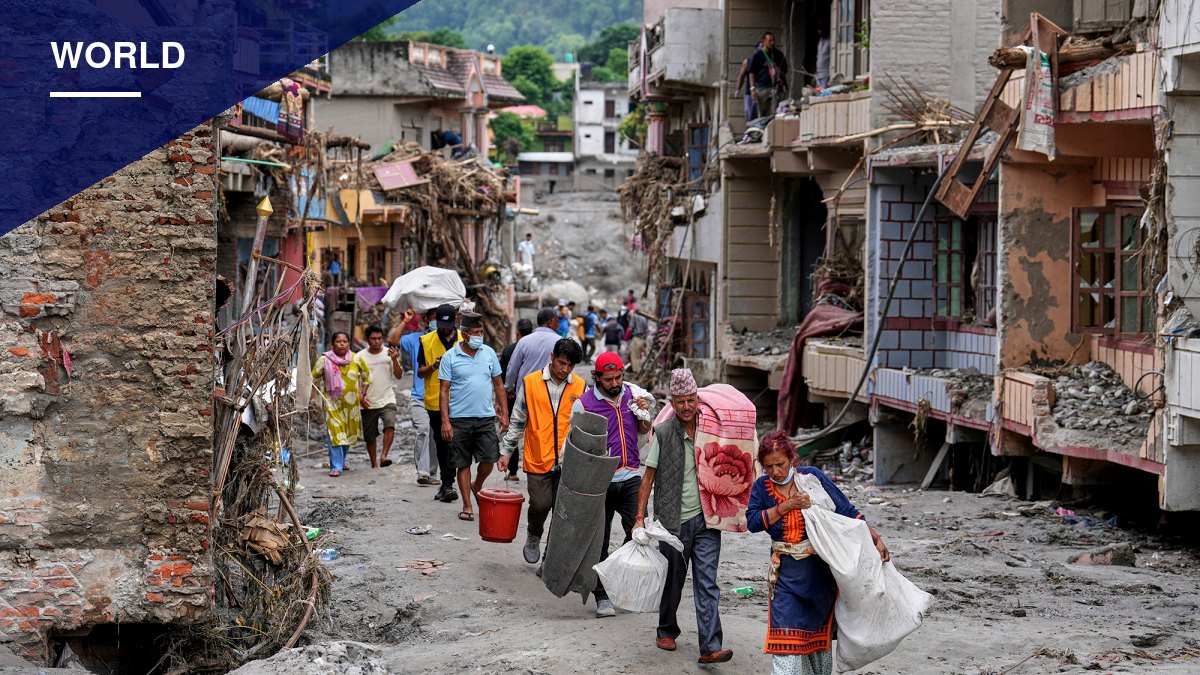
When floodwaters from a late-August avalanche tore down Nepal’s Trishuli Valley, Bidur school principal Rajendra Dawadi got his roughly 900 students out of harm’s way in the minutes before the water hit. There was no siren. The alert spread by word of mouth.
The disaster that struck the valley left more than 1,400 people dead and 5,000 missing, according to figures cited in a recent opinion piece by Bjorn Lomborg, president of the Copenhagen Consensus. Nepal’s recovery bill is estimated at nearly $5 billion, roughly an eighth of the country’s economy. The event is expected to feature prominently at the COP31 UN climate summit opening Monday in Antalya, Turkey.
UN climate chief Simon Stiell has said climate change is making disasters like this “much more likely, frequent and severe,” and environmentalist Bill McKibben wrote that Nepalis “are not causing the crisis that is killing them: we are.”
What the research says
The World Weather Attribution group estimated that human-caused warming raised Himalayan summer temperatures by about 2.7°F above the preindustrial average, but the group itself described climate change as “a destabilizing factor acting on a pre-existing geological predisposition, rather than the fundamental cause” of the avalanche. A separate study published this year mapping 60 million avalanches across high-mountain Asia since 1990 found no long-term trend across 85% of the region, according to Lomborg’s piece.
Warning systems went unfunded
Lomborg’s analysis argues that thousands of people were swept away even in areas that had 40 minutes or more of lead time before the flood arrived — because no alert reached them. Nepal’s own damage assessment calls for better river monitoring, repairs to damaged hydrological stations, and a network of sirens and text alerts, at an estimated initial cost of $2.3 million.
That money was not readily available, despite large sums of international climate finance flowing into Nepal. According to the piece, more than $3 billion in international development funding committed to Nepal between 2020 and 2024 went toward climate-related projects. Among them:
- Nearly $500 million for power lines and smart meters to shift from fossil fuels to hydropower — in a country that already generates almost all its electricity from water.
- $6.7 million in German aid for solar panels to cut carbon emissions — more than three times the cost of the proposed flood warning system.
- A $150 million World Bank disaster-resilience program that was meant to include better flood warnings but instead funded work on droughts, wildfires, heat waves and building-code compliance.
- $27.4 million approved by the Green Climate Fund in 2020 to make the Trishuli river basin more resilient to floods and landslides, none of which went to sirens or flood alerts. The money instead supported irrigation, farmer training, ecotourism and a gender-action plan.
- A separate $50 million Green Climate Fund project for sensors, sirens and backup communications sat unapproved for seven years before being greenlit in 2025 — too late for this year’s disaster — and is not due to finish until 2033.
The cost of warning systems versus the cost of disasters
The World Meteorological Organization estimates that an $800 million investment in early warning systems across poor countries would prevent $3 billion to $16 billion in annual losses. Lomborg’s piece points to Bangladesh, which lost more than 300,000 people to a 1970 cyclone but has kept annual cyclone deaths under 200 since 2007 through improved forecasting, shelters and evacuation drills.
Globally, deaths from climate-related disasters have fallen more than 97% over the past century, a decline the piece attributes largely to rising wealth and preparedness rather than emissions cuts.
Nepal’s per-capita GDP stands at $1,548, among the lowest in the world, despite recent progress reducing extreme poverty. Lomborg’s piece argues that Nepal’s path to resilience runs through economic growth — more power generation, better roads and fewer regulatory barriers — rather than additional emissions-focused spending, and calls on the Antalya summit to fund the warning systems the Trishuli Valley never got.