Nine fingerprints lifted from the Bundy Drive crime scene in the 1994 murders of Nicole Brown Simpson and Ron Goldman were never matched to any known suspect — and more than 30 years later, a filmmaker behind a new documentary series is pushing investigators to run them through today’s far more advanced forensic databases.
Ari Mark co-directed the Peacock docuseries “OJ’s Accomplice,” which reexamines whether O.J. Simpson acted alone the night his ex-wife and her friend were stabbed to death outside her Los Angeles condominium. The series focuses heavily on Joey Ippolito, a convicted drug trafficker and Simpson associate with reported organized crime ties, as a possible accomplice.
“The fact that there’s nine fingerprints sitting around that nobody wants to put through a system that’s very updated and technologically not what it was before, that just seems unnecessary,” Mark said. “Just do it.”
“You can take latent prints and analyze those in a way that you couldn’t before,” he added. “Also, remember, the systems over time are obviously collecting more data and more people. So, if you’re looking for a match, you have a greater chance of getting one all these years later.”
What happened at trial
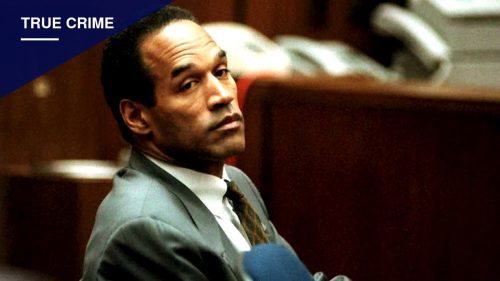
During the 1995 trial, the Los Angeles Times reported that none of the identifiable fingerprints collected at the Bundy Drive condo matched Simpson. Fingerprint specialist Gilbert Aguilar, testifying for the defense, said police knew Simpson’s prints didn’t match what was found at the scene.
Under questioning from lead defense attorney Johnnie Cochran Jr., Aguilar testified that nine prints recovered at the scene could not be matched to any known sample. Defense lawyers argued that unidentified attackers were responsible and that detectives failed to pursue that possibility because they settled early on Simpson as the sole suspect.
Aguilar testified that investigators had compared the unmatched prints against Simpson, Brown Simpson and 58 friends, relatives and acquaintances, and also ran them through federal and state fingerprint databases, without finding a match.
Why the prints might matter now
Aguilar, who appears in the new documentary, said expanded databases today could change the outcome.
“At the crime scene, there were nine identifiable prints that I never identified to whom they belong,” Aguilar said. “Back in 1994, you’re running prints through AFIS. But first, it’s checking everybody that’s been arrested by the Los Angeles Police Department. Then it would be run through Sacramento. Then run through all the Western states.”
“If somebody is arrested outside your database, like in New York or the state of Florida, you’re not going to get anything,” Aguilar said. “LAPD has all the prints and they could have them tested again. They may or may not. I don’t know. It’s up to them now.”
It’s unclear whether investigators have ever rerun the nine prints through updated systems. The LAPD told Fox News Digital the case remains open.
“The OJ Simpson case remains an open and ongoing investigation. The Department has an obligation to continue to pursue justice in this matter, at a point that, if new evidence is found, detectives will follow those investigatory leads. At this point there is no other information available for release.”
In the docuseries, defense investigator Pat McKenna argued the prints deserve a fresh lab look. “This is like a door,” he said. “Wide open. Don’t you want to close that door? I would think they should want to do that. But I think they’re afraid of what it would show.”
According to the docuseries, producers asked the Los Angeles County District Attorney’s Office to reexamine the prints but received no response. Fox News Digital also contacted the office for comment.
“I wouldn’t put anything past technology,” Mark said. “I think we all know that tech, it’s just gotten so advanced, especially when it comes to forensics, that I believe something could be pulled from those fingerprints. Ideally, there’d be some sort of DNA that’s been preserved, and the right type of reopening would force a reinvestigation of those materials.”
The accomplice theory
Before the series premiered, Joey Ippolito’s brother, Sam Ippolito, told The New York Times that Joey returned to a Los Angeles apartment around midnight on June 12, 1994, carrying a bag with a heavy object inside, and appeared to have blood on his hands. Sam said Joey stuffed his clothes into the bag and told him to dispose of it; Sam said he threw it into a dumpster near a construction site on Doheny Drive. He repeats the account in the docuseries.
Sam’s credibility has been questioned — the Times reported he sought payment for his story and later tried to retract it after the paper declined to pay. Friends and relatives have disputed any suggestion Ippolito was involved in the killings.
Ippolito, who had escaped from a Florida prison in May 1994, became a federal informant after his 1995 arrest, as Simpson’s trial was wrapping up. He died in 2006. A December 1996 federal prosecution memo, unsealed at the Times’ request, described him as a source with knowledge of Simpson’s alleged efforts to dispose of the murder weapon and flee authorities. Former federal prosecutor David Kelley called him a “remarkable source of information” but told the Times he did not believe Ippolito took part in the murders.
“My instinct is that not only did I feel that he was telling the truth, but I also felt that he had more to share,” Mark said. “I think The New York Times probably spooked him a bit because they are a big publication … But I really do believe him. I believed him then, I believe him now.”
Brown Simpson’s sister, Tanya Brown, rejects the accomplice theory and says in the docuseries she believes Simpson alone killed her sister. “I think it’s impossible if you’re in her position to speculate about theories, and I don’t blame her for that,” Mark said.
Background
Simpson and Brown Simpson married in 1985, had two children, and divorced in 1992. Two years later, Brown Simpson and Goldman were found stabbed to death. Simpson was acquitted in the 1995 criminal trial but found liable for both deaths in a 1997 civil case. He later served nearly nine years in prison on unrelated armed robbery charges from Las Vegas. Simpson died in April 2024 at age 76.
Mark said his goal with the documentary was “to raise enough questions that it gets a second look,” adding that victims’ families’ support would be his first priority in any renewed investigation. “I think everyone deserves to know what actually happened, and if that involves a second person, third person or whatever it is, great.”