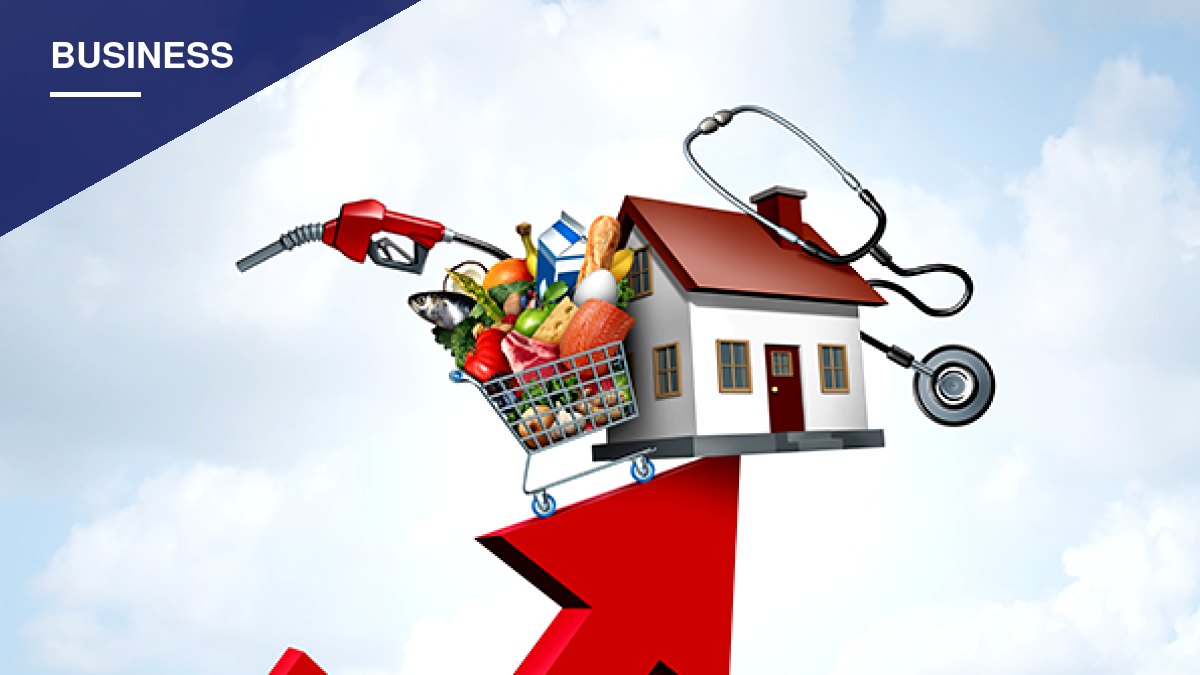
New inflation data released Tuesday shows that even as gasoline price increases cooled off, price pressures are broadening across the U.S. economy, touching food, services and a growing share of everyday goods.
The Consumer Price Index rose 0.4 percent in October, the Department of Labor reported, a slowdown from September’s 0.6 percent increase. That slowdown was driven mainly by gasoline prices, which rose just 1 percent in October after jumping 9.1 percent the previous month.
But economists who dug into the details found the underlying numbers tell a more worrying story. Food prices accelerated, core inflation held at a stubbornly high level, and inflation in services outside housing picked up speed.
A wider share of prices are rising fast
One way economists track inflation is by looking at how many different categories of goods and services are seeing rapid price increases — a measure known as dispersion. Federal Reserve Chairman Kevin Warsh highlighted this approach in a speech at Jackson Hole in August, noting that 54 percent of components in the Fed’s preferred inflation gauge had seen price increases above 3 percent over the prior year, compared with a pre-pandemic average of 32 percent.
A similar analysis of Consumer Price Index data across 119 detailed categories found that from May through July, 42 percent of categories saw price increases exceeding a 3 percent annualized rate. From August through October, that share jumped to 56.3 percent. The number of categories with inflation above 5 percent doubled, from 26 to 52.
The picture looks similar when counting falling prices instead of rising ones. In March, 61 of 141 detailed consumer price categories were recording price declines. By October, that had fallen to just 38 — meaning the share of categories with falling prices dropped from 43 percent to 27 percent. Fewer prices are falling, and more are rising quickly, suggesting the disinflationary trends from earlier this year are fading.
Core and services inflation stay elevated
Core consumer prices, which strip out food and energy, rose 0.3 percent for the third straight month — an annualized pace of roughly 3.7 percent, well above the Federal Reserve’s 2 percent target.
Services prices excluding rent of shelter, sometimes called