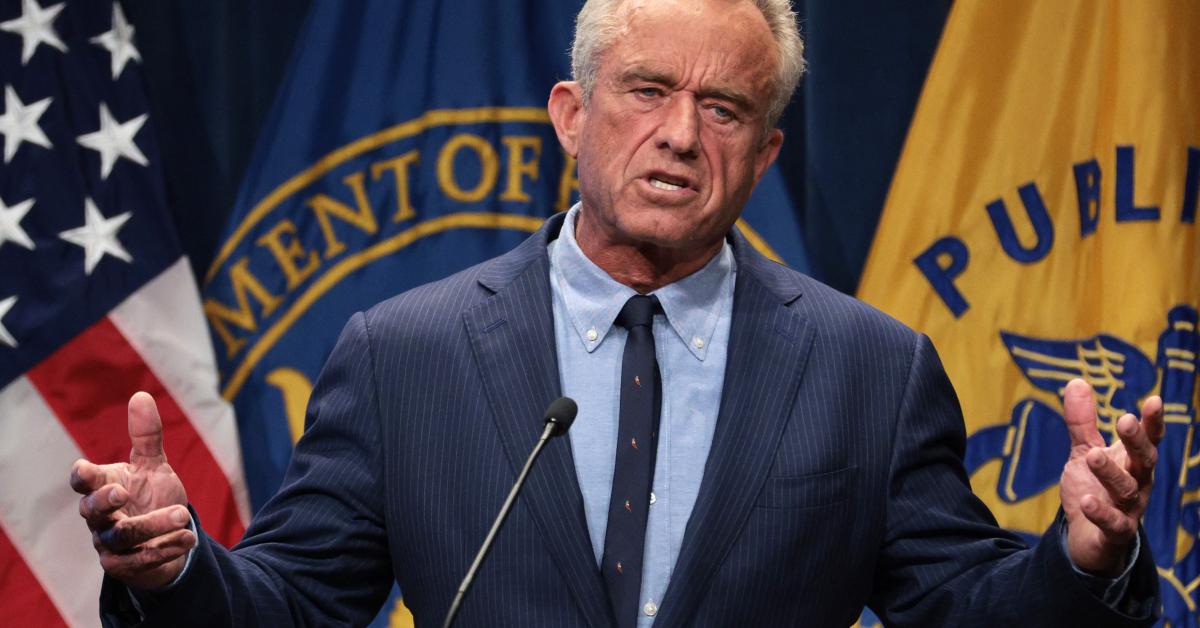
Health and Human Services Secretary Robert F. Kennedy Jr. recently shared his thoughts on the ongoing debate regarding rising autism rates. He criticized those who attribute the increase solely to improved testing and genetics, calling them “epidemic” deniers. This follows a new CDC study that credits the rise in autism cases to better early identification.
Between 2018 and 2022, autism diagnosis among children increased from 1-in-44 to 1-in-31. Back in 2003, it was a mere 1-in-150, and experts have been divided over the reasons for this shift. Some believe genetics play a major role, others cite technological advancements, and some say it’s a combination of both.
However, Kennedy has dismissed these explanations. During his first news conference as HHS secretary, he emphasized the need for more autism research under his Administration for a Healthy America. He questioned, “If the autism epidemic is because of better diagnostic criteria why are we not seeing it in older people?”
Kennedy is firm in his belief that environmental toxins are to blame. He claims these toxins have infiltrated the U.S. food and water supply. He stated, “Somebody made a profit by putting that environmental toxin into our air, our water, our medicines, our food.”
Kennedy also announced plans to launch new studies. Within three weeks, he promises to identify the environmental toxins causing the increase in autism cases. This bold move aims to shed light on what he considers a pressing public health issue.
Dr. Walter Zahorodny, an expert in the field, supports Kennedy’s call for more research. He co-authored the recent CDC report and shared his views at the news conference. Zahorodny emphasized the need to explore environmental or risk factors as potential causes of autism.
He believes the autism surge is a genuine phenomenon. According to him, the understanding of autism has not significantly progressed in the last two decades. Zahorodny stated, “We need to address this question seriously because, in my opinion, for the last 20 years, we’ve collected data but not made real progress in understanding what causes autism or how to effectively prevent it or treat it effectively.”
Kennedy’s stance aligns with conservative values that prioritize individual and environmental health. His leadership in the HHS highlights a commitment to addressing what he sees as overlooked health issues. By focusing on environmental factors, Kennedy hopes to bring about meaningful change.
While some critics argue that Kennedy’s views are controversial, his supporters see his approach as necessary. They argue that understanding and addressing environmental impacts align with traditional conservative principles. The focus remains on safeguarding the future of American children.
Kennedy’s administration plans to challenge the status quo. By questioning the mainstream explanations for autism, he seeks to uncover deeper truths. His approach underscores a dedication to ensuring a healthier America.
The ongoing debate on autism causes continues to spark discussions. Kennedy’s involvement adds a new dimension to the conversation. It’s a complex issue that requires careful consideration and decisive action.
In the coming weeks, the release of the new studies will be highly anticipated. The findings could potentially reshape the understanding of autism’s causes. Kennedy’s leadership in this area may pave the way for new policies and preventive measures.
As the conversation continues, the focus remains on protecting future generations. Kennedy’s proactive stance represents a push for transparency and accountability. The ultimate goal is to address the autism epidemic effectively and responsibly.