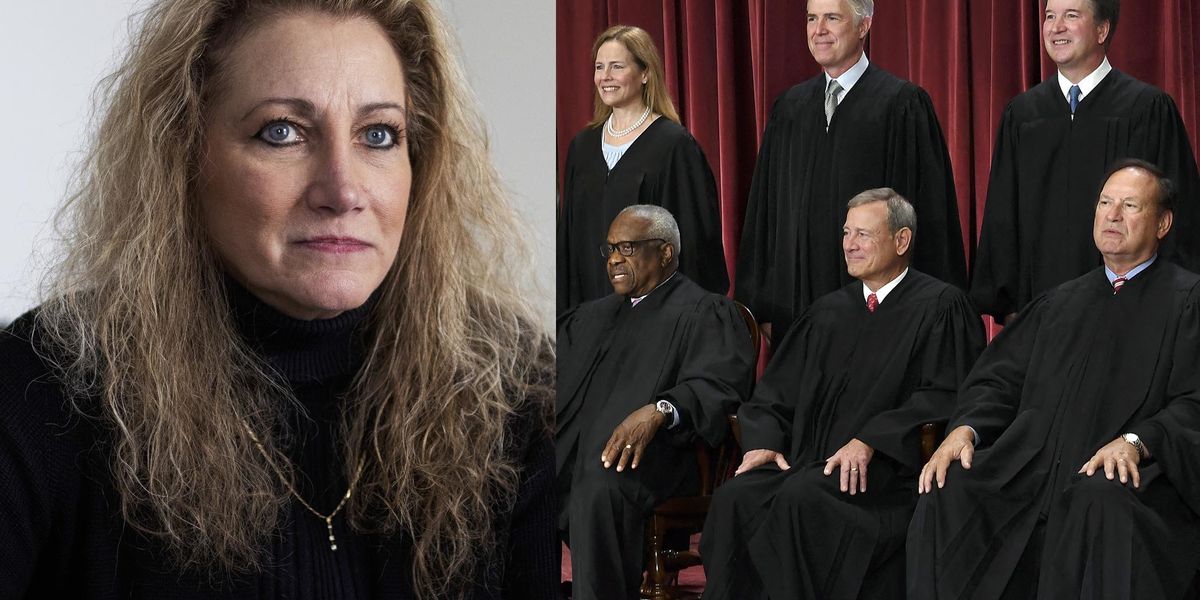
Marlean Ames has been battling her employer, claiming she faced discrimination for being a straight woman. She took her case all the way to the U.S. Supreme Court and came out with a powerful win. The court unanimously overturned a lower court’s decision that had set an unfair standard for cases of “reverse discrimination.”
Ames’ fight began after she accused the Department of Youth Services of Ohio of passing her over for a promotion in favor of a gay woman. She also alleged she was demoted, with a pay cut, in favor of a gay man. After over two decades of service, she felt sidelined due to her sexual orientation.
The Supreme Court’s decision challenges the Sixth Circuit Court of Appeals’ requirement that nonminority plaintiffs need more evidence to prove discrimination. Justice Ketanji Brown Jackson emphasized that Congress didn’t intend for courts to impose extra burdens on plaintiffs from majority groups. “The standard for proving disparate treatment under Title VII does not vary,” she wrote.
America First Legal celebrated this ruling as a significant step toward true equality in the legal system. Nick Barry, a senior counsel at AFL, criticized the previous requirement as lacking any basis in Title VII’s text. He described it as a judicial creation, unsupported by the law.
This case highlights ongoing debates about fairness and equality in the workplace. Ames’ story is a reminder that discrimination can affect anyone, regardless of their background. Her persistence has now set a precedent that could impact similar cases nationwide.
The Supreme Court’s decision reinforces that Title VII protections apply equally to all individuals. This ruling eliminates the need for majority-group plaintiffs to meet an extra standard of proof. It underscores the principle that justice should be blind to majority or minority status.
Ames’ case is a testament to the power of perseverance in seeking justice. Her battle resonates with many who feel overlooked or undervalued in their professions. The outcome offers hope and a pathway for others facing similar challenges.
By standing up for her rights, Ames has contributed to a broader conversation about equity in employment. Her victory is a reminder that legal protections are meant to ensure fairness for everyone. This development could encourage others facing discrimination to step forward and seek justice.
The support from America First Legal underscores the importance of defending individual rights regardless of majority status. Their involvement highlights the commitment to ensuring the law is applied fairly to all. This case could serve as a catalyst for change in how discrimination claims are assessed.
This ruling is seen by many as a step toward leveling the playing field in the workplace. It challenges preconceived notions about who can be a victim of discrimination. The decision could influence future rulings and policy adjustments in employment law.
Ames’ journey through the legal system underscores the challenges individuals face when confronting discrimination. Her story adds a new dimension to discussions about workplace rights and protections. The Supreme Court’s decision may encourage others to pursue justice without fear of unequal treatment.
The case brings into focus the nuances of discrimination and the importance of a fair judicial process. It highlights the evolving nature of legal interpretations regarding equality. The ruling is a reminder of the ever-present need for vigilance in protecting civil rights.
For Ames, this decision marks a pivotal moment in her career and personal life. It represents validation of her experiences and a chance to continue her fight in the lower courts. The outcome is a victory not just for her, but for all who seek fair treatment under the law.
The ruling could have broader implications for how discrimination cases are handled in the future. It sets a precedent that could shift the legal landscape regarding majority and minority group dynamics. The decision is a step toward ensuring that legal standards are applied consistently.
Ames’ case could inspire legislative discussions about refining anti-discrimination laws. The ruling may prompt lawmakers to consider adjustments that reflect this new legal standard. It opens the door for a reevaluation of how discrimination is defined and addressed in the workplace.
This decision emphasizes that discrimination knows no boundaries, affecting individuals across the spectrum. It encourages a reevaluation of assumptions about who can be impacted by unfair treatment. The case is a powerful reminder of the universal need for vigilance in protecting workplace rights.
The Supreme Court’s ruling is a significant moment in the ongoing journey toward equality. It reinforces the idea that justice should not be contingent on majority or minority status. Ames’ victory is a beacon of hope for those seeking fair treatment in their professional lives.
The impact of this case extends beyond Ames, influencing how similar cases may be argued in the future. It provides a framework for other individuals facing discrimination to challenge unfair practices. The decision is a turning point in the ongoing effort to ensure equality for all.