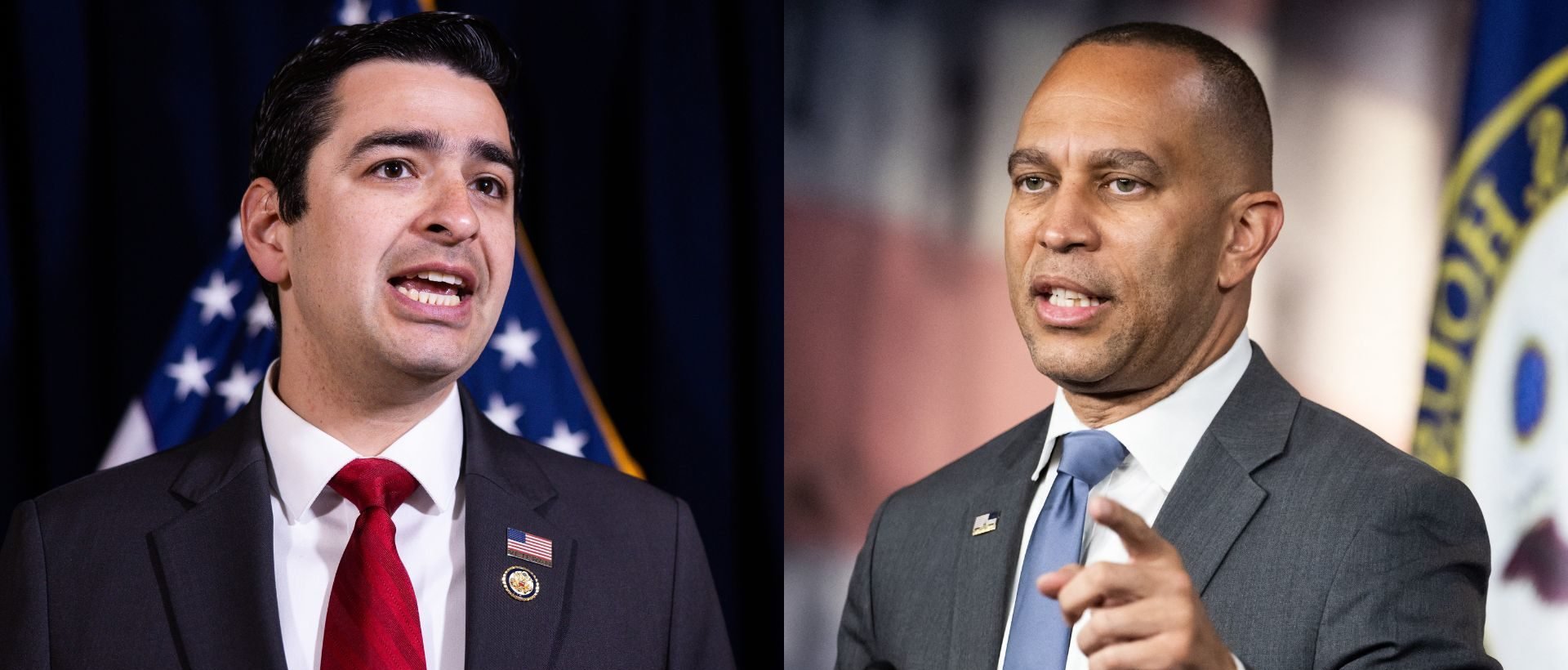
A majority of House Democrats recently opposed a GOP-sponsored resolution that condemned a terrorist attack in Boulder, Colorado, and supported federal immigration authorities in detaining criminal illegal migrants. The resolution, introduced by Republican Representative Gabe Evans of Colorado, passed the House of Representatives with a vote of 280 to 113. Seventy-five Democrats joined Republicans in backing the resolution, while six lawmakers, including Republican Representative Marjorie Taylor Greene, voted “present.”
The National Republican Congressional Committee (NRCC) criticized the Democrats who voted against the resolution. NRCC spokesperson Mike Marinella stated, “House Democrats just sided with terrorists over cops and couldn’t even bring themselves to condemn antisemitism.” According to Marinella, the Democrats have become the “antisemite and anti-cop caucus.”
Democratic Leader Hakeem Jeffries criticized Evans and the House Republicans for linking antisemitism condemnation with law enforcement support, including Immigration and Customs Enforcement (ICE). The resolution acknowledged ICE personnel for their role in “protecting the homeland” and urged aggressive vetting of foreign nationals applying for visas. Jeffries argued that the resolution was an inappropriate combination of issues.
The suspect in the Colorado terrorist attack, Mohamed Soliman, overstayed a visa that expired in February 2023, making him an illegal resident when the attack occurred. A Daily Caller News Foundation reporter confronted Jeffries on whether he supports ICE detaining illegal immigrants with criminal backgrounds. Jeffries deflected, instead criticizing the leadership at the Department of Homeland Security.
During a press conference, Jeffries dismissed Evans with sarcasm, questioning his seriousness about combating antisemitism. Jeffries claimed Evans was not genuinely concerned with the issue, suggesting that he was using it for political gain. He went on to predict Evans would only serve one term in Congress, calling him “a complete and total embarrassment.”
House Majority Leader Steve Scalise responded to Jeffries, thanking Evans for his efforts. Scalise, a former law enforcement officer and Iraq War veteran, expressed gratitude for the resolution’s support of law enforcement. He criticized “radical Democrats” for downplaying the significance of denouncing antisemitic terrorism.
House Majority Whip Tom Emmer claimed that the Democrats’ failure to secure the border under former President Joe Biden contributed to Soliman’s alleged attack. Emmer argued that stronger immigration controls could have prevented the tragedy. The narrative from Republican leaders consistently emphasized the need for stricter immigration policies as a means of national security.
In a related move, the House also passed a resolution condemning antisemitism and violence against Jewish individuals without mentioning immigration. This resolution faced no opposition from lawmakers. The separate vote highlights the contentious nature of linking immigration enforcement with other security measures.
The Daily Caller News Foundation, which reported on these developments, offers its content without charge to legitimate news publishers. This ensures the story reaches a broad audience, shedding light on the political dynamics at play. The foundation encourages partnerships for wider distribution of their coverage.
For more information on the guidelines or partnership opportunities, the Daily Caller News Foundation invites inquiries via email. Their coverage aims to provide clarity on significant political issues. The foundation’s commitment to independent reporting seeks to inform the public on matters impacting national discourse.
The debate over the resolution reflects broader political tensions in the U.S. regarding immigration and security. Republicans continue to advocate for robust immigration enforcement as a key component of national safety. Meanwhile, Democrats challenge the conflation of immigration with issues like antisemitism.
The political landscape remains polarized, with each party steadfast in its beliefs and approaches. As the discussions unfold, the public watches closely, assessing the implications for future policy. The dynamics in Congress illustrate the ongoing struggle for consensus on critical national issues.
The recent votes underscore the complexities of addressing terrorism, immigration, and antisemitism. Lawmakers grapple with finding solutions that balance security concerns with broader social and political implications. The debate is likely to continue as both parties navigate these challenging topics.