This piece lays out the fallout from President Trump’s new limits on migration from certain countries, the violent incident that triggered the policy spotlight, the predictable Democratic reaction, and why the debate about authority and public safety matters now.
You already saw the controversy coming when the administration moved to tighten entry from specific countries, including Afghanistan, after a tragic attack on two National Guard members. The victims were identified as Sarah Beckstrom, 20, and Andrew Wolfe, 24, and the suspect was Rahmanullah Lakanwal, 29, an Afghan national whose visa had expired. Beckstrom died the day after the attack and Wolfe later regained consciousness, facts that pushed border and vetting issues back into the headlines.
The administration framed its move as a straightforward exercise of executive authority, repeatedly noting that “the president has the ultimate authority” to set immigration priorities, especially when public safety is at stake. That language echoes longstanding Republican arguments that national security trumps open-ended immigration policies when courts and Congress leave gaps. Americans who put troops and neighbors first see this as a common-sense response to a dangerous incident, not an ideological provocation.
As expected, the Left erupted, spinning the policy into a broader cultural attack instead of addressing the security questions at hand. Critics instantly labeled the step racist or xenophobic, settling on a familiar narrative rather than engaging with the facts behind the decision. One common refrain, pushed by some Democratic figures, boiled down to the idea that “Trump hates brown people,” a talking point that ignores both the specifics of the case and the legal authority the president exercises.
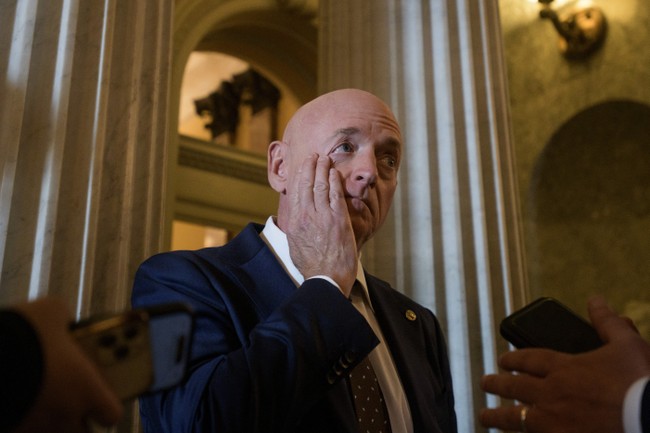
🚨 NOW: Seditious Dem. Sen. Mark Kelly is LIVID about President Trump's 3rd world migration halt, claiming it's RACIST
That's just because it gets in the way of his seditious plans!
"When he says '3rd world countries,' he's saying he doesn't want BROWN PEOPLE!" pic.twitter.com/A3LSqrQvWW
— Eric Daugherty (@EricLDaugh) November 30, 2025
President Trump escalated tensions on Thanksgiving by targeting Minnesota leadership, calling Governor Tim Walz “seriously retarded” in a blunt, incendiary line that dominated cable coverage. That comment was meant to criticize how state leaders handle public-safety threats tied to certain immigrant communities, and it predictably drew outrage while also forcing a debate over tone versus policy. The insult distracted from the central question for many voters: are state and federal leaders doing enough to protect citizens?
Senator Mark Kelly (D-AZ) responded by pushing the usual media-friendly take, repeating the ‘Trump hates brown people’ line instead of focusing on the root problems of vetting and law enforcement coordination. His remarks fit a pattern where Democrats weaponize rhetoric to score cultural points while sidestepping hard questions about border security, refugee vetting, and background checks. That approach irritates voters who want real accountability rather than reheated outrage.
Beyond the sound bites, there is a serious institutional issue in play: how the military and law enforcement interpret orders and political leadership during high-tension moments. Some on the Left floated what one critic called “a quasi-seditious plea with American service members to not follow phantom illegal orders from President Trump,” a line that threatens discipline and unity in uniformed ranks. Suggesting troops should disobey orders that are merely politically unpopular risks turning the military into a political football, and that is dangerous for national security.
This debate also exposes how media cycles reward outrage over nuance, pushing lawmakers to adopt extremes rather than pragmatic fixes. Republicans argue that tightening policies in response to a violent crime is a necessary, limited measure to restore public confidence and protect service members. Democrats, meanwhile, often frame any enforcement action as an attack on communities, which fuels division instead of solutions.
On the ground, communities affected by crime want clear action and accountability, not symbolic gestures or media theater. Families of victims expect leaders to take steps that prevent repeat tragedies, including sensible vetting and better cooperation between federal and state authorities. That practical demand is the political split: one side wants results, the other prefers messaging wins.
This fight will continue to play out in the courts, on the campaign trail, and in town halls across the country as both sides jockey for public opinion. Republicans should keep the focus tight on safety, authority, and the tangible facts of cases like the one involving Sarah Beckstrom and Andrew Wolfe. Democrats can keep repeating predictable lines, but voters will ultimately decide whether words or security matter more.