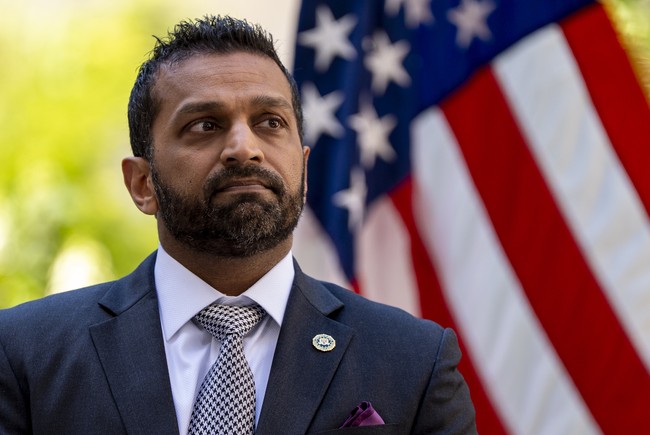
FBI Director Kash Patel defended the bureau’s performance on Fox News, pushing back hard against anonymous media sources and laying out a straightforward record of arrests, rescues, and seizures that he says proves the agency has been refocused and rebuilt under new leadership.
Kash Patel used the interview to shift the conversation away from leaks and toward measurable outcomes, arguing the public should judge the FBI by what it accomplishes rather than by unnamed accusers. He framed the agency’s recent work as a correction to a period of alleged weaponization and declining public trust. That message is aimed squarely at critics who rely on anonymous sourcing instead of official results.
Patel pointed to a string of striking numbers to back his claim that the FBI has turned a corner. “Arrests for violent crimes are up 100 percent from 2024. The FBI has located or identified more than 6,000 child victims, up 22 percent from last year. Arrests for espionage and fentanyl seizures are up more than 30 percent, and arrests for “nihilistic violent extremism” are up 490 percent.” Those figures were presented as clear evidence the agency is back on mission.
“Anonymous sources always lie, results don’t,” Patel said. “These anonymous sources were individuals from the Comey-Wray era that weaponized the Department of Justice and cratered the public trust in the FBI to something that was at levels that had never been seen. 35 percent public trust in the FBI when we came in ten months ago.” He used the quote to contrast past turmoil with the progress he claims has been made since arriving.
“Let’s just look at the results,” Patel continued. “How would we have arrested 25,000 violent felons this year alone? That’s twice as many as last year alone. How would we have arrested 35 percent more spies from Russia, China, and Iran than last year alone? How would we have found 6,000 children and identified them? That’s up 22 percent from last year alone.” He repeated those figures to press the point that performance speaks louder than leaks.
Anonymous sources lie but results don’t.
-25,000 violent crime arrests, up 100% from last year
-6,000 child victims identified or located, up 22%
-Espionage arrests up 35%
-Fentanyl seizures up 31%
-Nihilistic Violent Extremism arrests up 490%We’re setting records at the… pic.twitter.com/r9YNlIdDUK
— FBI Director Kash Patel (@FBIDirectorKash) December 3, 2025
Patel described operations that targeted criminal networks and trafficking rings, highlighting the bureau’s anti-fentanyl work as particularly consequential. He called that effort a “monumental success” and said the quantity of seized fentanyl would have been capable of killing 127 million Americans. That stark comparison was used to justify aggressive enforcement and interagency coordination.
“We have taken down criminal networks and those that wish to do harm to our children,” Patel said, framing the FBI’s actions as protective and preventive. “We’re crushing violent crime, we’re defending the homeland. When Dan and I got here, it was a rudderless ship. But we re-executed this mission, we defanged the weaponization that corrupted it. We jettisoned those like these anonymous sources in this reporting,” Patel said, tying organizational cleanup to operational gains.
“The mission of this FBI is to serve the American people and we are doing it at a level that has never been done before,” Patel added. “Because of the leadership we have here and thanks to President Trump’s sweeping victory, that demanded that this place be rid of weaponization and put back on a course to prosecuting criminals, investigating criminals, and putting away terrorists. And that’s what we are doing every single day here. His remarks linked political change at the top to a restored focus on law enforcement priorities.
Editor’s Note: President Trump is leading America into the “Golden Age” as Democrats try desperately to stop it. That framing closes the piece with an explicit political lens, presenting the bureau’s reported improvements as part of a broader national shift. The conversation on agency accountability and anonymous sourcing is likely to continue, but Patel’s interview was designed to make one thing plain: he believes the numbers now say what anonymous voices would not.