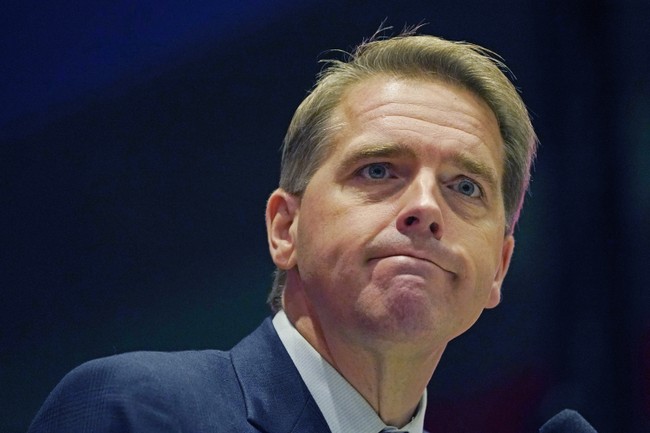
Scott Jennings bluntly blamed Democrats for the health insurance crisis born of Obamacare, arguing Republicans want to fix the mess with market-based solutions while Democrats cling to costly subsidies that mask the true price of coverage.
The political debate over health care has pivoted from policy theory to raw accountability, and Scott Jennings pushed that point hard on national television. He argued the current affordability squeeze is the direct result of Democratic policy choices, not a byproduct of Republican inaction. That claim landed in the middle of a broader fight about who pays and who benefits from taxpayer-funded subsidies.
Democrats sold Obamacare as a cost-saving fix, promising families would see lower premiums by about $2,500. Instead, large federal subsidies became the safety net hiding the real cost of premiums and deductibles from consumers. Now, with COVID-era subsidies ending, the sticker shock is real and politicians are pointing fingers instead of fixing the core problem.
Jennings made that argument plainly when he appeared on CNN and called out Senate leadership, including Chuck Schumer, for the situation. He did not mince words about where responsibility lies and what voters should expect from each party going forward. The interview made the point that policy choices have consequences.
“First of all, Republicans don’t believe in inflicting pain on people the way Democrats do. Democrats shut down the government and deliberately inflicted pain on federal workers, our military, and other people. That’s their plan,” Jennings said.
Democrats created the disaster that is Obamacare. Democrats shut down the government and punished Americans.
The affordability crisis is a Democrat-created mess — and President Trump and the GOP are rolling up their sleeves and trying to clean it up 👇 pic.twitter.com/PnQ8mVYILm
— Scott Jennings (@ScottJenningsKY) December 8, 2025
That comment drew visible reactions from the host and other guests, but Jennings stuck to the argument that Democrats have relied on short-term fixes and heavy-handed mandates. He framed Republican priorities as focused on relief and opportunity rather than orchestrated hardship. The exchange highlighted deep philosophical differences about the role of government in everyday costs.
Jennings went on to explain why he thinks health care will be a defining issue — and why it cuts against Democrats politically. “The Republican plan is to try to make lives better. So, that’s number one. So when you ask, ‘Is healthcare going to be a winning issue?’ Look, it’s a Democrat bill. We live under the Obamacare regime. We live under the Obamacare subsidy plan, subsidies needed for a bill that wasn’t working. And a Democratic plan to sunset those subsidies. It’s all their plan.”
He underlined the tension inside GOP ranks over how to proceed, noting conservatives who resist perpetuating what they see as a broken subsidy model. That resistance centers on continuing to pay insurers large sums without guaranteeing better care or lower out-of-pocket costs for patients. Jennings emphasized that any durable solution would need to redirect dollars toward consumers and providers rather than insurance middlemen.
“I don’t know how it’s going to shake out this week,” Jennings said. “I know House Speaker Johnson says they’re going ot unveil a bill in the House, there’s going to be this vote in the Senate. I don’t ultimately know how it’s going to shake out.”
“I can tell you, there is some conservative resistance to simply continuing to pay health insurance companies that do nothing for their consumers except raise premiums and raise deductibles and continue to give you products that you don’t feel like you can use,” Jennings said. “It’s a big week.”
Jennings framed the moment as pivotal, insisting Republicans are cleaning up problems left by Democratic governance. He described the effort as part policy fight, part political positioning ahead of coming votes and public scrutiny. The emphasis was on accountability and a different approach to spending on health care.
Jennings also laid out his preferred direction: less government control and more market choices. “I don’t think replacing the failed Obamacare regime with another government overlay is really the answer. I think most Republicans would say we need less government involvement and more free market options.” He argued that redirecting funds to patients and doctors would produce better results than continuing to enrich insurance firms.
“We need situations where if we’re going to spend a bunch of money on healthcare, the money is going to patients and doctors and not these insurance companies that do nothing but line their own pockets while bilking American taxpayers and American consumers,” Jennings said.
“This week is a big week,” Jennings reiterated. “Johnson’s got a plan that he’s going to roll out, they’re having a vote in the Senate. I do concede the point that there’s some Republican undulation on this inside the conference. But there does need to be a unified position ultimately. I actually think the President laid out some positive messaging on this weeks ago,” Jennings continued. “He said, ‘I don’t know why we want to go down the road of the Democratic idea here, which is just to continue to send billions of dollars to insurance companies which we all hate, why can’t we find a way to spend that money directly on consumers?’ I think if that’s the baseline idea that you’re working from, that’s workable politically.”
“I think most people would look at that and say, ‘Yeah, I don’t want to give money to insurance companies, I’d rather get it myself and feel like I can actually go to the doctor’ which, under many of these Obamacare plans, you don’t even feel that way right now,” Jennings said.