A Minnesota fraud case that funneled more than $1 billion from welfare programs has become a political flashpoint, with CAIR’s Minnesota director defending Somali Americans as victims while critics point to community-wide welfare dependence and political fallout.
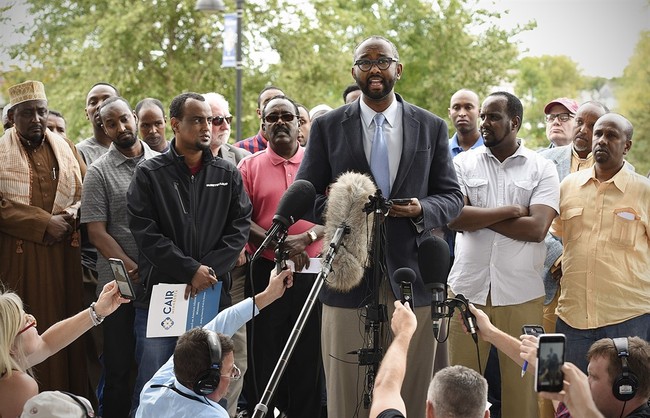
Jaylani Hussein, director of the Minnesota chapter of the Council on American-Islamic Relations, argued that Somali Americans are being unfairly painted as the villains after prosecutors linked dozens of defendants in the scheme to the Somali community. The scandal involved massive diversion of taxpayer funds from pandemic-era relief programs, and many of those charged were of Somali descent. That reality has driven sharp public debate over responsibility, criminality, and how communities recover reputation and trust. Political leaders and media outlets are trading blame as the legal process unfolds.
State and national reactions have been loud. CAIR has been under scrutiny recently, and both Texas and Florida have taken the rare step of labeling the group a foreign terrorist organization in the last month. On the other side, public officials and commentators are pointing to what they see as deeper issues within refugee and immigrant communities, including employment and benefit participation patterns. This is now as much about policy and enforcement as it is about the specific criminal cases.
CNN anchor Boris Sanchez asked Hussein directly about the optics and possible political consequences, saying, “Of the 70 or so people charged in that case, most are members of the Somali community. Do you think that scandal is giving the White House ammunition for these attacks?” That exchange framed how national media are linking local prosecutions to broader political narratives. President Trump has seized on the scandal to criticize Somali immigrants and local leaders.
President Trump, in the wake of the fraud scandal, has criticized Somali immigrants, the Governor of Minnesota, Tim Walz, Rep. Ilhan Omar, whose district this occurred in, and others. Specifically, Trump called Somali’s “garbage” and pointed out that they disproportionately take more from state and federal welfare programs than they contribute via taxes. Those comments have inflamed tensions and pushed the story into national partisan debate, drawing both defenders and harsh critics.
“I think this actually… First of all, fraud is wrong,” Hussein began. “In fact this particular fraud impacts specifically low-income families, which many are Somali Americans. And in fact, they were victims in this particular moment. But what’s interesting it that this fraud, and there are many frauds during the pandemic, this one is the only one that’s getting some attention, impacted all of us taxpayers. But as far as the Somali American community, we reject it and condemn this fraud, we have in the past as well.”
But most importantly, we know that this is conflating the truth here. You cannot single out an entire community for the acts of individuals; we know that, and the president is using this moment to try and target our community. In fact, you know, most of the local republicans in the state of Minnesota did not make that mistake, of claiming the entire community is responsible for the acts of individuals. In this moment, some of them are jumping in on that, and it’s gonna be unfortunate because in the state of Minnesota we actually saw an increase of Trump supporters even within the Somali American community. He should be asked about that. That now we are seeing many of those individuals not supporting Republican candidates in the future. He is also targeting his own base that supported him in this past election.
That defense did not satisfy everyone. Critics point out broad socioeconomic indicators in Minnesota that show Somali communities lagging on workforce participation and educational attainment. Those same critics note higher rates of reliance on welfare programs and lower average tax contributions compared with statewide figures, arguing those structural gaps matter when taxpayer-funded benefits are abused. For skeptical observers, the scandal underlines a need for tougher oversight and better integration policies.
The Director of CAIR in Minnesota, Jaylani Hussein:
"Somalis were the victims in this particular moment." pic.twitter.com/y1eGhJ5HtB
— Townhall.com (@townhallcom) December 4, 2025
Supporters of stronger enforcement argue this is not about scapegoating an entire ethnicity but about protecting public dollars and ensuring fairness for all taxpayers. They say investigations and prosecutions should be precise, relentlessly pursued, and publicly transparent so the system can deter future schemes. At the same time, they acknowledge communities with large refugee populations face legitimate barriers that deserve attention beyond criminal cases. The balance between accountability and community rehabilitation is proving difficult to strike in this heated environment.
Local political consequences are already clear. Elected officials tied to districts with sizable Somali populations have faced pressure from all sides, and national figures have used the episode to rally supporters. For many voters, the story reinforces concerns about immigration policy, assimilation, and the integrity of pandemic-era relief programs. For immigrant advocates, the worry is reputational damage that lasts longer than any single prosecution.
The legal process will determine guilt for the individuals charged, but public debate will keep running. Policymakers will likely respond with proposals to tighten benefits verification and to increase fraud detection, while civil society groups press for community support programs to lift employment and education outcomes. Whatever comes next, this case has already reshaped talking points for campaigns and raised broader questions about how to protect taxpayer funds while treating communities fairly.