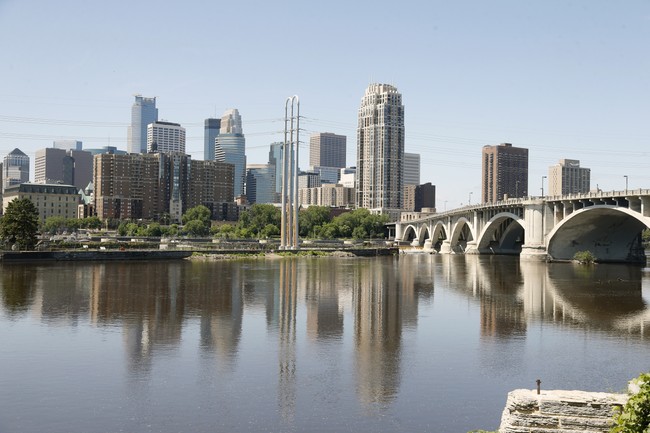
Community change in Minneapolis has become a flashpoint, with a nearly 120-year-old dive bar closing and plans to turn the space into a mosque sparking sharp cultural and political reactions about immigration, religion, and local priorities.
Across the country, cultural clashes are showing up in everyday places. In cities like Dearborn and Minneapolis, changes tied to new immigrant communities are reshaping neighborhoods in ways that make many longtime residents uneasy. These shifts touch routines, local businesses, and civic life, and they are fueling a debate about how much change communities should absorb.
In Minneapolis, Palmer’s — a bar that had been a West Bank institution for almost 120 years — is closing. Word circulating in local reporting says the building is set to be converted into a mosque, and that prospect has become a lightning rod for opinion and frustration. For those who see the bar as part of the neighborhood’s identity, the loss feels personal and symbolic.
Alcohol is forbidden under Islamic law, so the change of use from a bar to a religious space has practical implications as well as cultural ones. Residents who valued the bar’s music, gatherings, and informal community say the neighborhood is losing an ecosystem that supported local artists and regulars. That frustration is feeding into wider concerns about whether civic life will accommodate longstanding local traditions.
A 119 year old historic bar was forced closed by a Muslim Mosque in Minneapolis
You’re never going to guess what came next. Now closed the historic bar is being transformed into a new Muslim mosque
“They see them as something that's bad because people drink there, and men and… pic.twitter.com/O3vx9jNewK
— Wall Street Apes (@WallStreetApes) December 22, 2025
Palmer’s was often described by locals as “the heart of the city” for its role in bringing people together. Some Somali and other Muslim residents in the area have viewed the bar differently, and that difference of perspective contributed to tensions around the venue. Now that the bar is set to close and be repurposed, those divisions are coming into the open.
On the political left, many voices respond with calls for tolerance and diversity, arguing that religious freedom and community needs should be respected. Conservatives see a different pattern: when a symbol of local culture vanishes and is replaced by an institution associated with a distinct set of customs, it looks less like simple coexistence and more like cultural displacement. That contrast in interpretation is a core part of the debate.
Claims that the left will shrug and label critics as racist or Islamophobic are common in conservative commentary. Those accusations shut down honest discussion about the practical effects of rapid demographic change, argue many who feel unheard. The tone of the debate often turns on whether people can raise concerns without being stereotyped or silenced.
The line that “The hypocrisy is completely on-brand for Islam” appears in heated commentary and reflects how some critics view the situation. Strong statements like that drive polarization and make constructive local planning harder. Still, those words capture the anger some feel when neighborhood institutions vanish without a process that residents feel they were allowed to influence.
Others look at this development and see clear signs of cultural conquest rather than mere demographic change. “Yep. They’ve claimed it for their own. We’re being conquered,” is the sentiment echoing among a subset of residents who believe national identity is being eroded at the local level. Those views feed calls for firmer control over immigration and stronger protections for neighborhood traditions.
That reaction is framed as partisan by opponents, who point out that a city’s evolving religious and cultural makeup is part of modern life. For conservatives watching these shifts, however, the concern is about balance: how to welcome newcomers without losing the civic fabric that held communities together. The question is whether policymakers and local leaders will protect shared institutions or allow them to be replaced without broad community buy-in.
MinnPost reported that Palmer’s faced financial pressures, even though it maintained a steady clientele and hosted community events. Local coverage noted that economic difficulties, neighborhood change, and the fading ecosystem of nearby venues all played a role in the bar’s decline. Those factors complicate any single explanation for the closure, but they do not quiet the political firestorm that followed.
Perhaps Esquire is a curse. Perhaps financial mistakes were made. Maybe the closing is an inevitable consequence of neighborhood change, and a Cedar Avenue that’s been consistently inebriated since the 1870s has permanently turned a corner. Fifteen years ago, if you had told me that almost every drinking and music establishment on the West Bank would be gone by 2025, I would not have thought it possible. In those days, the various spots fed off each other to create an ecosystem of punks, music, hippies and whiskey. Without those connections, not even the most resilient institutions can survive.
Still, I can recite a long list of Twin Cities dive bars that survive to this day drawing a small fraction of the clientele that Palmer’s receives in a week. A business that last month was hosting fundraisers for others couldn’t find a way to rally the community to stay in business, nor find a buyer to keep the business afloat.
Plenty of conservatives urge that Americans pay attention to how cultural and religious norms influence public life. When local clerics in some places press businesses to stop selling pork or alcohol, it raises the question of how secular public norms will be maintained. In Texas, officials have responded strongly in ways that reflect those tensions, and other states may act differently.
The closure of Palmer’s is a small story with big implications because it illustrates the collision of law, culture, and community identity. Voters and local residents are watching how city governments, courts, and civic institutions handle similar disputes in the months ahead. For many, this is not just about one building but about what kind of neighborhoods they want to pass to the next generation.