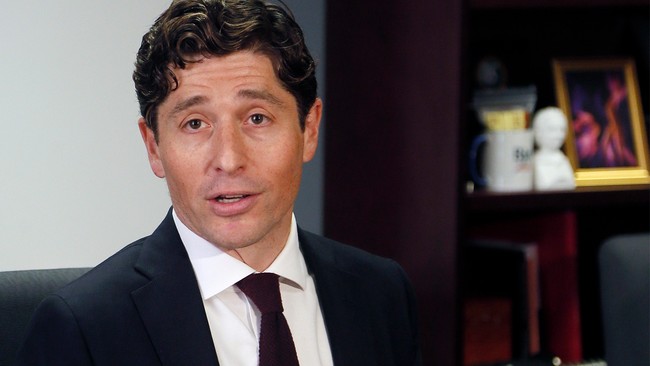
Minneapolis Mayor Jacob Frey warned during a public speech that the arrival of federal immigration agents could spark violence in his city, and his comments drew support from Minnesota Governor Tim Walz, touching off a heated debate about law enforcement, political responsibility, and public safety.
Mayor Jacob Frey told an audience on Tuesday that the presence of ICE agents in Minneapolis has created a volatile situation and that “Somebody is going to get seriously injured or killed, and whether that be an ICE agent or a community member, we all know the tinder box that could explode because of it.” His words landed hard in a city already wrestling with crime and tension, and they immediately raised questions about where local leaders draw the line between protest and threats. The tone of Frey’s message made national headlines because it framed federal enforcement as a potential flashpoint rather than a straightforward legal action.
Frey went on to emphasize his worry that residents might put themselves in harm’s way to protect neighbors, saying, “We all know that we cannot afford to lose a single Minneapolis resident because they showed up and decided to protect their neighbors.” That line framed the situation as a moral dilemma for people who feel compelled to defend their community, but it also reads like a warning that vigilantism could follow. The practical effect is to pit local sentiment against federal authority and to complicate efforts by law enforcement to carry out court-authorized operations.
🚨 BREAKING: Minneapolis Mayor Jacob Frey is facing calls to RESIGN after he warned ICE agents may be “KlLLED” if the operations continue in his city
WHAT IS WRONG with this guy?!
He should be deploying his police to maintain ORDER. RESIGN! pic.twitter.com/18f25Gbjwr
— Eric Daugherty (@EricLDaugh) December 23, 2025
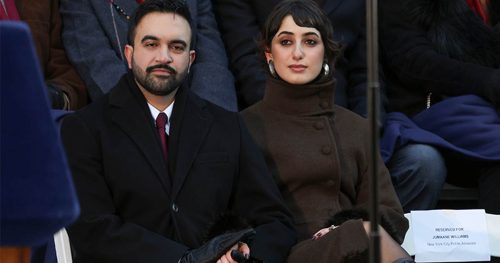
Standing behind the mayor at the event was Governor Tim Walz, a Democrat whose remarks added a political edge to the moment. Walz claimed the president’s enforcement plans were politically motivated and said, “I think it’s pretty clear to all of us what this president is doing,” adding, “He’s targeting states and communities that he has a national political fight against and that he doesn’t agree with. It’s all a distraction from his own personal crimes that are out there being investigated while he’s harassing others.” Those words turned what might have been a local law-and-order conversation into another front in a broader national partisan fight.
Walz’s comments came amid separate scrutiny of his administration, which the report referenced as “currently under investigation for a massive $9 billion fraud,” making the governor’s criticisms carry an added note of irony for opponents. Whether the investigation findings will change political dynamics in Minnesota, or alter how local officials handle federal law enforcement actions, remains uncertain. What is clear is that leaders on the left framed federal immigration enforcement as a political attack rather than a routine execution of immigration law, and that framing encouraged a confrontational posture.
The Biden administration’s shift was not the only driver of the confrontation; federal policy moves have direct effects on local communities, and in this case ICE operations are expected to increase after President Trump revoked Temporary Protected Status for Somalis living in Minnesota. That decision removes a layer of legal protection for a specific group and sets the stage for stepped-up enforcement that will put agents on the ground. The prospect of more enforcement in neighborhoods with large immigrant populations created immediate anxiety among activists and officials who fear aggressive tactics could lead to violent clashes.
Local leaders who publicly frame federal enforcement as an existential threat end up shaping public behavior, and critics argue that Frey and Walz bear responsibility for cooling rhetoric rather than fanning it. From a Republican perspective, the core issue is simple: enforcing immigration laws is a federal duty, and officials should not normalize language that makes resistance sound acceptable or inevitable. Law enforcement officers who follow legal warrants need clear backing from elected officials if we expect them to operate without fear of politicized retaliation.
There is a second-order problem when political leaders imply that federal actions stem from personal or partisan motives, because that suggestion erodes trust in neutral institutions and fuels tribal anger. Republicans see the pattern as part of a larger refusal by Democratic leaders to accept federal authority when it conflicts with local political priorities, and that refusal often ends up protecting lawbreaking rather than citizens. The consequence is a patchwork of resistance across cities that undermines predictable application of the law and invites instability.
Accountability and de-escalation are the practical steps people want to hear right now: clear commitments to protect both residents and officers, firm promises from city and state leaders to discourage violence, and an insistence that lawful enforcement proceed without political theater. The American system depends on public officials who temper rhetoric and manage crises, not amplify them, and voters on all sides will watch how Minneapolis and Saint Paul handle the coming weeks to see whether leaders choose rhetoric or responsibility.
Editor’s Note: Democrat politicians and their radical supporters will do everything they can to interfere with and threaten ICE agents enforcing our immigration laws.