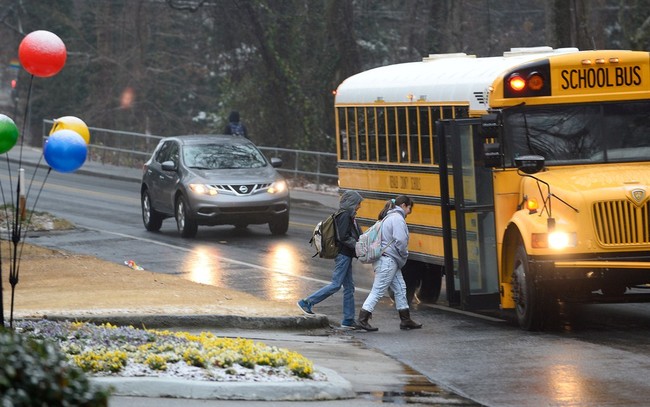
Parents in Western New York say electric school buses are leaving kids cold, pointing to battery limitations, heating tradeoffs, and broken-down buses as proof that an all-electric mandate can do more harm than good in harsh winter climates.
The national push for “green energy” has dominated policy conversations for years, and elected leaders have been eager to force electric solutions from one end of the country to the other. When programs are rolled out without accounting for real-world conditions like subzero wind chills and long rural routes, the result can be policies that sound good on paper but fail the kids who rely on school transportation.
In parts of upstate New York winters are brutal, and parents in the Lake Shore Central School District are now raising alarms about a state mandate that aims to convert all school buses to electric by 2027. Those parents say the new buses are leaving students uncomfortable at best and exposed to dangerous conditions at worst, and they are pointing to specific failures rather than abstract theory.
One boy came home cold and told his horrified grandmother the buses can’t turn on the heat because it drains the batteries.
Local outlet WIVB reported that the law has drawn the ire of parents in the Lake Shore Central School District. The station received “several calls” over the electric buses, with parents claiming that their children are freezing when they come home from school.
Per WIVB, the district operates 23 electric buses, 24 gasoline buses and four full-size diesel buses.
“The heaters on the bus run off the same electricity as the bus itself,” Scott Ziobro, a local parent, told WIVB. “They were told that it drains the battery capacity of the bus itself.”
FREEZE FACTOR: Parents in western New York are sounding the alarm after a new mandate requires all school bus purchases to be electric by 2027 — and they say kids are already paying the price with cold rides and frequent breakdowns.
One local grandmother says she was horrified… pic.twitter.com/i5IitJWeps
— Fox News (@FoxNews) December 22, 2025
That battery-drain problem is not unique to buses; it is a well-documented issue for electric vehicles in cold weather. The Department of Energy warns, “weather-related battery drain can especially be a serious issue for EV drivers in cold climates, as frigid temperatures can drain the battery significantly faster.” When battery capacity falls, operators face rough choices: shorten routes, limit heating, or risk being stranded.
Range loss in freezing temperatures can be dramatic — studies and manufacturer guidance show drops of as much as 30 percent or more — which forces more frequent charges and greater demand on the electric grid. More charging means more generation, and unless that electricity comes from zero-emission sources, the environmental benefit can be smaller than advertised.
Worse than discomfort, parents say, are service failures. Parent Chris Lampman reported that a bus “broke down en route” and that his son was forced to stand outside for more than 30 minutes waiting for a bus that never came. In freezing conditions, a delayed ride can quickly become a health risk for small children who lack heavy outerwear or are not prepared to wait outdoors.
Lake Shore Central is in Angola, New York, where winter daytime highs often sit in the low 30s and nights drop to or below freezing. Hypothermia sets in once a person’s core body temperature drops below 95 degrees Fahrenheit, and that risk increases significantly for children. Without adequate insulation, clothing, or blankets, hypothermia could set in in under 35 minutes.
These are practical, measurable concerns that deserve attention rather than slogans. Mandates written far from cold weather realities can force local administrators into impossible tradeoffs: keep kids warm and risk running out of battery to complete routes, or preserve range and let children ride home chilled.
Some parents worry this could trigger more school disruptions. If buses can’t safely operate in extreme cold, districts might be pushed back to remote learning or canceled routes, replaying the pandemic-era educational disruptions that many families still remember. That is exactly the kind of top-down policy consequence critics warned about when electrification timelines were rushed without adequate field testing.
Editor’s Note: Do you enjoy Townhall’s conservative reporting that takes on the radical left and woke media? Support our work so that we can continue to bring you the truth.
Join Townhall VIP and use promo code MERRY74 to get 74% off your membership.