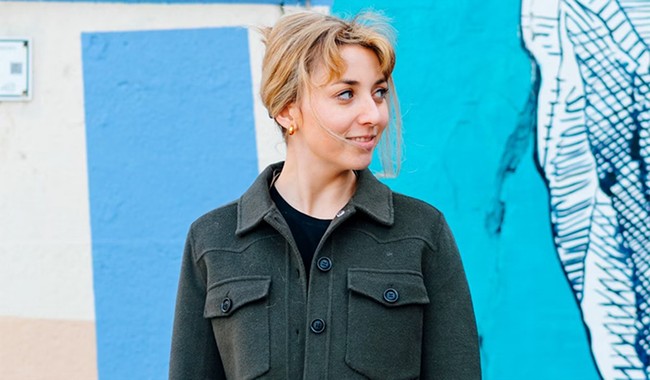
Kat Abughazaleh, a Democratic congressional candidate from Illinois, announced she is quitting X after posting a protest image and a long critique of Elon Musk. Her exit has been framed as a political stand against the platform’s direction under new ownership.
Kat Abughazaleh is running for Congress in Illinois and has spent the last six months loudly aligning with the anti-Trump left. Her profile has risen as she positioned herself as an outspoken critic of conservatives and of platforms she sees as hostile to her side.
She posted an image of the old Twitter bluebird turned upside down, marked with an X through it, and attached a lengthy statement blasting the platform and its owner. — Kat Abughazaleh (@KatAbughazaleh)
Effective immediately, I'm leaving Twitter.
And I'm calling on other candidates to stop enriching Elon Musk — directly or indirectly. He needs us. We don't need him. pic.twitter.com/4YcXwuQNnB
— Kat Abughazaleh (@KatAbughazaleh) December 22, 2025
“All of the former benefits of Twitter have been traded for a non-functional UI, armies of bots, and algorithms that reward extremism, all while serving as a panopticon for surveillance of vulnerable populations and outspoken critics by this administration and its allies,” another image read. “I have refused to buy a checkmark (though I have been given one against my will) or advertise my congressional campaign on this Twitter because i don’t want to actively give money to Elon Musk. But the truth is that using this site at all still enriches him. I do not want to be a part of it. And frankly, you shouldn’t, either. For years, many of us — governments, journalists, and the public — have considered Twitter a necessity for communication, the standard for social media. That is no longer the reality, and it’s time we act like it.”
The move reads like the familiar left-wing reflex to withdraw from a space once dominated by their voices. Where Democrats once felt at home on the platform, a more balanced user base has left them uneasy about losing influence and cultural control.
Observers have noted that X now mirrors the country’s political split more closely than the old Twitter did, and that irritates activists who liked default majorities. That shift explains both public resignations and louder attacks on the platform from the left, who see any dilution of their share as unacceptable.
Critics point out that Elon Musk, with vast resources and growing businesses, will not be hurt by the voluntary departures of individual activists. He is on track to become one of the richest people on earth, and a single former user leaving, or declining a $50-a-month feature, makes little difference to the balance sheet.
Abughazaleh’s complaint that she was “given” a checkmark and refused to monetize the platform for her campaign is a symbolic gesture rather than a strategic blow. If the goal is to deprive Musk of revenue, walking away alone does not move the needle, and the broader public seems unconcerned by individual renunciations.
There is also the performative side to this story: making a show of abandoning a platform is newsworthy only if you have an audience that cares. X is not an airport; there is no need to announce your departure, and grand statements about leaving usually land harder on the leaver than on the owner.
Editor’s Note: The Democrat Party has never been less popular as voters reject its globalist agenda.