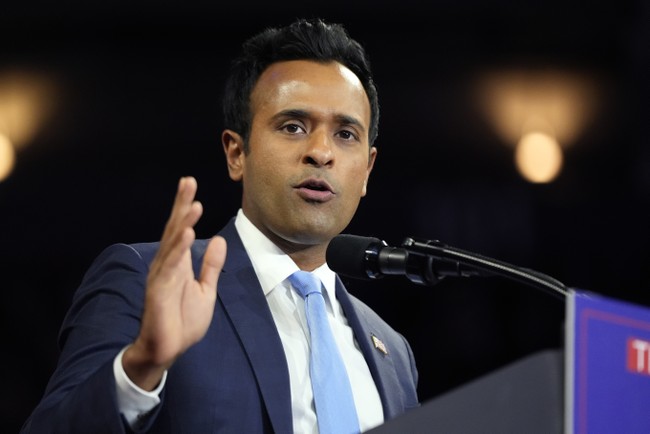
Nick Fuentes has declared he will try to stop Vivek Ramaswamy from winning Ohio’s governor race, using overtly racist language and signaling a growing friction between fringe activists and mainstream conservatives.
Nick Fuentes, a self-styled right-wing influencer with neo-Nazi ties, publicly vowed to make the Ohio governor’s race his primary target and said denial was the goal. His remarks were full of racial slurs and an explicit preference for blocking Vivek Ramaswamy regardless of who else might win.
“I think I’m going to go to Ohio,” Feuntes said on a Tuesday livestream. “And the word that we are looking for is denial. We have to deny Vivek Ramaswamy the governorship. This is the only race I care about in ‘26. It’s the only one I care about.”
Fuentes later escalated into an extended rant that relied on ugly stereotypes and profanity, attacking Ramaswamy’s family and assimilation. “This is not your home. And you know it’s not your home. That’s why you married an Indian, and you had Indian kids. You gave them Indian names, and you didn’t assimilate; you didn’t even adopt the religion of our country. And you go around telling us that we don’t even have to speak English to be American. F**k you. You should go back to India, where there’s a lot more people like you. There’s a billion and a half Indians in India, and you don’t have to worry about being called a J**t there because there’s a billion and a half f**king J**ts in India and they won’t call you one over there,” Fuentes raged.
He punctuated that rant with another blunt line: “This anchor baby cannot become the governor of Ohio, I don’t care if it’s a Jewish woman who wins,” Fuentes said. Those words show the kind of tribal identity politics that are at odds with conservative patriotism and limited government principles.
Ramaswamy’s campaign pushed back, making clear the campaign’s priorities in direct terms. In response, Ramaswamy’s campaign said on Wednesday, “We’re focused on the issues that matter most to Ohioans, not fringe voices that prefer a far-left Democrat to the Trump-endorsed conservative.”
This spat arrives amid broader generational and ideological jockeying on the right, visible at recent conservative gatherings where competing visions of conservatism were on display. Younger activists at events are often more captivated by bomb-throwing media figures and online provocateurs than by steady institutional voices.
At AmericaFest, the mix of opinions underscored tensions over support for allies like Israel, how the right confronts antisemitism, and whether conservatism is defined by policy or by heritage. Ramaswamy has argued that being American is about commitment to the ideals in the Declaration of Independence and the Constitution, not ethnic lineage.
That argument matters because when the conservative movement allows the fringes to set the tone, it invites confusion and public backlash. Clear principles—limited government, free speech, national defense, and rule of law—are what attract broad coalitions, not identity-driven rancor or racist theatrics.
Examples of fringe influence are already visible in down-ballot races and obscure campaigns where symbolic gestures carry outsized meaning. A recent incident involved a little-known gubernatorial candidate who wore merchandise connected to Fuentes and praised his followers in public remarks.
That candidate, James Fishback, publicly called groypers “incredibly informed and insightful” and refused to disavow them, even as Fuentes and his supporters openly traffic in praise for dictators and explicit antisemitism. Those endorsements matter because they signal which currents are gaining traction among some activists.
Even if such fringe candidates remain electorally marginal, their presence highlights a broader risk: when conservatism lacks a coherent moral and intellectual core, it becomes vulnerable to capture by extreme voices. The remedy is not censorship but strong leadership and an unapologetic defense of traditional conservative values.
Mainstream conservatives should call out hateful rhetoric plainly without surrendering the broader political argument to the left. That means defending free speech while refusing to normalize racism, antisemitism, or admiration for totalitarian figures.
BREAKING: Florida GOP gubernatorial candidate James Fishback dons an America First hat at a campaign event. pic.twitter.com/8q7Vq0j5ld
— Joan (@joanfromdc) December 22, 2025
Leaders who built the postwar conservative movement insisted on principle and persuasion instead of performative outrage. Figures like William F. Buckley Jr. insisted that conservatism be grounded in argument, facts, and respect for constitutional order.
If the right wants to win in Ohio and beyond, it needs to present a clear, disciplined message about governance and national purpose. Allowing a fringe to define tone and tactics will only make the work of building durable conservative majorities harder.