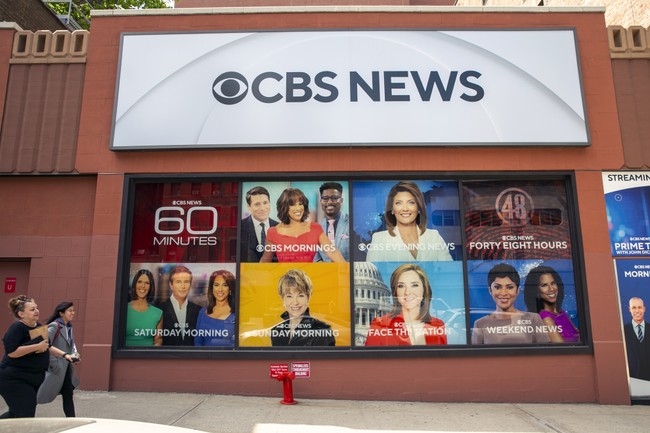
Bari Weiss’s arrival at CBS has put a spotlight on newsroom practices and fired up tensions between traditional journalism and internal politics.
I studied English and communications at a small Catholic college and learned that newsroom ethics mattered even in a tiny student paper. My professor argued journalists should consider keeping politics out of their reporting, even suggesting they might abstain from voting to preserve credibility. That old lesson now reads like a lost standard in many major outlets.
Back then, ethics and integrity were not optional ideals but the backbone of a reporter’s work. Today too many reporters treat ideology as part of the byline and partisan alignment as a reporting tool. That decay helps explain the frustration when someone like Bari Weiss shows up demanding basic editorial rigor.
Bari Weiss is not a right-wing firebrand; she once worked at The New York Times and left over the paper’s handling of dissent. Her departure followed a decision by the paper not to run an op-ed by Senator Tom Cotton, and her resignation signaled a break with newsroom groupthink. Afterward she built The Free Press on principles she described as “honesty, doggedness, and fierce independence.”
CBS and Paramount acquired The Free Press and gave Weiss an editorial role, which some of her colleagues have treated like an intrusion. Weiss asked reporters to tighten sourcing and push for fuller context on a story about CECOT, the El Salvadoran prison where some migrants were sent. Her memo insisted that routine coverage be advanced, not replayed.
“If we’re going to run another story about a topic that has by now been much-covered we need to advance it,” her memo read. Among the ways to do so: does anyone in the administration or anyone prominent who defended the use of the Alien Enemies Act now regret it in light of what these Venezuelans endured at CECOT? That’s a question I’d like to see asked and answered.”
She also pressed for balance and fuller explanation, noting the story lacked the administration’s rationale and missing critical voices. Weiss pushed producers to ask why the data presented an “incongruent picture” and to clarify the criminal histories of those sent to the facility. Those are standard editorial concerns, not political maneuvers.
The reaction inside CBS exposed resentment at being held to ordinary journalistic standards. Correspondent and producer Sharyn Alfonsi accused Weiss of pulling the piece for “political reasons,” alleging the network had been blocked from speaking with key figures. Later reporting showed the White House, State, and Homeland Security provided on-the-record comments that were absent from the leaked segment.
That omission highlights how sloppy context and selective sourcing can shape narratives. Alfonsi’s own history includes reporting that critics called misleading, and public trust suffers when reporters recycle thin framing. The industry’s comfort with partisan narratives leaves them ill-equipped to hear an editor demanding more rigor.
One of the sharper attacks came from Peter Rothpletz, who wrote a piece called “Bury Weiss” and labeled her “the faux-free speech warrior, faux-queer rights advocate, and arguably faux-journalist.” That kind of rhetoric reads less like critique and more like a tantrum from an industry that sees its privileges threatened. It’s a textbook example of defensive outrage when practices are questioned.
I picture newsroom tantrums as the consequence of a long stretch where journalists could blend reporting and advocacy without pushback. That permissive culture created bitter entitlement among some reporters who now react like spoiled children when asked to do actual editing. The result is less accountability and more reflexive loyalty to political allies.
Weiss has said she will keep insisting on basic editorial checks. Her response to critics was unambiguous: “My job is to make sure that all stories we publish are the best they can be. Holding stories that aren’t ready for whatever reason — that they lack sufficient context, say, or that they are missing critical voices — happens every day in every newsroom. I look forward to airing this important piece when it’s ready.”
There’s real irony that an editor who wants fuller context and more on-the-record sourcing is painted as politically motivated. That framing protects the status quo and discourages internal critique, which is precisely what a healthy newsroom needs. If journalism is worth saving, it will start with editors who demand the work be done right.
Too many outlets abandoned the old guardrails of practice and replaced them with advocacy. Now that someone is trying to rebuild standards, attacks follow because entrenched habits are comfortable and profitable. For readers who want reliable reporting, Weiss’s insistence on context and voices is exactly the kind of pushback the profession badly needs.
“Over the last 48 hours, the faux-free speech warrior, faux-queer rights advocate, and arguably faux-journalist “editor-in-chief” of CBS News decided to drop the mask; she opted to go full fash, as the kids say.” – @PeterTwinklage for First Draft: https://t.co/Q9tdDGGNBl
— Mehdi Hasan (@mehdirhasan) December 23, 2025