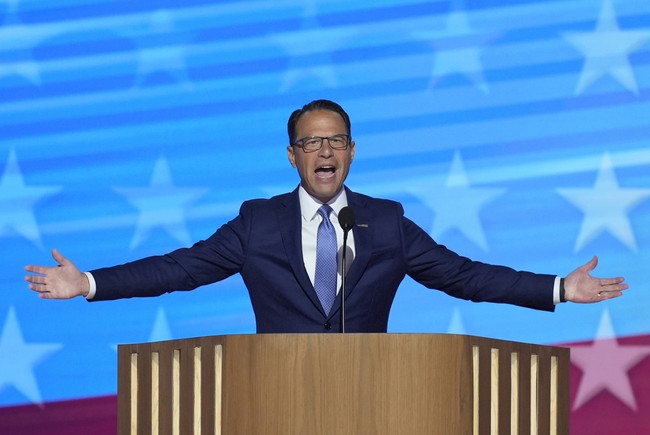
Josh Shapiro says his vetting for vice president included invasive questions about Israel and his Jewish identity, and he says Harris’ team even asked whether he had been an Israeli agent.
Pennsylvania Governor Josh Shapiro lays this out in his upcoming memoir, “Where We Keep the Light,” describing a vetting process that zeroed in on his views about Israel. The line of questioning has reignited talk that Shapiro’s religion and stances on Israel played a role in who the Harris team ultimately picked. He paints a picture of a vetting team more interested in proving suspicions than discovering readiness for national office.
Gov. Shapiro wrote that Harris’ aides repeatedly focused on Israel and pressed beyond policy into personal territory. At one point, he recalls, a member of the former vice president’s team asked, “Had I been a double agent for Israel?” He says he answered that the question was offensive and was told, “Well, we have to ask.”
Josh Shapiro Writes That Harris Team Asked if He Had Ever Been an Israeli Agent
In his new memoir, the Pennsylvania governor suggests that when Kamala Harris's team vetted him to be her running mate, aides focused on Israel to an extent he found offensive.
Full Story:… pic.twitter.com/mnc070LdXu
— Yashar Ali 🐘 (@yashar) January 19, 2026
The questioning reportedly continued with even more precise language: “Have you ever communicated with an undercover agent of Israel?” Shapiro relays the exchange in plain terms that make the handling of a vetted candidate look clumsy at best and biased at worst. From his account, the line between legitimate background checks and intrusive interrogation blurred fast.
Shapiro’s reaction was sharp and human: “If they were undercover, I responded, how the hell would I know?” He notes that Dana Remus, who posed some of the questions and once served as White House counsel, was “just doing her job.” Still, he says the focus on his Jewish background and support for Israel “said a lot about some of the people around the VP.”
He also wrote about the climate on college campuses after October 7, 2023, when Hamas launched its attack, which he calls the deadliest on Jewish people since the Holocaust. In the weeks following, protests flared at universities and many demonstrations targeted Israel’s response rather than condemning the initial assault, with chants and signs accusing Israel of “genocide,” and of confining Gazans to an “open-air prison.” Those scenes, he argues, informed how some in politics approached candidates who were openly pro-Israel.
Shapiro made clear his stance on campus speech and rights, writing, “I believe in free speech, and I’ll defend it with all I’ve got,” while noting that not all speech crossed into peaceful, protected expression. He describes a fine line between defending constitutional liberties and confronting activity that felt threatening or violent. That distinction, he suggests, mattered to voters and to the people doing the vetting.
On whether the questions were targeted, Shapiro asked a pointed question of his own inside the book: “I wondered whether these questions were being posed to just me — the only Jewish guy in the running — or if everyone who had not held a federal office was being grilled about Israel in the same way,” Shapiro continued. The line implies a deeper concern that identity, not only experience, shaped the vetting process. For a candidate who was often viewed as electorally strong, that raises uncomfortable questions about how teams evaluate potential partners.
The disclosure arrives soon after Kamala Harris published “107 Days,” her account of a short and difficult presidential campaign that also touches on vice presidential decision-making. In her memoir, Harris argues Shapiro wasn’t ideal because he supposedly had his own ambitions and needed reminding he would be second in command, and she portrays Minnesota Governor Tim Walz as easier to manage. Harris writes that she believed Walz would help her reach white male voters, a calculation that, by the events that followed, did not produce the intended results.
Shapiro’s memoir is due later this month and these passages are already fueling debate about vetting standards, identity, and the politics of choosing a running mate. The exchanges he recounts put a spotlight on how teams balance security questions, political strategy, and personal background during high-stakes selections. Whatever readers make of the claims, the episode is now part of the public record as both books continue to shape the conversation.