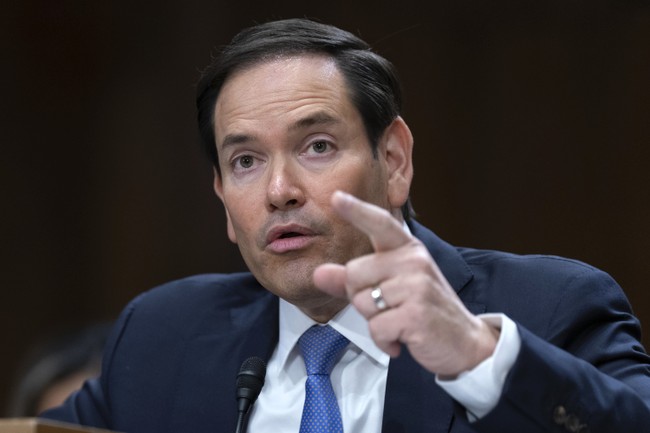
Senators clashed over the constitutionality and wisdom of the Trump administration’s Venezuela operation, with Rand Paul warning about dangerous precedents and Marco Rubio arguing Maduro was not a lawful leader and posed criminal threats to the United States.
At a recent hearing, Senator Rand Paul accused the administration of overstepping constitutional limits with its actions in Venezuela, and Senator Marco Rubio pushed back hard. The exchange put two competing views of executive power and international intervention on full display. The debate focused on whether the target of the operation was an actual, lawful head of state and what that means for U.S. conduct abroad.
Sen. Paul argued the action crossed a constitutional line by ousting an elected official from another country, stressing the danger of setting a dangerous precedent. “I think we are in violation of both the spirit and the law of the Constitution by bombing a capital, blockading a country, and removing an elected official,” Paul said. “And we certainly wouldn’t tolerate it, nor would I, if someone did it to us.”
Rubio shot back that Nicolás Maduro is not the same as a legitimately chosen democratic leader, pointing to widely reported election rigging and criminal charges. “So we didn’t remove an elected official,” Rubio replied. “We removed someone who was not elected and who was actually an indicted drug trafficker in the United States.
Paul persisted with the constitutional concern, framing it as a question of rules and limits on presidential power and warning about the slippery slope. “Our laws. Indicted under our laws,” Sen. Paul said. The tension in the room came down to one side insisting on a strict guardrail on executive action and the other insisting context and facts about the target matter enormously.
Look, Bolsonaro says that Da Silva is not really the president of Brazil. Our president said Biden wasn’t really the president. Hillary Clinton said in 2016, Trump wasn’t the president. So you have these arguments, and I agree with you. It probably was, and most likely was, and most assuredly was a bad election, and he (Maduro) wasn’t really elected. But at the same time, if that’s our predicate and you have to come to us cause its a drug bust, we’re just removing somebody, you can see where it leads to. And it leads to chaos. And that’s why we have rules like the Constitution, so we don’t get so far out there that presidents can do whatever they want. It is this check and balance, and I would argue for 70 years we’ve been going the wrong way. This isn’t just this president, but it’s a debate that I think is worth having.
Those comments reflect a real institutional worry: once presidents start acting without clear congressional guidance, the boundaries of acceptable conduct can dissolve. Yet the counterargument is straightforward — not every foreign target is an ordinary, lawfully elected leader, and some actors present criminal or security threats that change the calculus. Rubio emphasized that Maduro’s lack of democratic legitimacy and American indictments against him alter the nature of the action.
On the practical side, the Venezuela operation has not produced the sort of regional collapse or global crisis Paul predicted. Instead, supporters argue it has stamped U.S. resolve back onto the map and signaled that American interests in the hemisphere will be defended. That matters to allies and adversaries who watch how the U.S. responds when its strategic position is challenged.
🚨 BREAKING: Sec. Marco Rubio CLAPS BACK at Rand Paul opposing the Venezuela attacks
PAUL: We violated the Constitution, removed an elected official!
RUBIO: We did NOT remove an elected official! We removed an unelected, indicted DRUG TRAFFICKER! 🔥🔥🔥 pic.twitter.com/Jr8QyL5d9Z
— Eric Daugherty (@EricLDaugh) January 28, 2026
History shows foreign interventions sometimes fail, and those failures are often tied to poor planning, unclear aims, or timid leadership rather than the idea of intervention itself. Critics on the left and a handful of cautious conservatives are quick to label any use of force as a slide toward endless wars, yet no Trump-led operation in recent memory has produced a perpetual conflict that swallows generations. The hard question for Congress and the public is whether they prefer to restrain the executive by legislating clear rules or to empower decisive action when intelligence and circumstances demand it.
The institutional fix would be quicker, clearer congressional authorization for certain kinds of actions, but politics moves slowly and compromise is hard to achieve. Until lawmakers provide unambiguous guidance, the executive branch will remain the practical instrument for protecting American interests abroad. That dynamic fuels both the worry about unchecked presidential power and the argument that leadership sometimes must act on imperfect options to prevent greater harm.
Editor’s Note: Thanks to President Trump and his administration’s bold leadership, we are respected on the world stage, and our enemies are being put on notice.