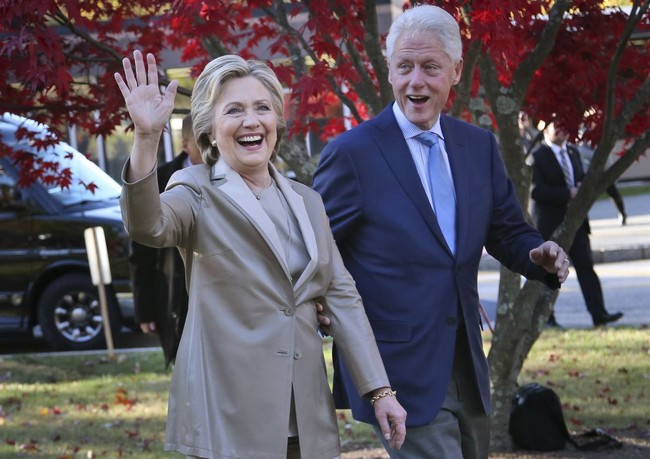
Former President Bill Clinton and former Secretary of State Hillary Clinton have reversed course and agreed to appear before the House Oversight and Government Reform Committee to answer questions tied to the long-running Jeffrey Epstein investigation, after initially skipping depositions and facing potential contempt proceedings from Republican lawmakers.
The announcement that both Clintons will comply with a congressional subpoena marks a sharp change from their earlier stance, which saw missed depositions in mid January and raised the prospect of formal contempt actions. Republican leaders had debated whether to pursue contempt charges, an escalation that could have led to criminal referrals and even jail time if convictions followed.
Republican Oversight Committee members framed the move as necessary to restore congressional authority and public trust, saying no one should be above accountability. For weeks GOP lawmakers argued that defiance of a bipartisan subpoena threatened the committee’s ability to probe ties and conduct related to Jeffrey Epstein and his network.
Oversight Committee Chairman James Comer drove the message hard and delivered a blunt warning on the consequences of ignoring Congress: “No witness—not a former President or a private citizen—may willfully defy a duly issued congressional subpoena without consequence,” Oversight Committee Chairman James Comer (TN-01) said in a statement on Jan. 21. That line underlined why Republican leadership pushed toward tougher options rather than backing down.
According to committee Republicans, the Clintons initially sought limits on the scope and conditions of testimony, which GOP members rejected as an attempt to secure special treatment. Comer and other Republicans accused the pair of leveraging their stature to negotiate restrictions that would shield key topics and witnesses from full inquiry.
It remains unclear when the hearings will be scheduled and whether the committee reached any agreement with the Clintons on the boundaries of questioning. Committee staff and members will likely spend the coming days or weeks working out logistics and deciding how to handle sensitive lines of questioning without undermining the committee’s investigative authority.
🚨The Clintons are in contempt of Congress. Their attorneys’ latest letter makes clear they still expect special treatment because of their last name.
The Clintons do not get to dictate the terms of lawful subpoenas.
I have rejected their latest offer.👇 https://t.co/BI0LAiCpI3
— Rep. James Comer (@RepJamesComer) February 2, 2026
The decision to testify brings a high-stakes public phase to a probe that has long drawn intense scrutiny from both parties, the media, and survivors’ advocates. Republicans view the testimony as a chance to press for answers about who knew what and when, while also demonstrating a willingness to hold powerful figures to the same legal standards applied to ordinary citizens.
From a Republican perspective, this episode illustrates why Congress must be able to enforce subpoenas and compel testimony when oversight is warranted. The committee’s push and the Clintons’ reversal signal that political clout will not automatically translate into immunity from congressional inquiry, and that accountability remains a governing principle Republicans say they will enforce.
How the hearings proceed — the witnesses called, documents demanded, and the level of public access — will tell the story of whether this turns into a substantive fact-finding exercise or a staged public relations event. For now, the central fact is simple: both Bill and Hillary Clinton have agreed to appear before Congress after initially refusing, and Republicans are framing the outcome as a win for oversight and the rule of law.