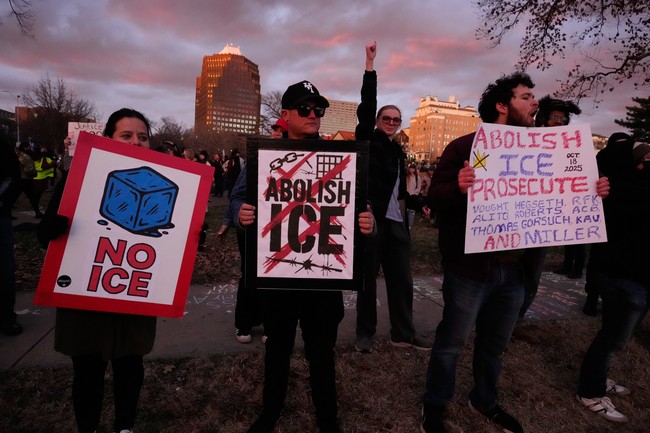
A nationwide wave of walkouts and protests over Immigration and Customs Enforcement operations spread to 46 states with more than 250 separate events, but many of the high school actions looked like little more than a chance to skip class, raising questions about what qualifies as real protest in today’s political culture.
A nationwide walkout and protest against Immigration and Customs Enforcement (ICE) operations erupted Friday, with demonstrations reported in 46 states and more than 250 separate events nationwide. The coordinated actions followed two fatal shootings in Minneapolis, Minnesota, in which demonstrators were killed in separate incidents after confrontations that authorities said endangered the lives of immigration enforcement agents. These facts should provoke sober discussion about tactics and public safety, not performative chaos.
Alongside large, organized demonstrations were scenes from high schools that bore little resemblance to informed political action. In many cases, students seemed less interested in immigration policy than in an opportunity to skip class, chanting slogans and treating disruption as the point itself rather than a means to achieve change. The optics here are striking: spectacle without substance, noise without strategy, and a generation being taught that disruption is political currency.
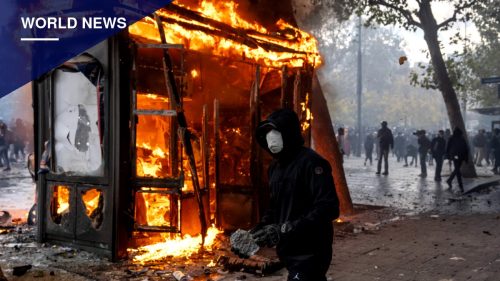
This outcome is rooted in a Democratic political culture that has steadily lowered the bar for what counts as protest. Where past movements like the Civil Rights Movement and the women’s suffrage movement were defined by disciplined organization, informed participants, and clear, achievable goals, today’s demonstrations too often reward chaos. In recent years, protests have openly excused or embraced violence, pushed radical and incoherent demands, and prioritized theatrical disruption over tangible policy wins.
Students at Stockton High School in California walk out to protest ICE deportations..
This is what an invasion looks like. pic.twitter.com/0XeXQmXaFE
— American AF 🇺🇸 (@iAnonPatriot) January 31, 2026
Those same demonstrations have sometimes rallied around causes that would have once disqualified them from serious political consideration, even praising or excusing ideas that threaten public safety. Protesters have rallied around causes ranging from sympathy for terrorist organizations to the release of socialist dictators and the abolition of law enforcement itself. When a movement’s platform drifts into sympathy for violence or the dismantling of institutions that keep people safe, it stops being civic engagement and starts becoming something else entirely.
At one high school in Georgia, a security guard described the school’s walkout as little more than hundreds of students gathering on the football field to roughhouse, run around, and leave trash scattered throughout the stadium. While the guard remarked that it was nice to see students turn out in purported solidarity against ICE, she also questioned why so few appeared to understand what they were actually protesting, or why they were there at all. That disconnect between intention and comprehension is a warning sign for the future of civic life.
What these walkouts ultimately reveal is not a rising generation of engaged activists, as Democrats may see, but the hollowing out of what it means to protest. When political leadership rewards attention-seeking disruption, young people learn to confuse visibility with victory, and dissent becomes performative rather than principled. That hollowing undermines the very tools citizens need to win lasting reforms.
When chanting a slogan, skipping class, or leaving a mess behind is treated as civic virtue, dissent loses its seriousness and its power, and becomes little more than an excuse for bad citizenship. Civic muscle is built through education, planning, and discipline, not through soundbites and selfies. If protests are to matter, they must be anchored in facts, respectful of public order, and aimed at realistic policy outcomes.
Far from empowering young people, Democrats have taught them that political engagement requires nothing more than disruption, even though history shows that simple, radical disruption alone has never produced meaningful or lasting political improvement. The path back to effective dissent starts with reclaiming the virtues of civic responsibility: clear goals, informed participants, respect for law, and strategies that win hearts and minds rather than simply shutting down public life. If protesters want to be taken seriously, they need to act like citizens, not part-time agitators.