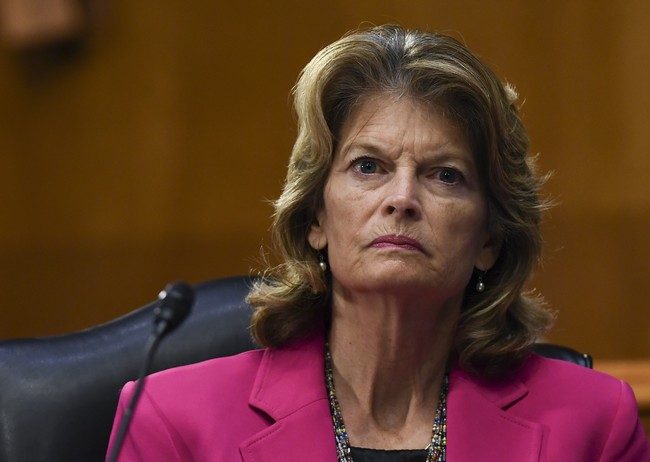
Sen. Lisa Murkowski publicly opposed the SAVE Act, drawing sharp criticism from conservatives who say she folded when the party needed a firm stand on voter verification and uniform ID requirements.
Lisa Murkowski’s decision to oppose the SAVE Act reads like a familiar pattern: when pressure comes from the base, she steps away. Conservatives see her move as evidence that some senators prefer to avoid fights rather than defend basic election standards. The SAVE Act was designed to set a national baseline for citizenship verification and ID at the polls, which many Republicans view as essential to secure elections.
Under current law, voters swear they are citizens and face penalties for lying, and states set the rest of the rules. The SAVE Act would change that by requiring documentary proof of citizenship to register and universal ID to vote, effectively federalizing certain aspects of the process. That shift is exactly what critics on both sides argued about when federal election measures came up under previous administrations.
Lisa Murkowski of Alaska on Tuesday became the first Republican senator to speak out against the SAVE Act, a sweeping election bill backed by President Donald Trump that would require proof of citizenship to vote nationwide.
In doing so, she reminded her colleagues that they roundly claimed to oppose new federal election laws as recently as Joe Biden’s presidency.
“When Democrats attempted to advance sweeping election reform legislation in 2021, Republicans were unanimous in opposition because it would have federalized elections, something we have long opposed,” Murkowski said in a statement. “Now, I’m seeing proposals such as the SAVE Act and MEGA that would effectively do just that. Once again, I do not support these efforts.”
[…]
Under current law, all U.S. voters must attest under oath that they are citizens, with criminal penalties for lying. Beyond that, states can set their own rules.
The SAVE Act would bar states from registering people to vote unless they provide documents or evidence proving U.S. citizenship. It would also require all Americans to present ID when they go to vote.
The legislation, introduced by Sen. Mike Lee, R-Utah, has 48 GOP co-sponsors, and Trump has repeatedly called on Congress to pass it in recent days. Even if it gains a majority of the Senate, it is subject to the 60-vote threshold, and Democrats have vowed to block it.
Murkowski framed her opposition around the danger of federalizing elections, a line that sounds principled but risks leaving basic safeguards on shaky ground. Conservatives counter that requiring proof of citizenship and photo ID is not federal overreach but common-sense protection for the integrity of the ballot. The debate is less about process and more about whether elections should be uniformly secure across states.
The SAVE Act carries serious Republican backing: it was introduced by Sen. Mike Lee and had dozens of GOP co-sponsors, and the former president urged Congress to act. Even with that support, the bill faces the Senate’s 60-vote filibuster hurdle and united Democratic opposition. That makes any Republican wavering more consequential, since procedural unity matters in close votes.
Washington dealmaking folded the SAVE Act into broader negotiations to avert another shutdown, which put additional pressure on senators to deliver votes they promised the House. That context exposed internal GOP tensions and procedural snags that can kill measures even when leadership wants them on the floor. For voters worried about fraud and consistent rules, seeing a promised vote dissolve into partisan infighting feels like a broken promise.
Conservatives expected a firmer stance from their senators, especially on an issue they list as a top priority. Murkowski’s retreat, real or calculated, landed poorly with a base that wants clear action on verification and ID. When leaders talk tough during campaigns, their votes in the Senate need to match that rhetoric.
The practical change in the SAVE Act is simple: register only with documents showing citizenship and require photo ID at the polls. Those are straightforward steps that many states already use, and advocates argue a national baseline would prevent bad actors from exploiting inconsistent local rules. Opponents counter that federal rules could override state flexibility, but the counterargument is that a baseline prevents weak links in election security.
Senate math is brutal and unforgiving; a few defections or procedural hesitations collapse whole bills. That reality makes each vote more than a statement — it is the difference between passing reforms and leaving them on the shelf. For conservatives who want reliable elections, the lesson is clear: intra-party disputes and retreating senators cost policy wins.
The public sees these fights and draws conclusions about priorities and resolve. Voters who care about election integrity want laws that make ballots uniform and secure, not endless arguments about jurisdiction. Murkowski’s opposition will be recalled next time candidates campaign on protecting the vote.
Republican voters and activists will keep pressing senators to close gaps in verification and ID requirements, insisting that the party deliver measurable steps rather than symbolic gestures. The SAVE Act represented one pathway to do that, and now it joins a list of bills stalled by politics and procedure. Expect the push for election reforms to continue, and expect conservatives to demand firmer commitments from their representation.