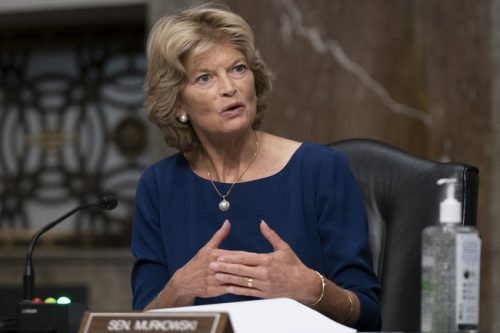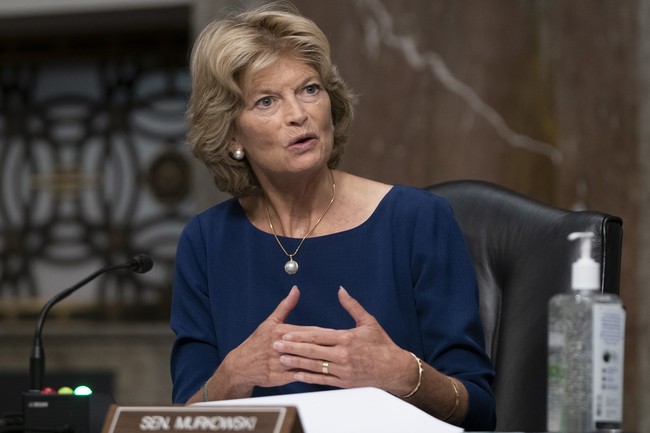
Sen. Lisa Murkowski publicly rejected the SAVE Act and was immediately called out online when a community note highlighted contradictions in her statement about federalizing elections and timing concerns.
Senator Lisa Murkowski’s recent post opposing the SAVE Act landed her in hot water with conservatives who wanted stronger election standards, and the reaction revealed real tension inside the GOP. Many in the party expect elected Republicans to push for clearer election integrity measures, so her stance felt like a retreat to some. That disagreement exploded into a sharp online rebuke when users pointed to earlier positions and context that didn’t quite line up with her latest explanation.
When Democrats attempted to advance sweeping election reform legislation in 2021, Republicans were unanimous in opposition because it would have federalized elections, something we have long opposed. Now, I’m seeing proposals such as the SAVE Act and MEGA that would effectively do just that. Once again, I do not support these efforts. Not only does the U.S. Constitution clearly provide states the authority to regulate the “times, places, and manner” of holding federal elections, but one-size-fits-all mandates from Washington, D.C., seldom work in places like Alaska.
When Democrats attempted to advance sweeping election reform legislation in 2021, Republicans were unanimous in opposition because it would have federalized elections, something we have long opposed. Now, I’m seeing proposals such as the SAVE Act and MEGA that would effectively…
— Sen. Lisa Murkowski (@lisamurkowski) February 10, 2026
Election Day is fast approaching. Imposing new federal requirements now, when states are deep into their preparations, would negatively impact election integrity by forcing election officials to scramble to adhere to new policies likely without the necessary resources. Ensuring public trust in our elections is at the core of our democracy, but federal overreach is not how we achieve this.
The community note that followed pointed out a clear friction: Murkowski claimed broad opposition to federalizing elections while having supported similar principles in the past, which made her present objections look inconsistent. Republicans across the map—some vocal, some quiet—are watching these internal debates because they shape how the party defends voting integrity without surrendering control to Washington. Senators like Mitch McConnell and Susan Collins have also hesitated, and that collective caution signals a wider hesitation among establishment Republicans that frustrates the base.
There’s a genuine policy question here about federal standards versus state flexibility, and it’s one conservatives have debated for years, but the optics matter. When an elected Republican opposes a bill touted as strengthening election procedures, grassroots voters see room for cynicism and a lack of unified commitment to stopping fraud and ensuring secure results. That disconnect between rhetoric and action is exactly what the community note exposed, and it doesn’t play well with primary voters who want clarity and toughness on election rules.
Murkowski’s timing argument—that imposing new rules close to election day would force states to scramble—has practical merit in a narrow sense, yet it sidesteps whether phased federal standards could be implemented to avoid chaos. Conservatives who back stronger safeguards argue you can design federal benchmarks that respect state administration while creating consistent minimums for transparency, chain-of-custody, and ballot verification. The debate isn’t purely abstract because the mechanisms lawmakers choose will determine how easily elections can be audited and how much public confidence those audits generate.
This episode is also political theater: community notes and social platforms amplify inconsistencies quickly, making it harder for lawmakers to finesse their positions without scrutiny. For members like Murkowski, who represent states with particular logistical challenges, the balance between federal guidance and local control is a live problem, but explaining a nuanced stance without sounding evasive is a skill that few politicians master under fire. Republicans watching will measure whether this was a thoughtful policy disagreement or an avoidant answer to pressure from both party wings.
Ultimately the clash over the SAVE Act and the public correction that followed show how internal party debates are now played out in public and judged instantly, and that reality will shape how Republican senators frame election reform going forward. Voters and activists alike are taking notes on who stands firm and who shifts, and those choices will influence trust, turnout, and the next round of primary challenges. The conversation itself is unlikely to disappear; expect the SAVE Act and similar proposals to remain a flashpoint as the party sorts through the balance between national standards and state sovereignty.